This post may contain affiliate links: read full affiliate disclosure.
Repotting plants can quickly turn into a messy job when soil spills across the patio, empty pots pile up nearby, and garden tools never seem to be within reach.
Working from the ground or an unsuitable table can also leave you bending awkwardly while carrying supplies back and forth.
Ahead, you’ll find 23 DIY potting bench ideas packed with practical inspiration for creating a hardworking setup that fits your garden and routine.
Tool Storage
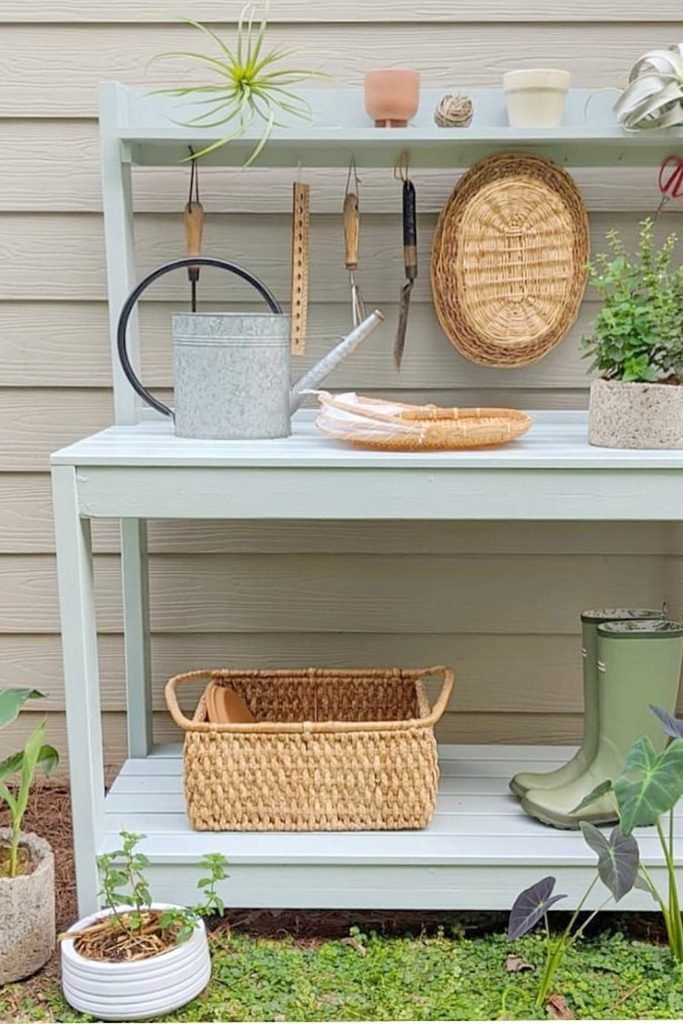
Mount a slim upper rail above the worktop so frequently used hand tools stay visible instead of disappearing into baskets or drawers.
Small hooks can hold trowels, scissors, and hand forks, while the lower shelf handles heavier supplies without crowding your planting surface.
Place this bench beside a shed or covered wall where everything stays close during quick repotting jobs and everyday plant care.
Indoor Station
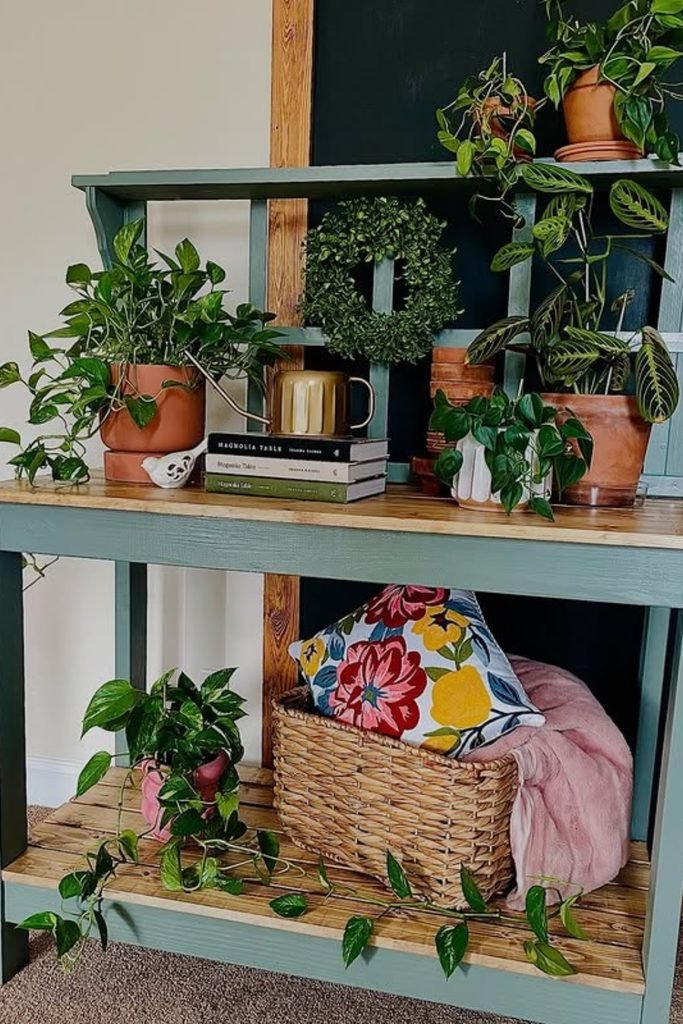
Bring a potting bench indoors when houseplants need regular attention but you lack a dedicated utility room for storing their supplies.
Use the open shelves for plants and baskets, then reserve one section for soil, pruning tools, spare pots, and watering essentials.
Choosing a finished wooden worktop makes the station blend naturally with furniture, so it can remain useful without feeling overly workshop-like.
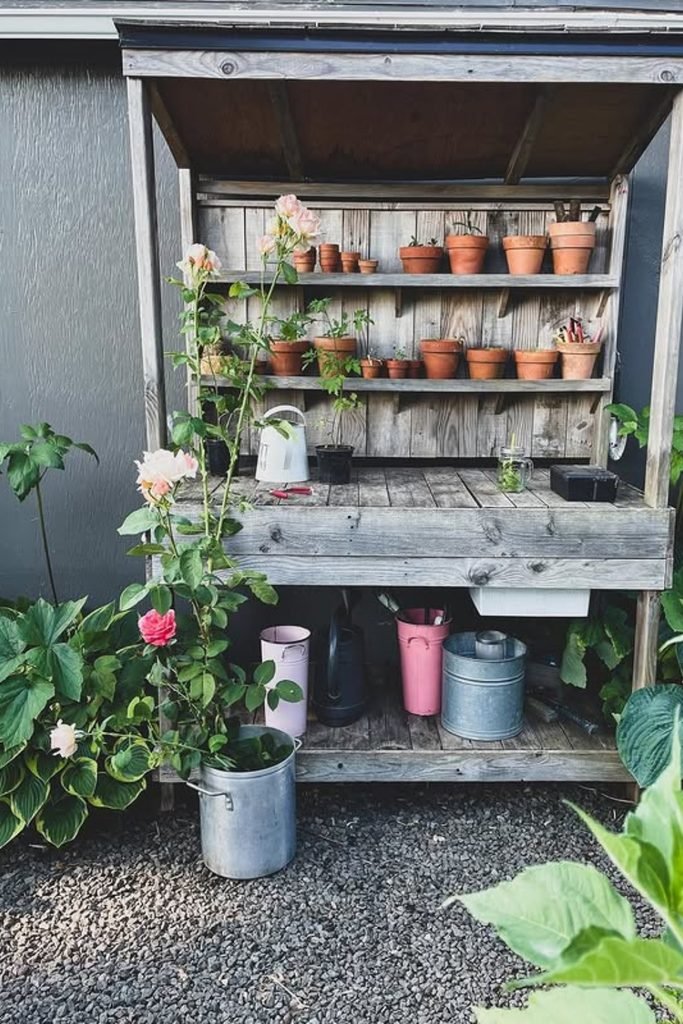
Covered Bench
Adding a simple roof turns an outdoor potting bench into a more dependable workspace when changing weather often interrupts gardening jobs.
Build shelves against the back for small pots and supplies, leaving the broad central worktop clear enough for repotting larger plants.
An open lower level works especially well for watering cans and buckets, while the overhead cover helps protect frequently used equipment.
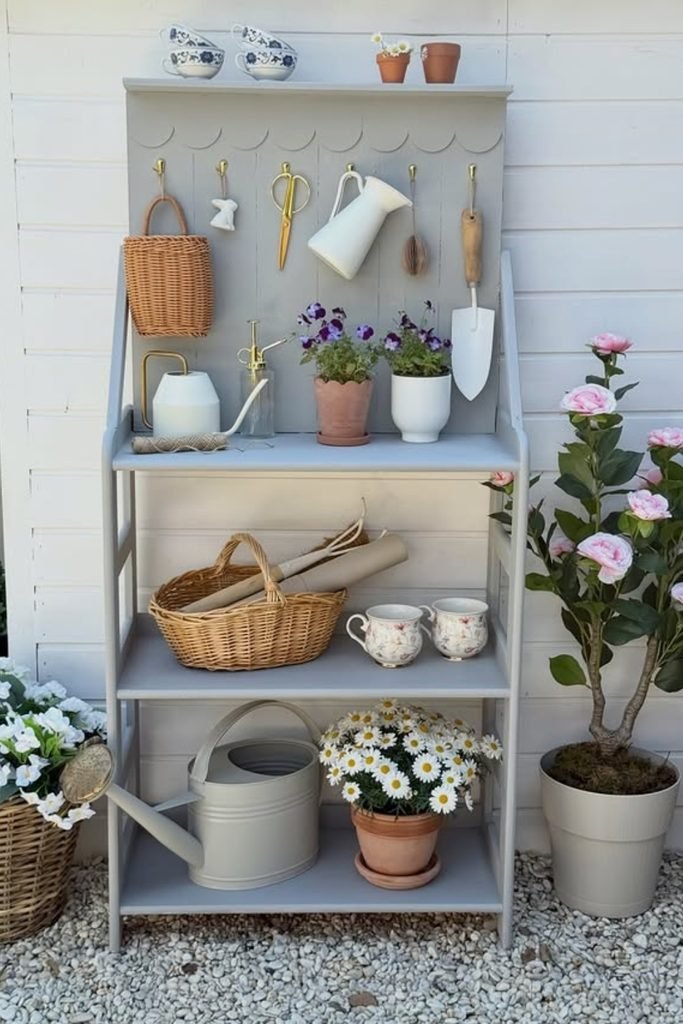
Vertical Organizer
Make the wall above your worktop work harder by adding hooks for lightweight tools instead of sacrificing valuable planting space.
Pair that hanging storage with two open lower shelves, giving baskets, watering cans, spare pots, and bulkier supplies separate places.
This narrow arrangement works nicely against a porch or shed wall where floor space is limited but vertical room remains available.
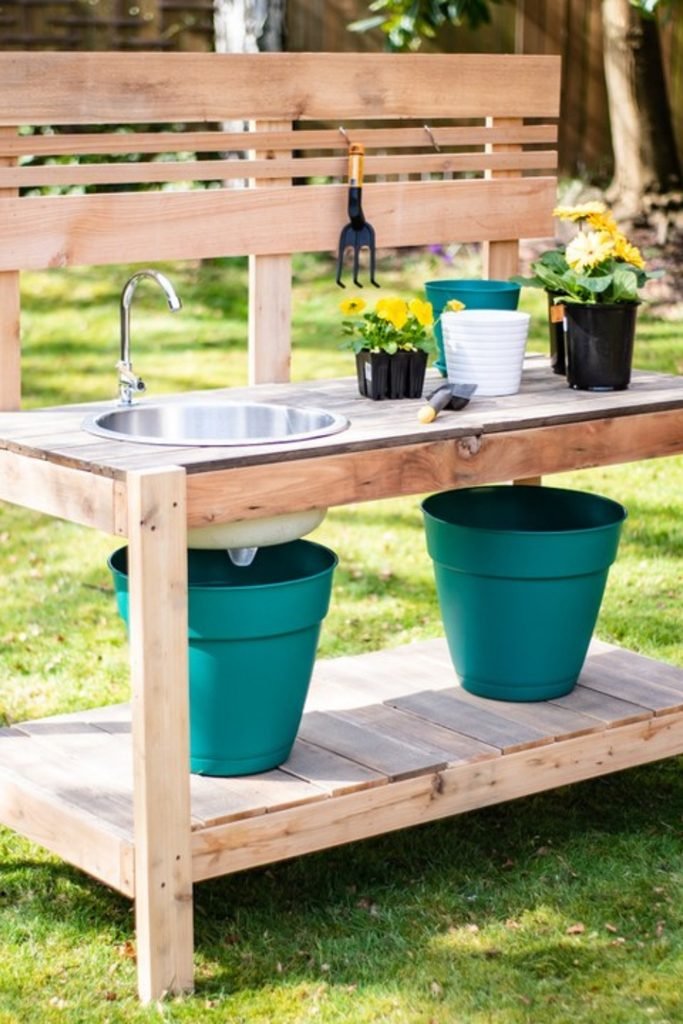
Wash Station
Building a small sink directly into the worktop when rinsing pots, washing hands, and cleaning tools usually means repeated trips indoors.
Connect it to an outdoor water source where practical, while leaving enough counter space beside the basin for comfortable repotting work.
Use the wide lower shelf for bulky planters and buckets, keeping heavier pieces below rather than cluttering your main working area.
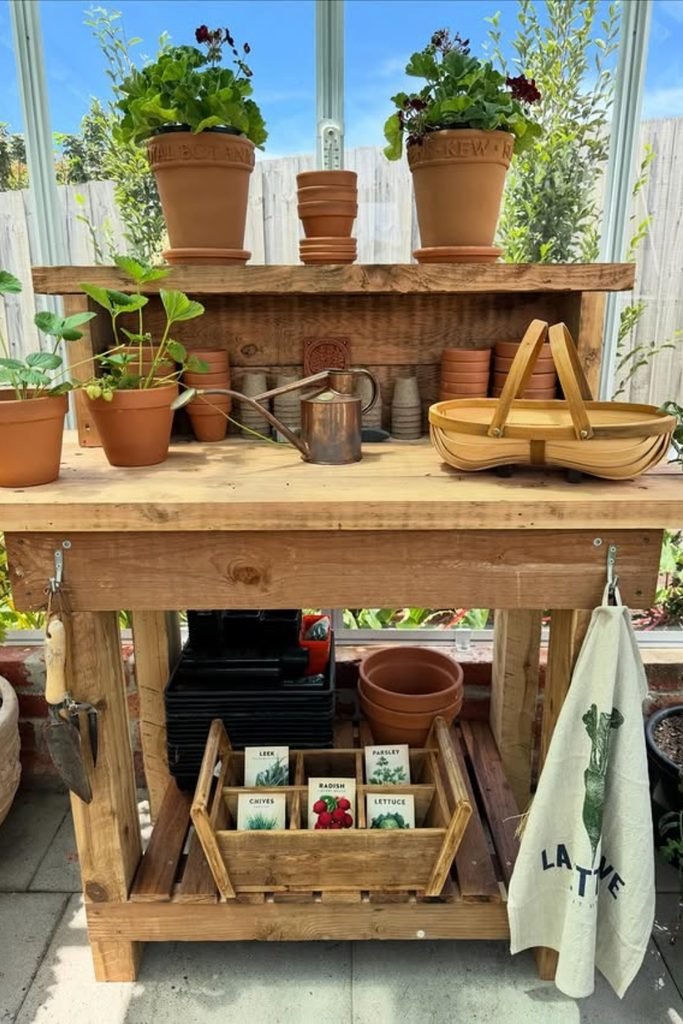
Seed Storage
Turn the space beneath your bench into a planting supply zone where seed packets, trays, and spare terracotta pots stay together.
A divided wooden box makes seed varieties easier to sort and grab, especially when you regularly start vegetables or herbs seasonally.
Position everyday pots across the raised back shelf so the central worktop remains open for sowing, transplanting, and preparing containers.
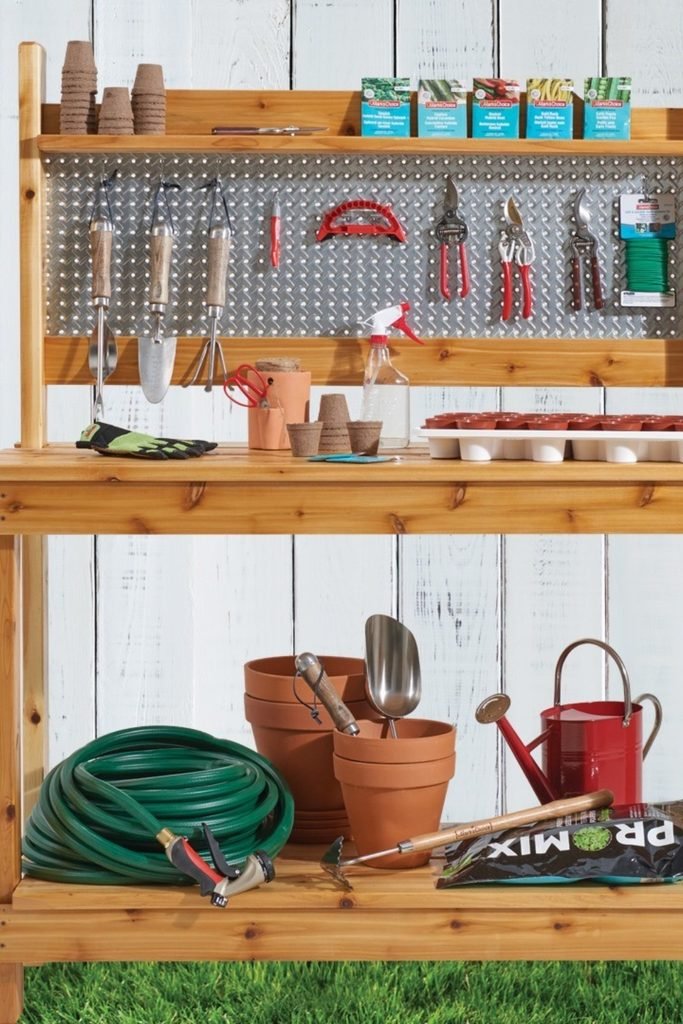
Metal Pegboard
Swap an ordinary wooden backboard for perforated metal when you want hand tools visible without filling drawers or covering your worktop.
Arrange hooks around the tools you reach for most, while a narrow top shelf handles seed packets and small starter pots.
Reserve the deep bottom shelf for hoses, watering cans, soil bags, and larger containers that would otherwise create garden clutter.
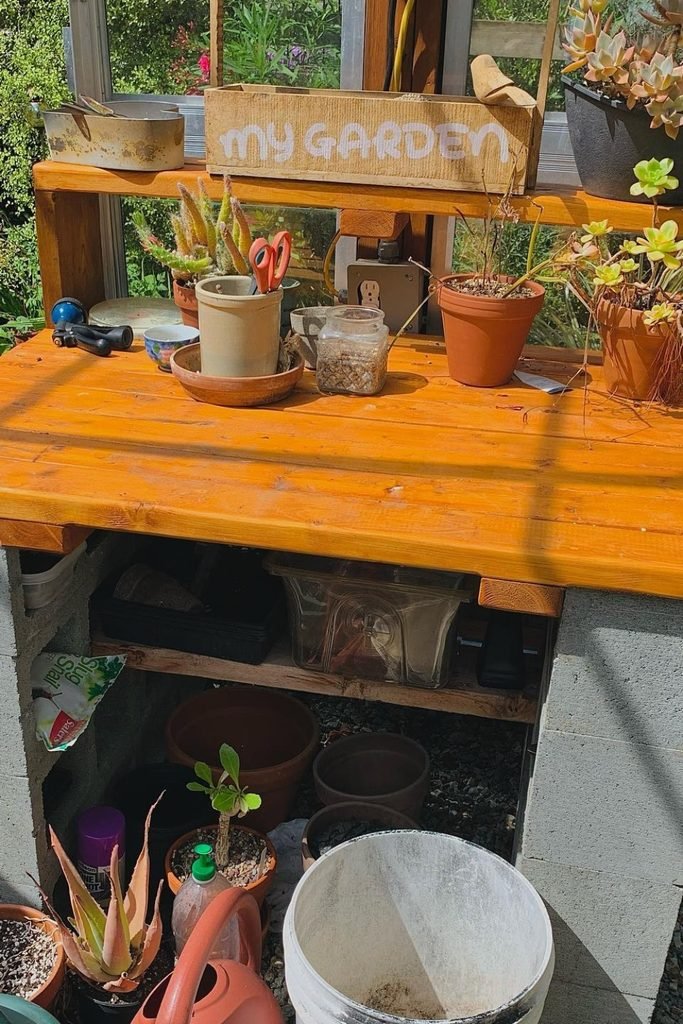
Block Base
Skip complicated joinery by supporting a thick wooden worktop with concrete blocks, creating a sturdy station from straightforward, affordable materials.
Leave the center underneath open for pots and storage tubs, then add a simple shelf wherever smaller gardening supplies need organizing.
This heavy-duty approach works especially well beside a greenhouse, where a generous work surface can handle frequent repotting and messy soil jobs.
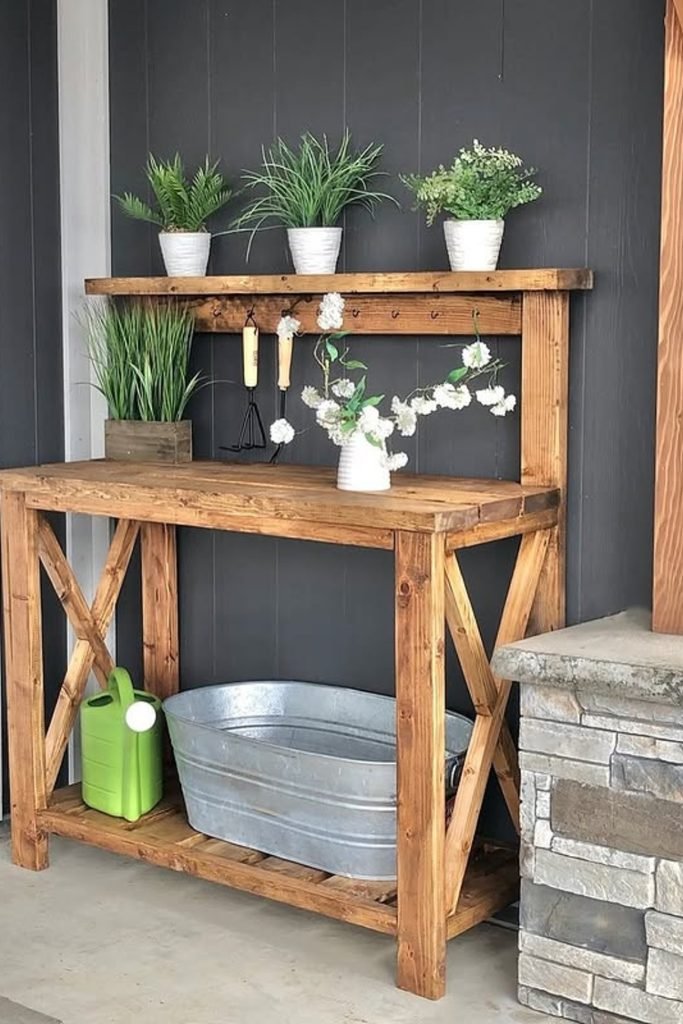
Tub Storage
Plan the bottom shelf around oversized supplies so a soil tub, watering can, or stacked containers have a permanent home below.
Cross-braced sides add useful stability to a tall wooden frame, especially when the worktop regularly carries heavy pots and damp soil.
Add a row of small hooks beneath the upper shelf for hand tools you want accessible without sacrificing valuable working room.
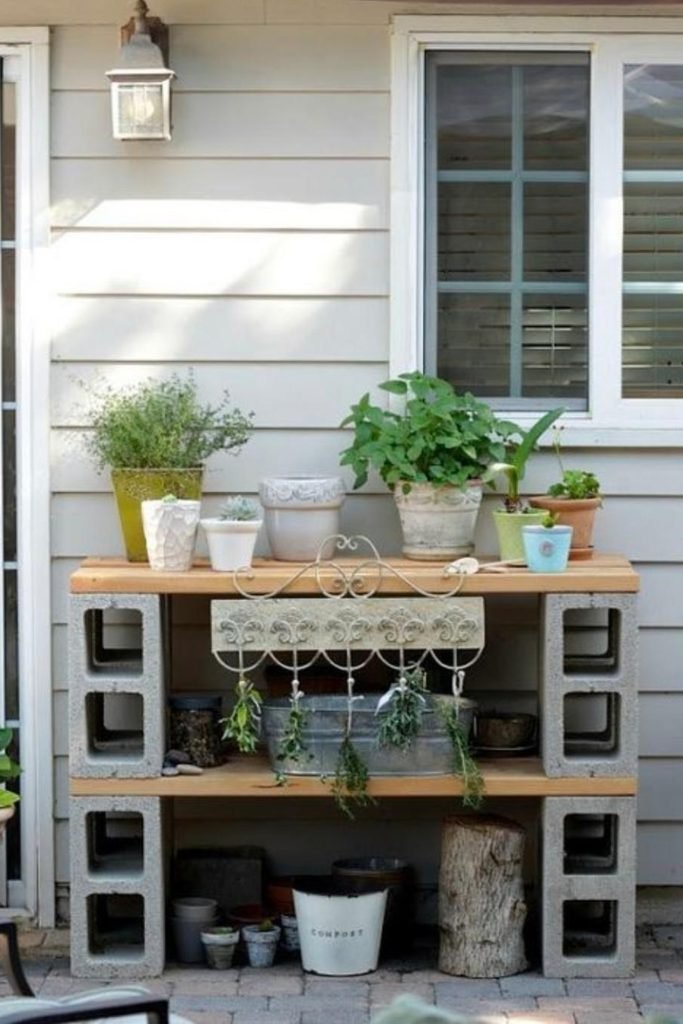
Cinder Shelves
Stacking cinder blocks between sturdy boards creates an inexpensive potting station without requiring complicated cuts, framing.
Adjust the number of blocks to change shelf spacing, leaving generous openings below for compost containers, spare pots, and bulky garden supplies.
Set this straightforward build against a patio wall where its weight provides stability and the layered shelves can handle everyday gardening clutter.
Pallet Bench
Repurpose pallet boards into a slatted potting bench when inexpensive materials matter more than achieving a perfectly polished furniture-style finish.
Small gaps between the boards help loose soil fall away instead of collecting across the surface during frequent planting and repotting sessions.
Paint or seal the timber for outdoor protection, then use the lower platform for buckets and containers that tolerate occasional dirt and moisture.
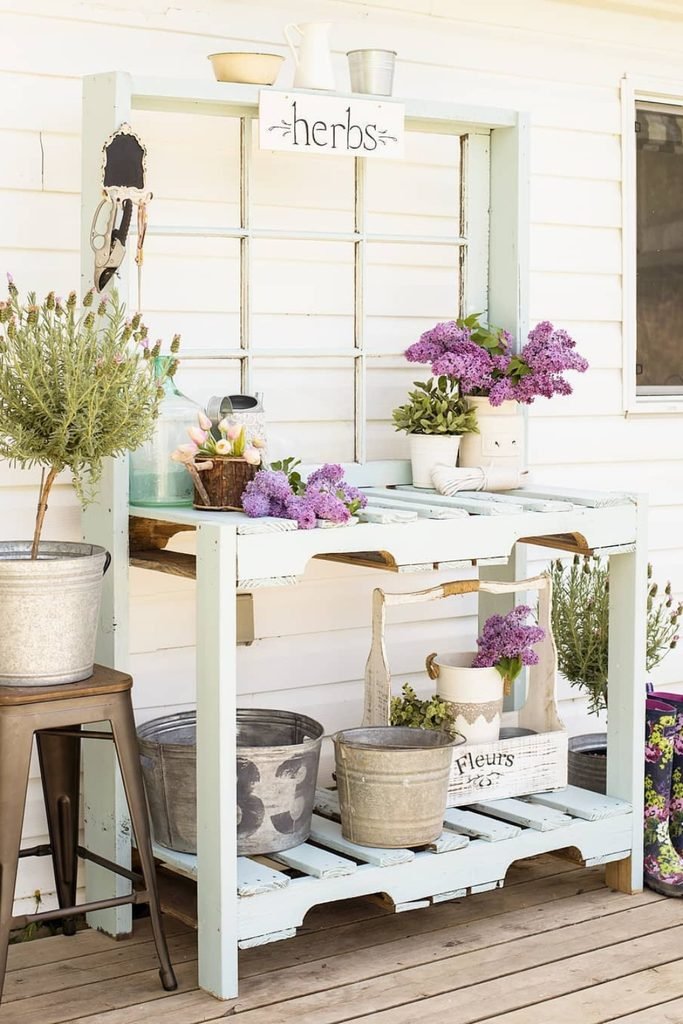
Porch Bench
Treat a covered porch as a gardening workspace by building a narrow bench that can stay useful without overwhelming the walkway.
Hang your most-used tools directly beneath the raised shelf, making them easy to grab while leaving the entire worktop available for planting.
Open storage underneath suits watering cans and larger plants, while porch cover provides extra protection from rain for the timber and supplies.
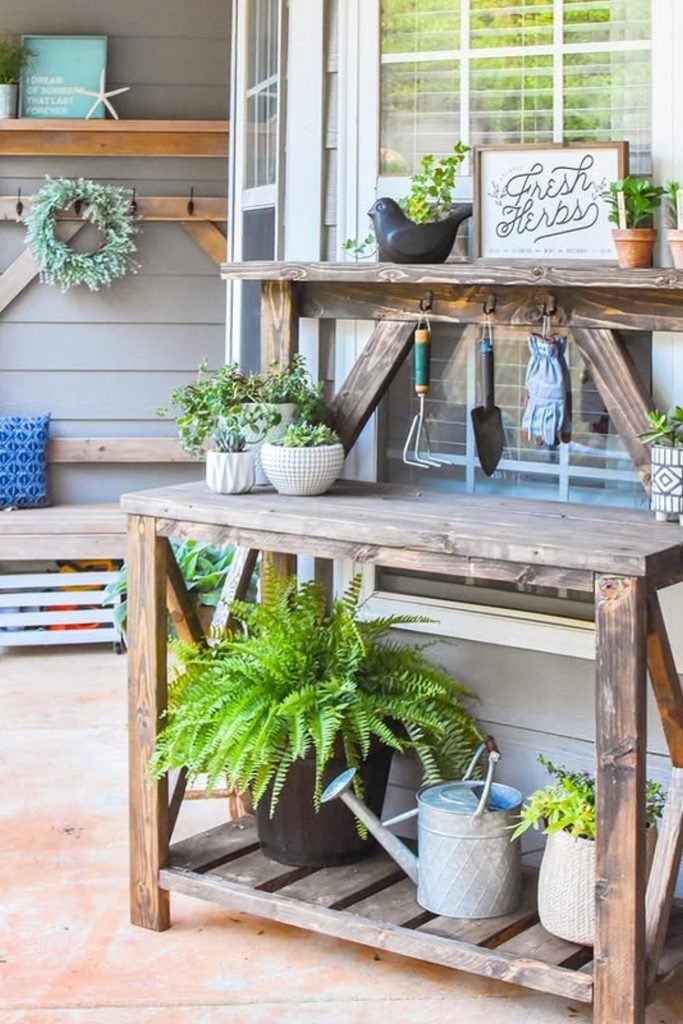
Lattice Back
Use a lattice panel behind the worktop when you want the bench to feel finished while still leaving room for hanging tools.
Attach several hooks along the front edge for hand tools, then reserve the raised shelf for spare pots and smaller supplies.
A slim frame fits comfortably against a patio wall, while the open lower shelf prevents stacked planters from taking over your workspace.
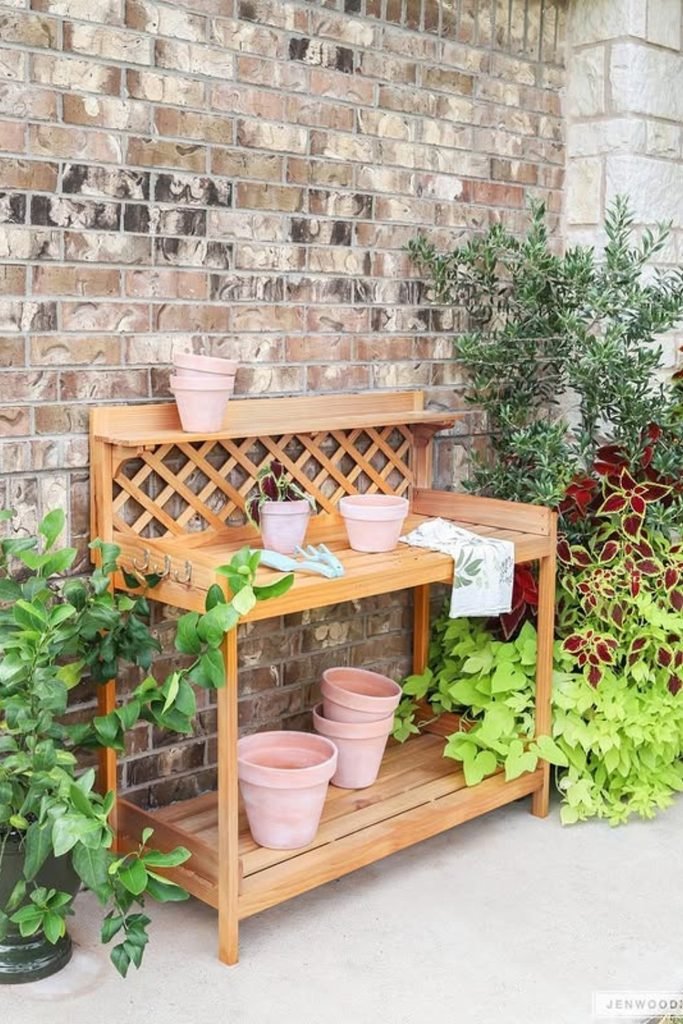
Rolling Bench
Add locking casters when your potting station needs to move between sunny planting areas, sheltered corners, or different parts of the patio.
Deep side compartments can hold seedlings and loose supplies, while narrow back shelves organize small pots without consuming the working surface.
Choose sturdy wheels rated for the loaded bench, since soil, timber, containers, and gardening equipment can quickly add considerable weight.
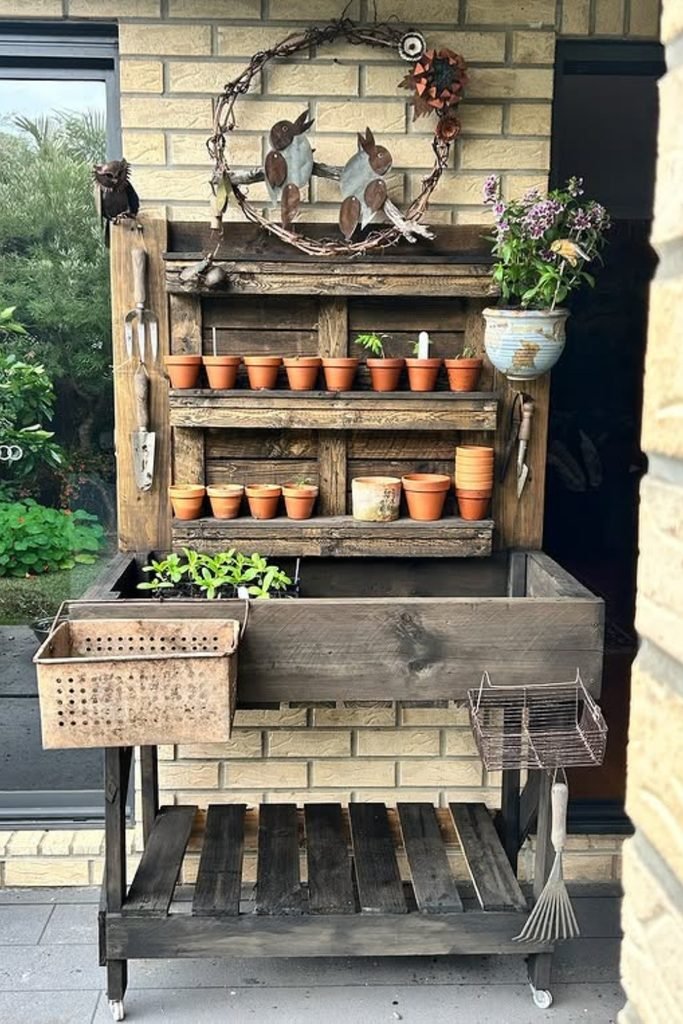
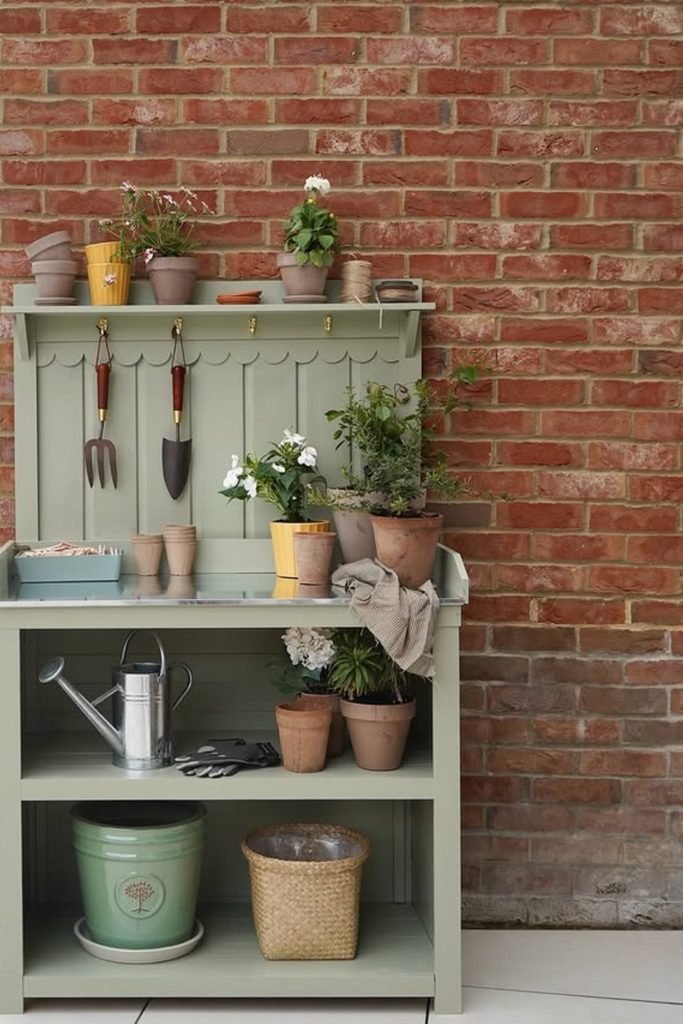
Tiered Storage
Separate everyday supplies across multiple levels so watering cans, spare pots, hand tools, and planting materials never compete for one shelf.
Mount hooks beneath the top ledge for frequently grabbed tools, leaving the middle shelf accessible for plants currently needing attention.
A painted finish helps exposed timber handle regular garden use while making a practical storage station feel more intentional beside brickwork.
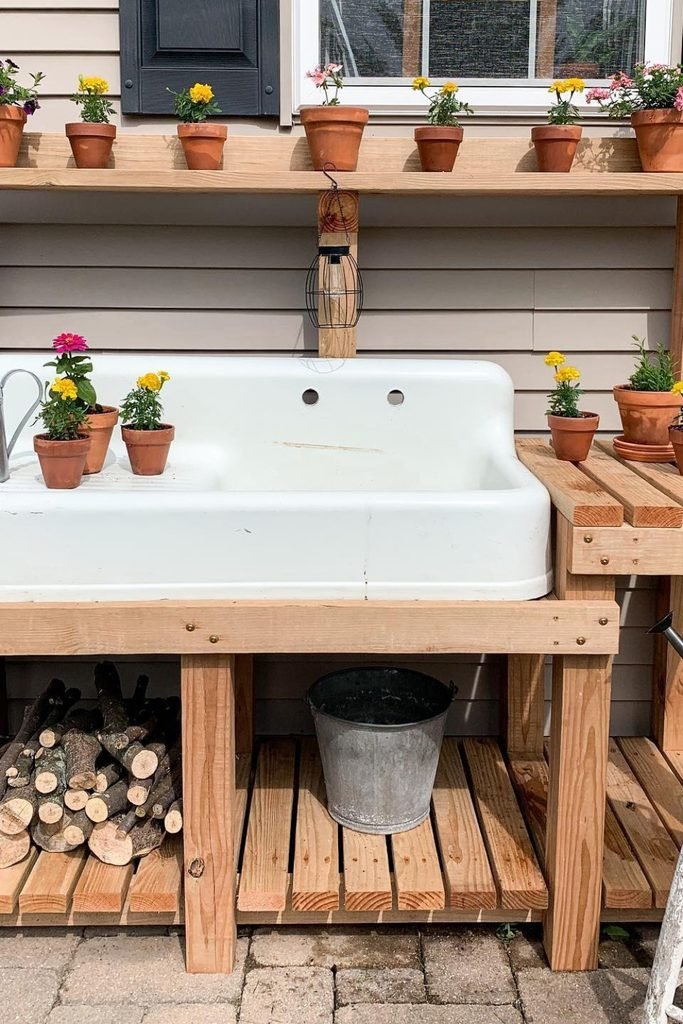
Double Worktop
Combine a deep utility sink with a separate slatted counter when washing and potting often happen during the same gardening session.
Use the basin for rinsing containers and muddy tools, while the raised side surface stays available for arranging plants or mixing soil.
Building open shelves underneath creates flexible storage for buckets and heavy supplies, preventing wet equipment from cluttering the cleaner worktop above.
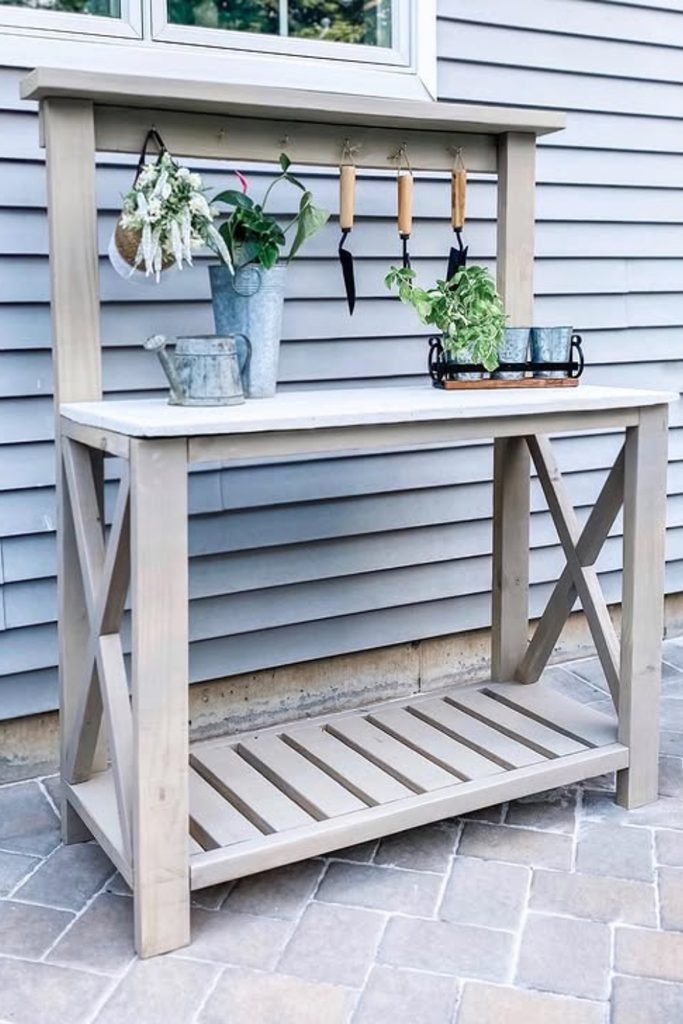
Cross Brace
Strengthen a narrow potting bench with X-shaped side braces, especially when you want an open frame without adding bulky enclosed storage.
A raised back shelf creates an easy spot for small containers, while hooks underneath put hand tools within comfortable grabbing distance.
Leave the slatted bottom shelf mostly open for heavier pots and soil supplies, making cleanup easier after messy planting sessions outdoors.
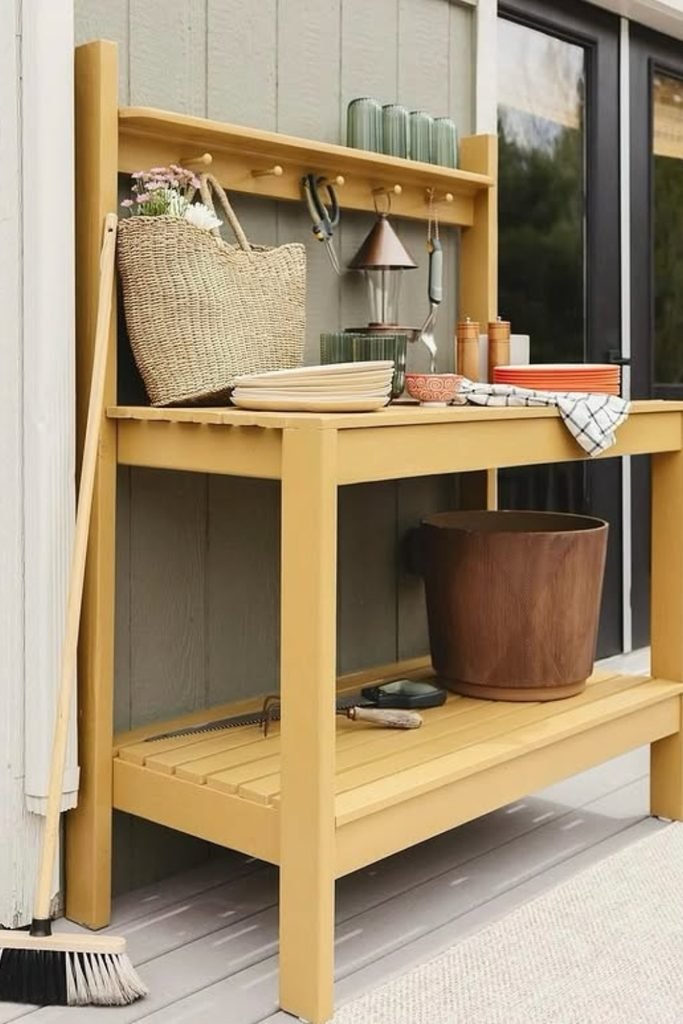
Peg Rail
Run a simple peg rail across the back when smaller gardening tools need dedicated spots but a full pegboard feels unnecessary.
Use the upper ledge for lightweight containers, then let the roomy lower shelf handle large pots, trays, and frequently used supplies.
A cheerful painted finish can help a basic timber build feel intentional enough for a porch that doubles as an entertaining area.
Plant Display
Let your potting bench double as indoor plant storage when cold weather brings tender greenery inside and floor space becomes crowded.
Build the lower shelf from spaced boards so pots have sturdy support while fallen soil and small debris remain easier to clean.
Reserve the main surface for repotting whenever needed, then arrange trailing plants above to make the workstation feel naturally decorative between jobs.
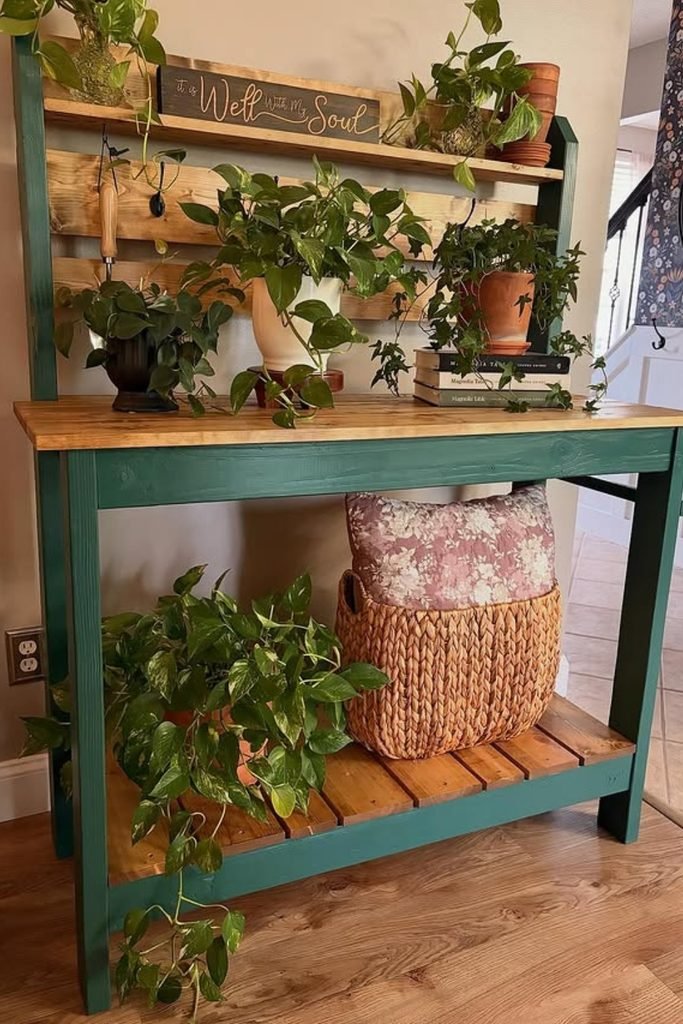
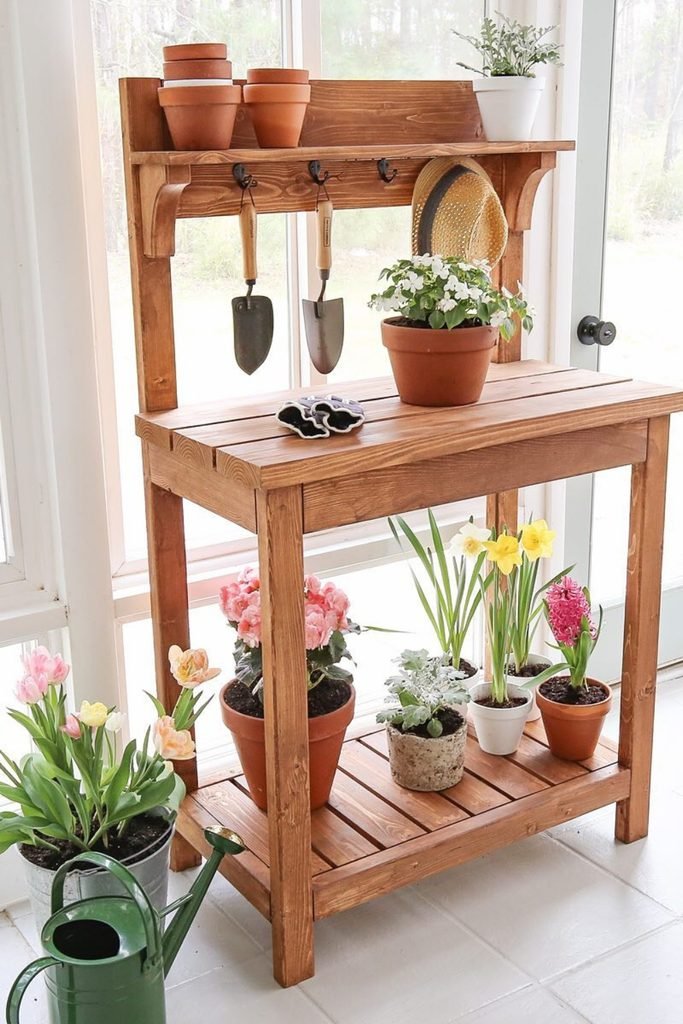
Window Station
Position a compact wooden bench near bright windows when you frequently repot houseplants or start seasonal flowers before moving them outdoors.
Hang trowels from sturdy hooks beneath the upper shelf, keeping sharp or dirty tools away from the main planting surface.
Stack spare terracotta pots overhead and use the slatted base for growing plants, turning unused window space into practical garden storage.
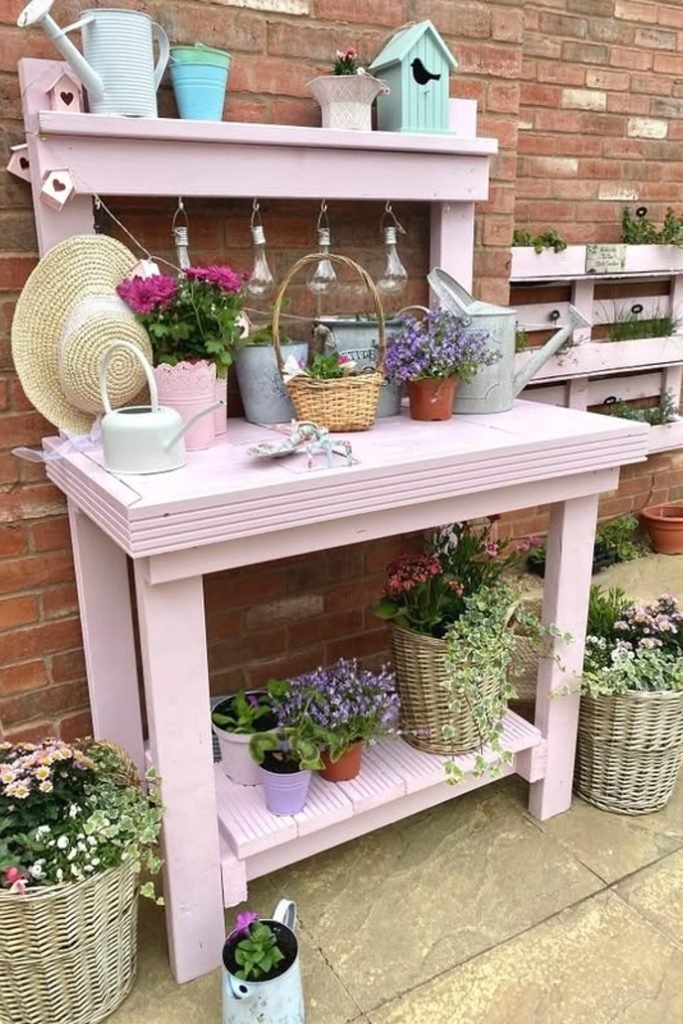
Colorful Finish
Turn a basic timber bench into a cheerful garden feature with exterior paint, especially when the station sits against plain brickwork.
Use the upper ledge for watering supplies and decorative pots, while hanging small accessories underneath keeps the broad worktop easier to use.
Reserve the narrow bottom shelf for plants awaiting repotting, so active projects stay together instead of spreading around your patio.
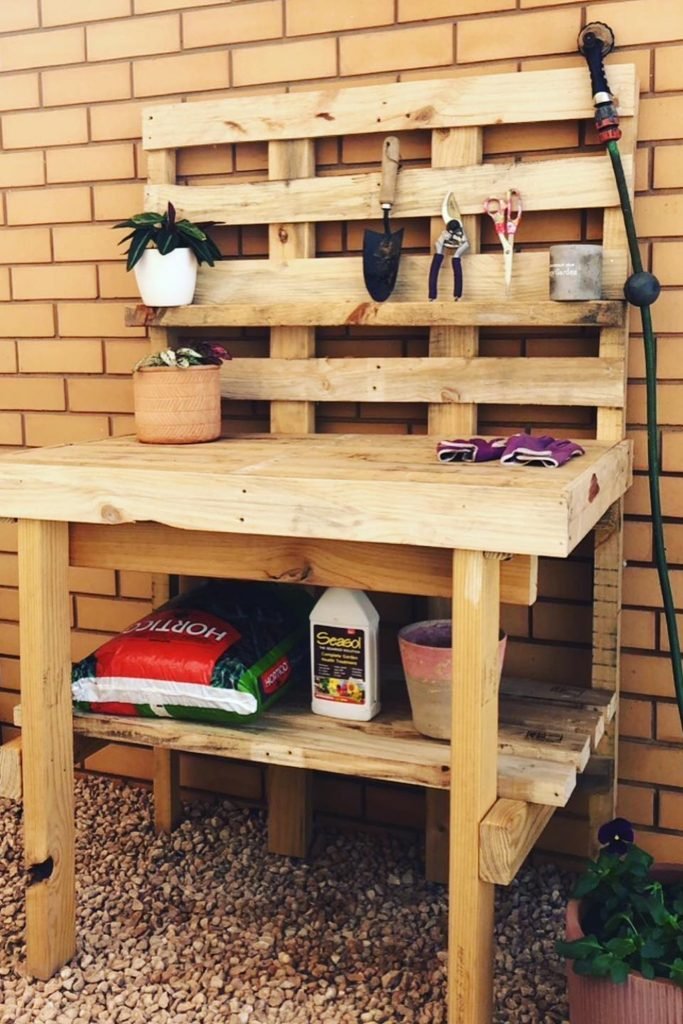
Pallet Back
Reuse an upright pallet as the back of your bench to create instant hanging storage without building a separate tool organizer.
Screw sturdy hooks into thicker boards for pruners, trowels, and scissors, then store soil bags safely on the shelf underneath.
Place the station close to your outdoor tap so watering, tool rinsing, and cleanup require fewer trips across the garden.
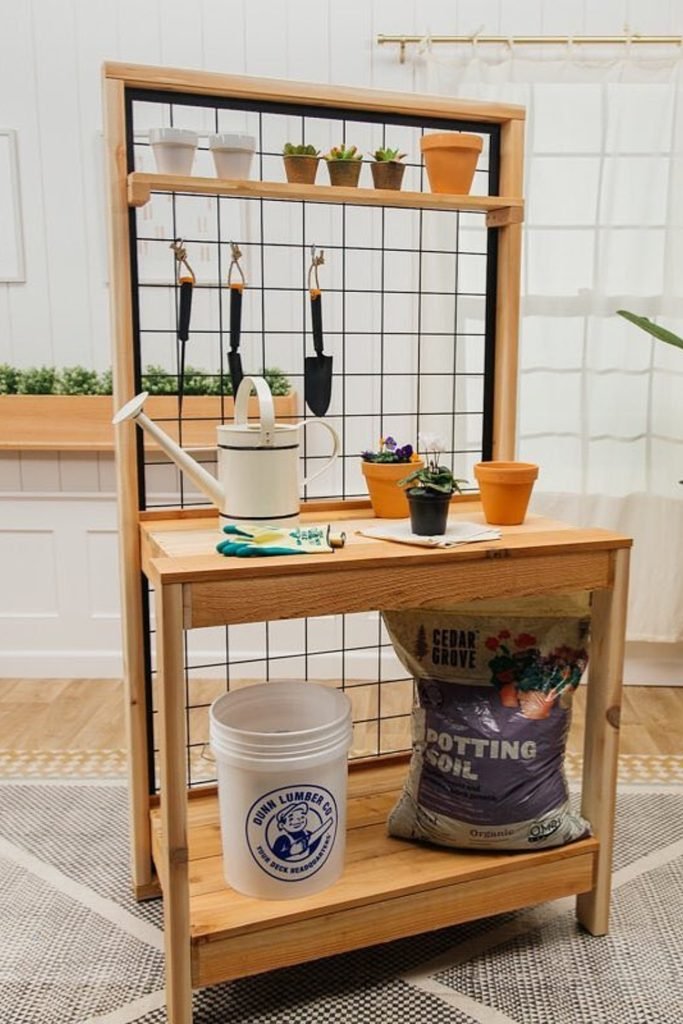
Grid Organizer
Install a wire grid behind the worktop when you want flexible hanging storage that can change as your collection of tools grows.
Clip hand tools at comfortable reaching height and place lightweight pots overhead, leaving the central surface open for everyday planting tasks.
Store heavy soil bags and buckets on the lowest shelf, where their weight adds stability without making supplies difficult to reach.
FAQs
What Height Works Best for a DIY Potting Bench?
Aim for a comfortable waist-level worktop so you can repot, divide plants, and prepare containers without constantly bending over.
Around 34-38 inches works for many people, but adjust the height around whoever will use the bench most often.
How Can I Protect a Wooden Potting Bench Outdoors?
Start with outdoor-suitable lumber and apply an exterior wood sealer or protective finish to exposed surfaces.
Pay extra attention to cut ends and joints where moisture can settle. Small gaps between worktop boards also help water drain instead of sitting against the wood.

Hi, my name is Ali Mehmood! I’m a passionate writer and DIY enthusiast who loves turning creative ideas into practical, hands-on projects.
I created this website to share inspiring, budget-friendly ideas that you can do yourself – whether it’s organizing your home, crafting something unique, or creating fun projects for kids and pets.
I believe DIY isn’t just a hobby – it’s a smart way to save money, reduce waste, and enjoy the satisfaction of making things with your own hands.
I’m excited to have you as part of this growing community, and I’ll continue bringing you helpful, realistic, and fun DIY ideas you can actually use.