This post may contain affiliate links: read full affiliate disclosure.
Building a wood trellis looks simple until your plants start to grow heavier, lean to one side, or pull on a frame that was only made to look pretty.
A trellis needs to support the plant, handle outdoor weather, stay steady in the soil, and still look good in the space where you place it.
The tricky part is that not every wood trellis works for every plant. Cucumbers, beans, peas, roses, clematis, and flowering vines all need different levels of support.
A small decorative frame may look lovely beside a planter, but it may not hold up once fast-growing vines start climbing.
Wood choice matters too, because cheap untreated wood can rot, split, or loosen faster when it sits outside in rain, sun, and wet soil.
You just need to choose the right style for your plant, build it with enough strength, and place it where it can actually do its job.
In this article, you will find practical DIY wood trellis ideas that can help you support climbing plants, add structure to your garden, save space, and make your outdoor stylish.
Lets dive in!
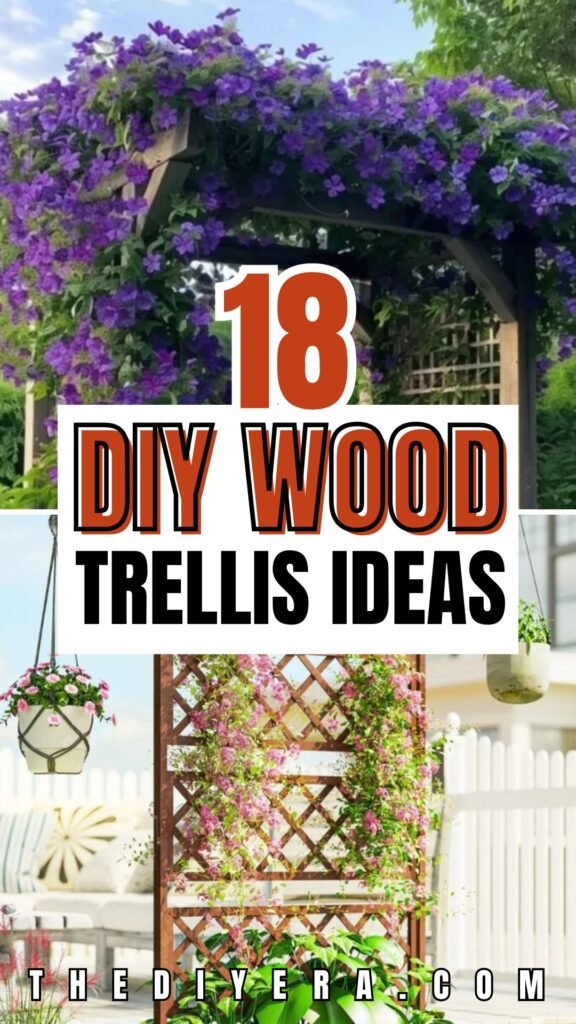
Frame the Entry
A flower-covered wood arch works beautifully when you want the garden path to feel planned, shaded, and more inviting before anyone steps fully through it.
Use thick posts and strong top beams for heavy flowering vines, because overhead growth can pull harder than it looks during peak season in full bloom.
Let the flowers spill over the corners, but keep the walkway clear so the trellis feels romantic without becoming difficult to pass through each day.
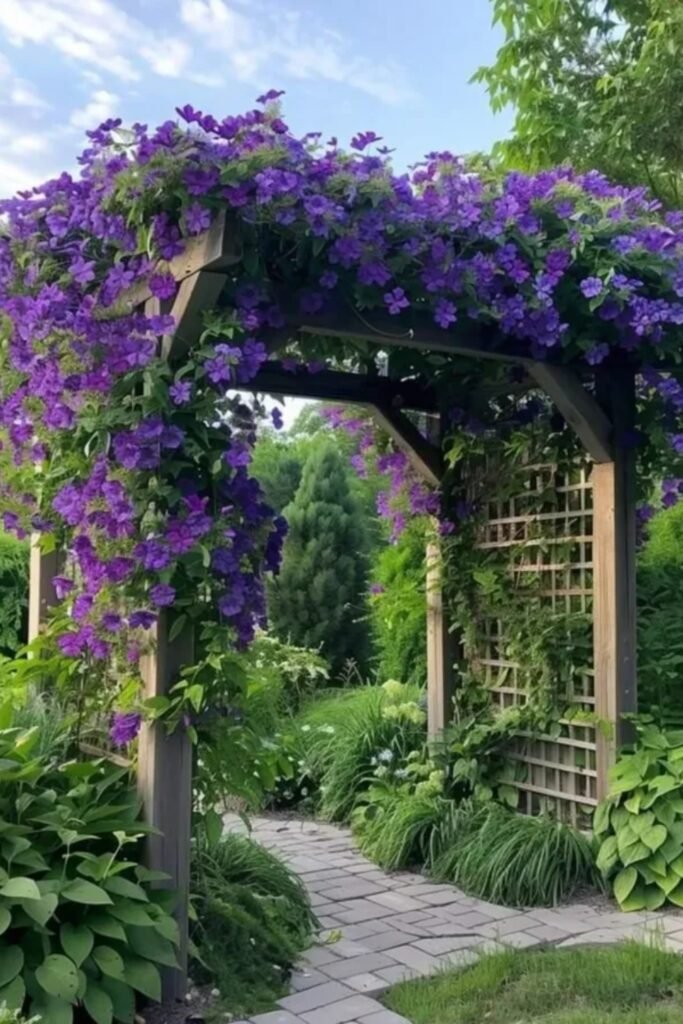
Add Planter Weight
A built-in planter base is a smart shortcut when you want a freestanding trellis without digging permanent holes in your lawn or patio area first.
The box adds weight at the bottom, while the lattice gives climbing flowers a clear path upward instead of spreading across the ground near garden beds.
Place it beside a deck or fence, then stain the wood to match nearby furniture so the project feels finished, not temporary from the start.
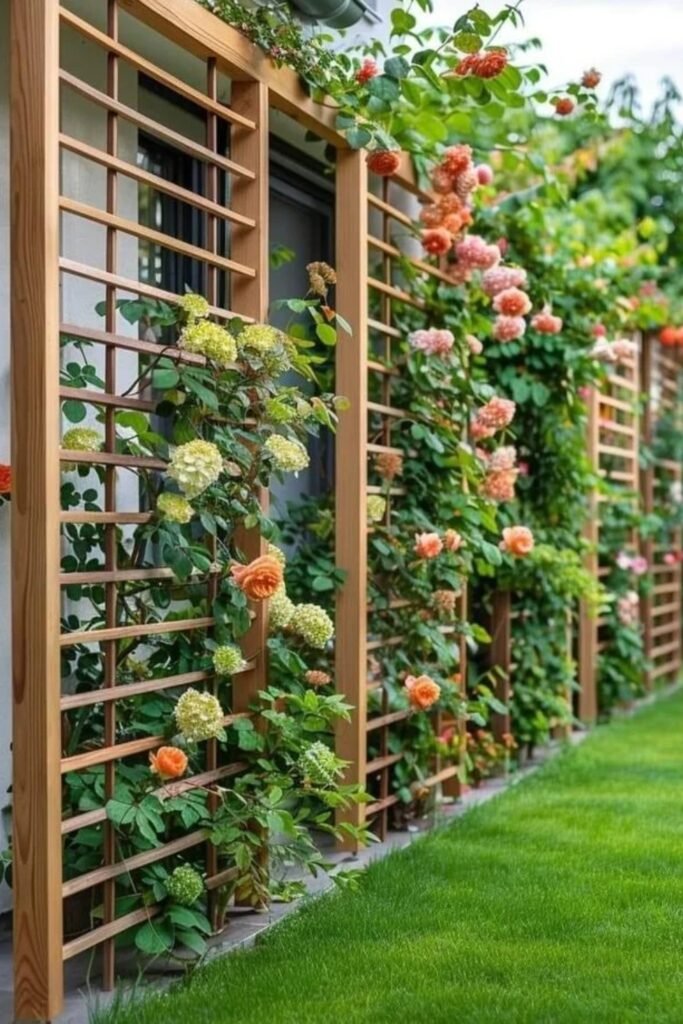
Cover Plain Walls
Flat wall trellises are perfect when your garden has a plain exterior wall that needs softness, color, and better vertical interest along the walkway edge.
Use repeated wood grids for roses or flowering climbers, because the pattern keeps stems organized while still leaving enough space for airflow behind the leaves.
Leave a little gap from the wall before fastening panels, so moisture and tangled growth do not sit directly against the house after every rain.
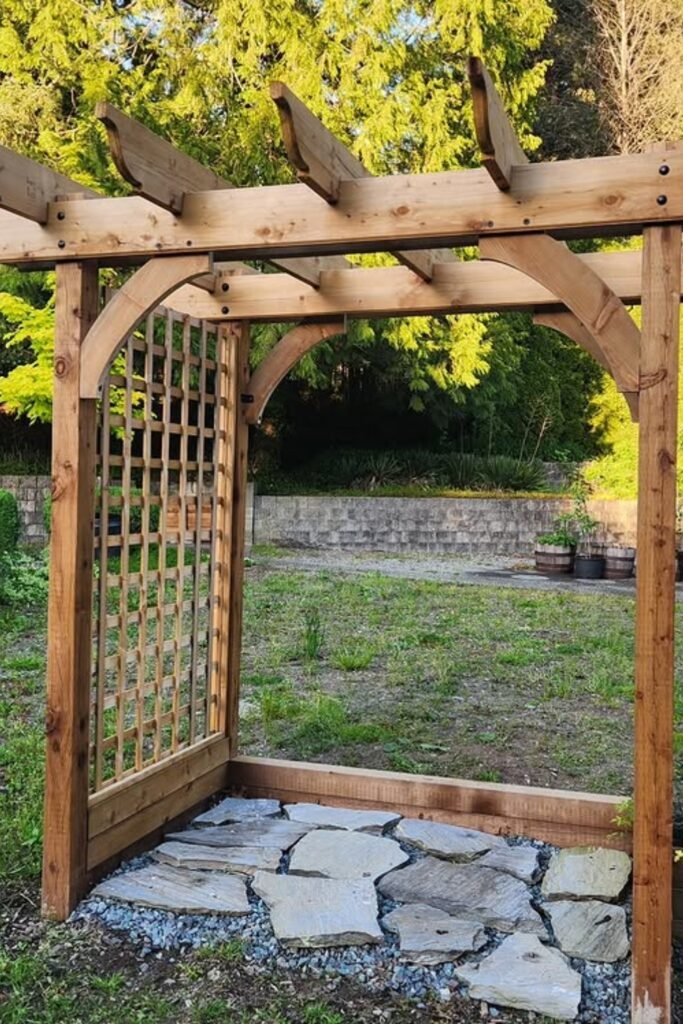
Build a Garden Doorway
A walk-through wood trellis works like a doorway, so use it where the garden needs structure, shade, or a stronger focal point especially near paths.
The side lattice can support vines, while the overhead beams make the space feel more architectural before plants even start covering it with new growth.
For a heavier build like this, secure the posts well and use outdoor hardware, because wind and vine weight will test every joint over time.
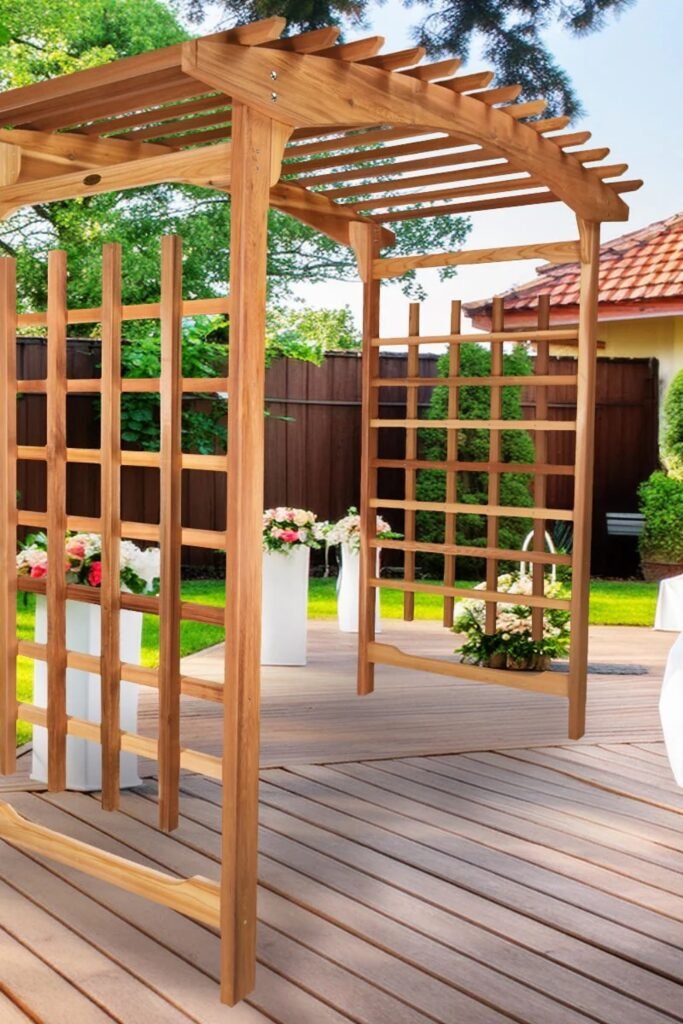
Open Up the Deck
Something like this works beautifully on a deck when you want a wood trellis that feels open, structured, and decorative without needing dense plant coverage yet.
The side grids give climbing vines a clear route upward, while the slatted top adds light shade and makes the whole build feel more finished.
If you copy this style, anchor the posts well and leave enough walking room inside so the trellis stays useful before the plants fill in.
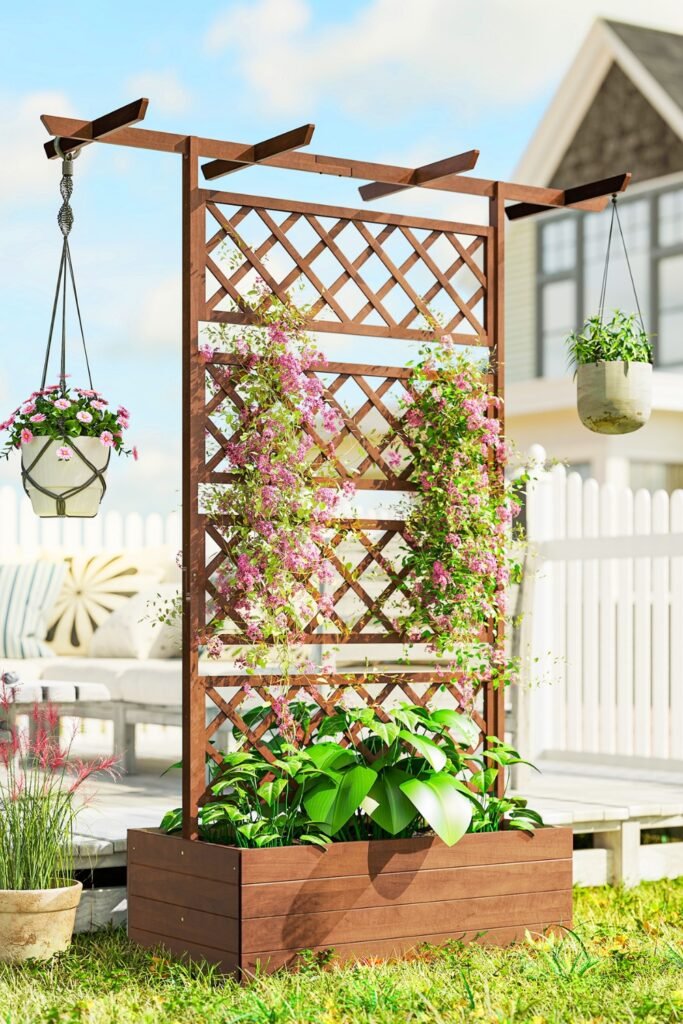
Let the Planter Help
When you need greenery without digging into the yard, a planter-based trellis like this gives you height, flowers, and support in one compact build piece.
What really makes it clever is the extra top arms, because they hold hanging baskets and help the structure look fuller even before vines start climbing.
Set one beside a patio or fence, then choose trailing flowers below and light climbers above so the whole piece stays balanced, not top-heavy outside.
Keep It Clean
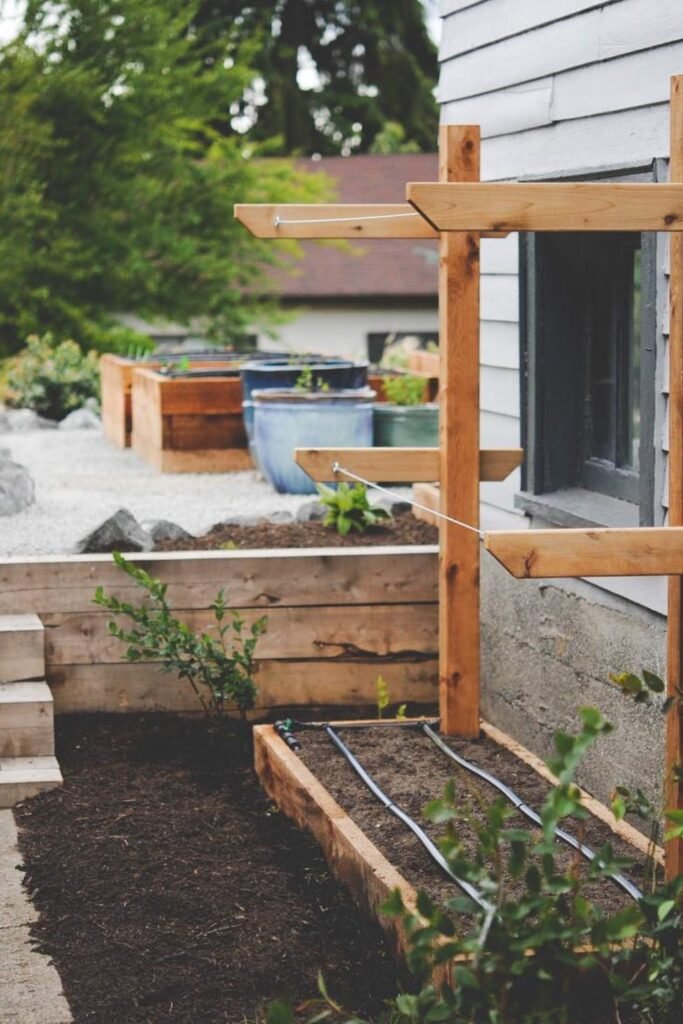
If a narrow side yard feels empty, this simple post-and-wire trellis is a smart way to add climbing support without building a wide, bulky frame.
The clean lines suit modern spaces, and the raised bed underneath gives vines a dedicated growing zone instead of letting them wander across pathways nearby.
Keep the wires tight and evenly spaced, because that small detail makes training stems much easier and stops the finished trellis from looking messy later.
Use the Corners
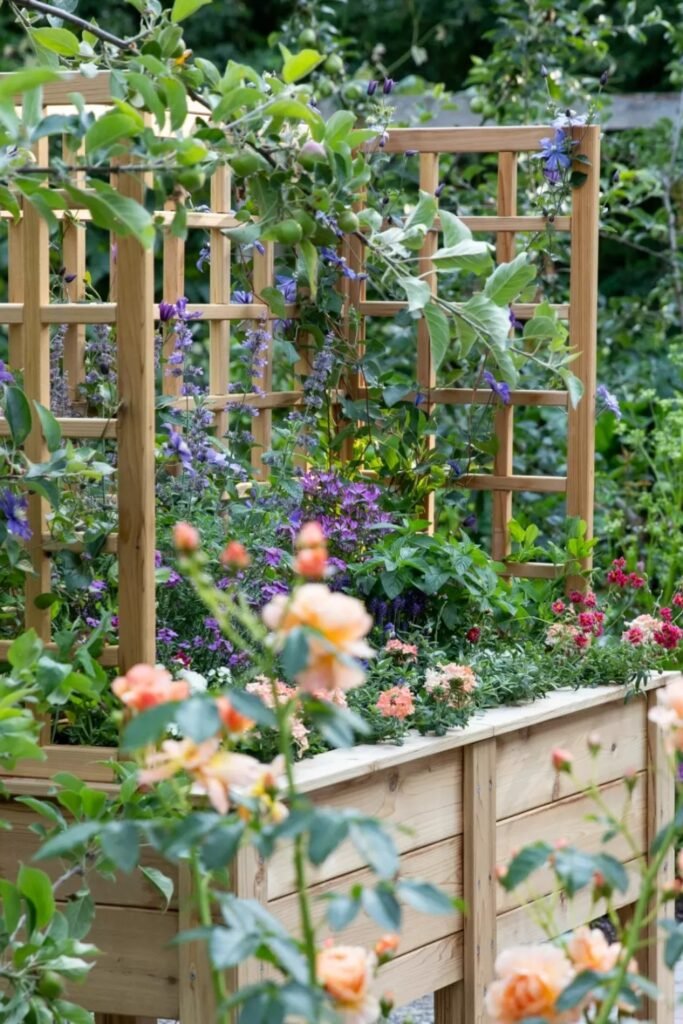
Raised beds get even better when the corners do more, and this lattice setup turns unused space into a neat support zone for flowers or climbers.
It keeps the planting area organized, adds vertical interest behind the blooms, and gives lighter vines a place to climb without taking over the whole bed.
Try this when you want a cottage-garden feel, but choose slimmer plants for the grid so nearby roses and perennials still get their share too.
Mark the Path
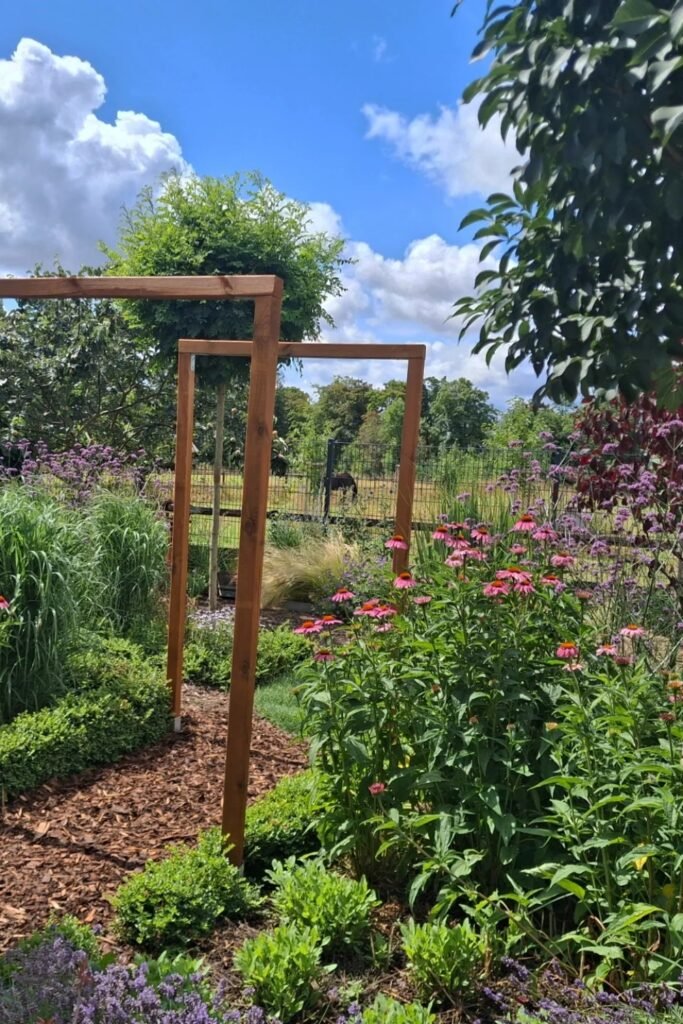
Simple wood frames can guide people through a garden without closing the space, which works well when flowers and grasses already bring plenty of texture.
The open rectangular shape adds structure to the walkway, while still letting the surrounding plants stay loose, natural, and full around each post.
Use this idea when you want a soft garden entrance, not a heavy covered trellis that blocks views or competes with the planting.
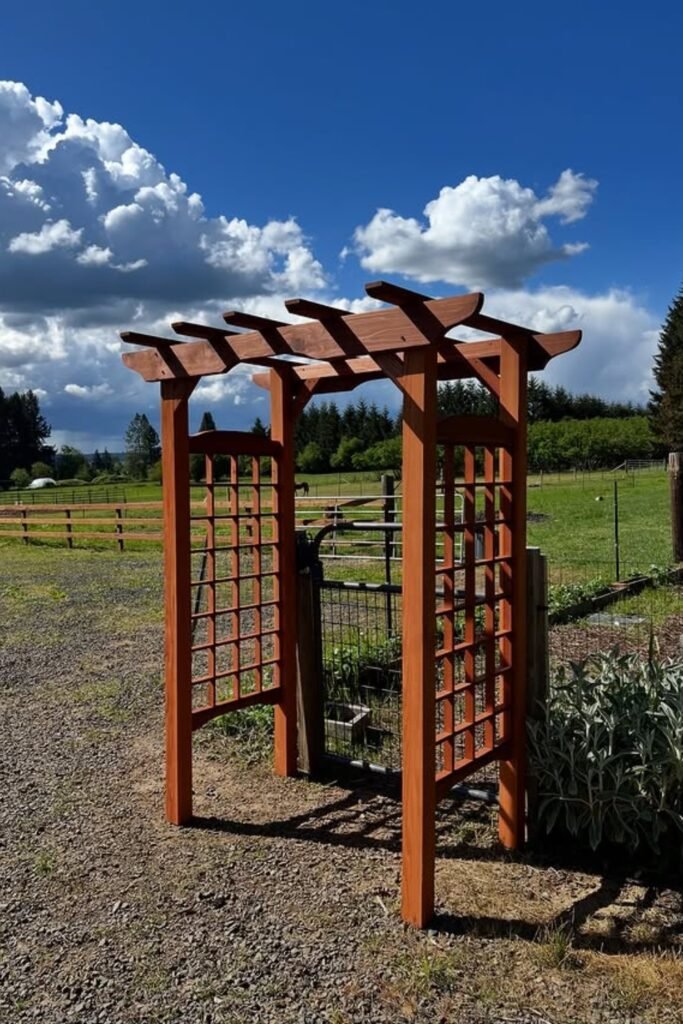
Add Gate Structure
A wood trellis over a gate gives even a practical garden entrance more presence, especially when the side panels can support climbers later.
The overhead beams make the opening feel intentional, while the lattice sides give vines a place to grow without leaning into the walkway.
Try this near vegetable beds, animal areas, or back garden gates where you want the entrance to feel useful but still decorative.
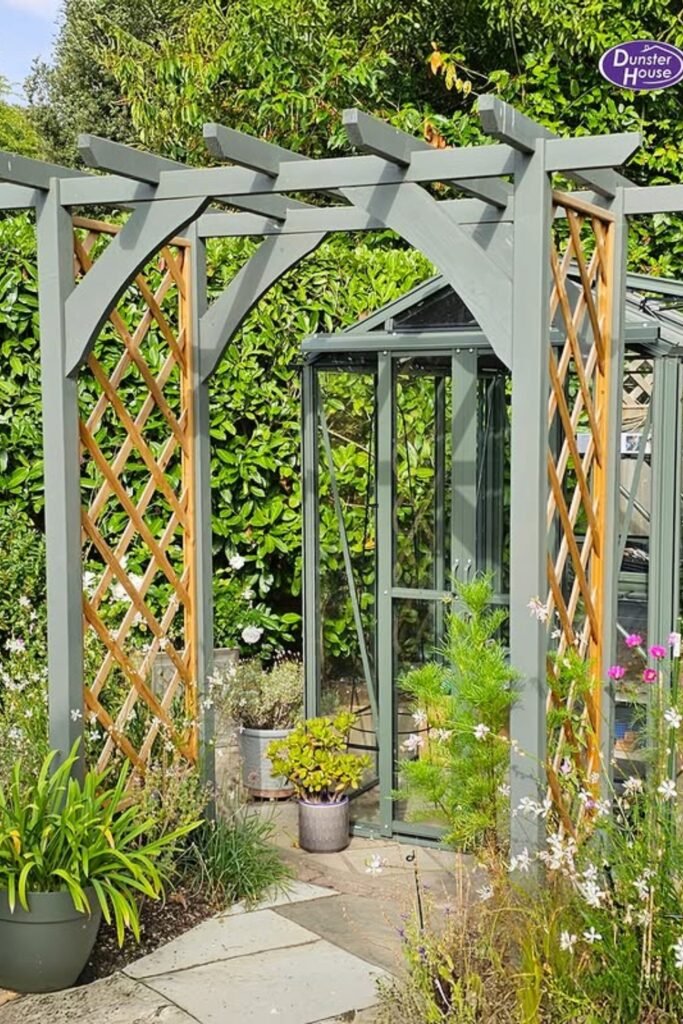
Paint the Frame
Paint can completely change a wood trellis, and this gray frame proves how color helps the structure match nearby sheds, greenhouses, or fences.
The natural lattice panels still keep a warm garden feel, while the painted posts make the whole entrance look more polished and planned.
Use this idea when raw wood feels too rustic, but you still want climbing plants to soften the sides over time.
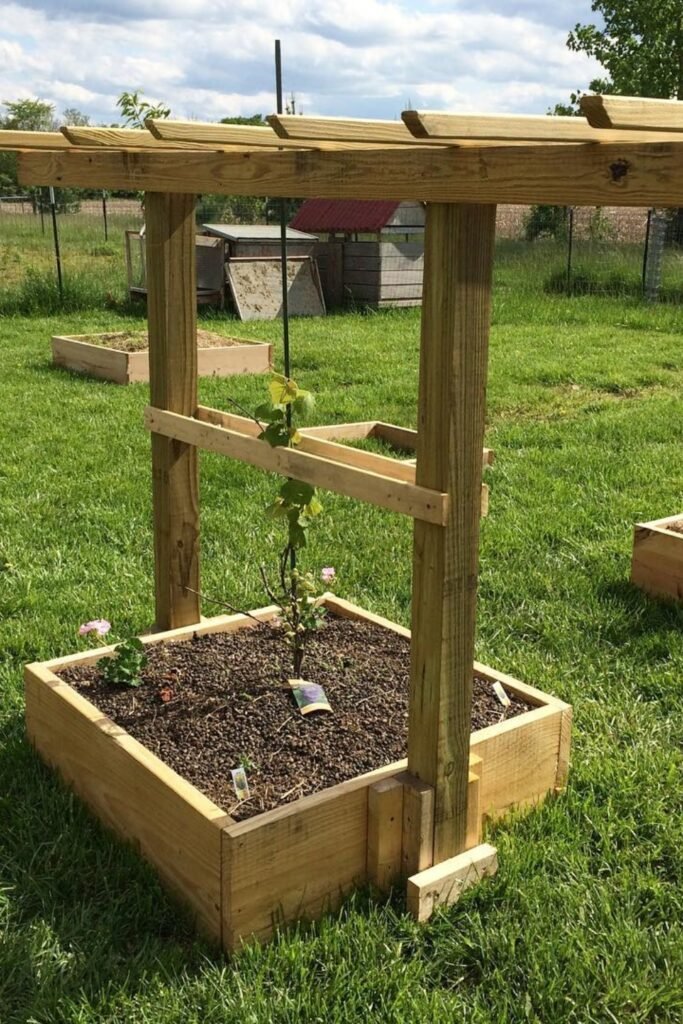
Combine Bed and Roof
A raised bed with an overhead trellis is useful when you want plants to grow upward instead of spreading across the lawn or garden path.
The thick posts give the frame strength, while the top slats offer support for vines as they climb above the planting box.
Copy this for beans, cucumbers, or flowering climbers, but build the base wide enough so the trellis stays steady in the wind.
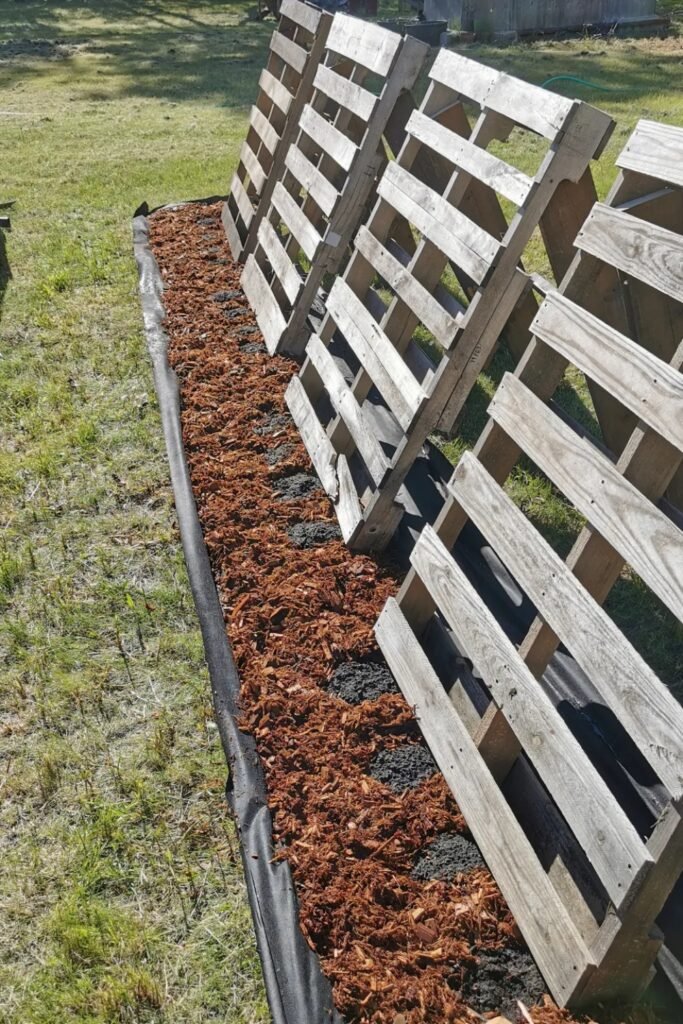
Reuse Pallet Panels
Old pallets can become a quick garden trellis when you need wide support without buying new lumber for every raised bed or growing row.
Lean each panel at a steady angle, then secure the bottom well so wind or heavy vines do not push the trellis forward later.
This idea suits beans, peas, or lighter climbers, but sand rough boards first so stems and hands do not catch on splinters.
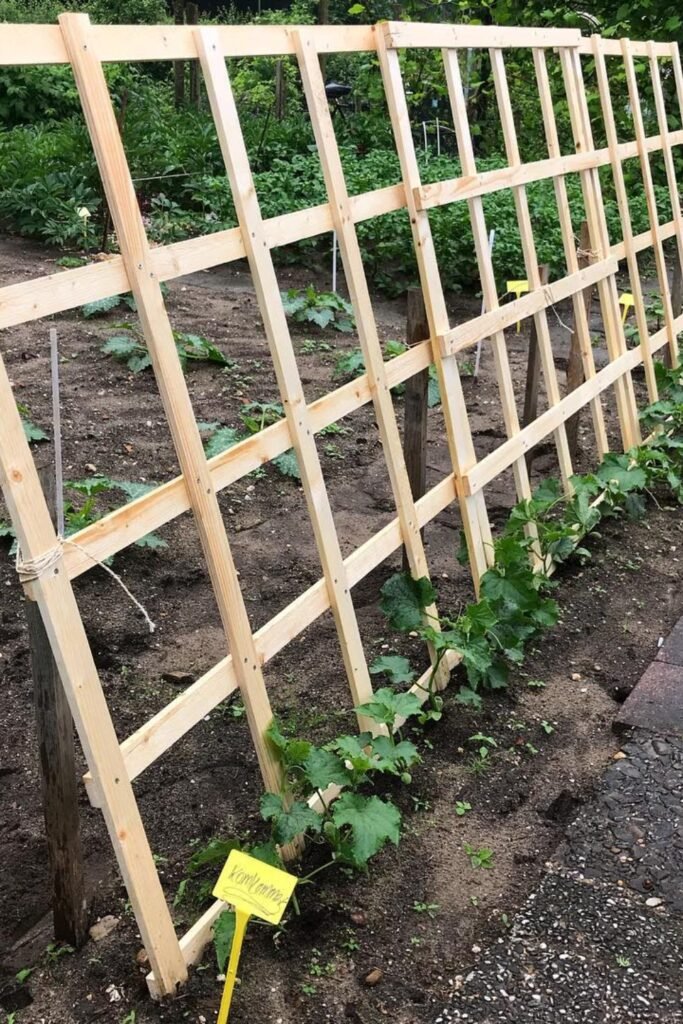
Build a Slanted Frame
A slanted wood trellis gives cucumber vines more room to climb while keeping the fruit easier to see, pick, and check for pests.
The angled shape also spreads weight better than a flat panel, especially when the frame has vertical supports behind it for extra strength.
Try this along a garden path, but leave enough walking space so the vines do not spill into the area you use daily.
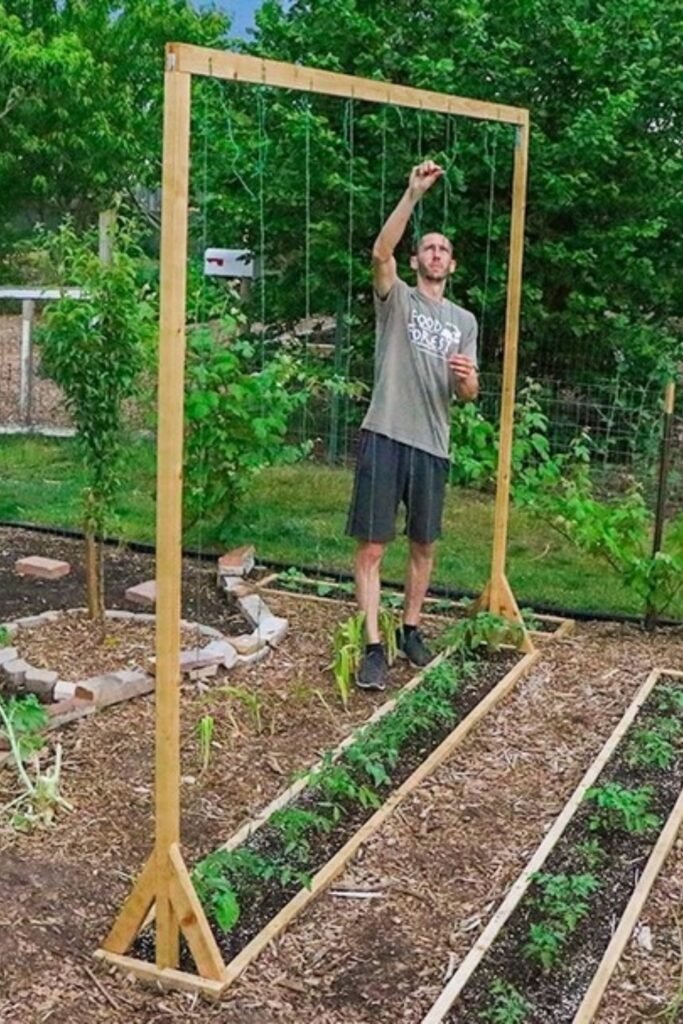
Stretch the Support
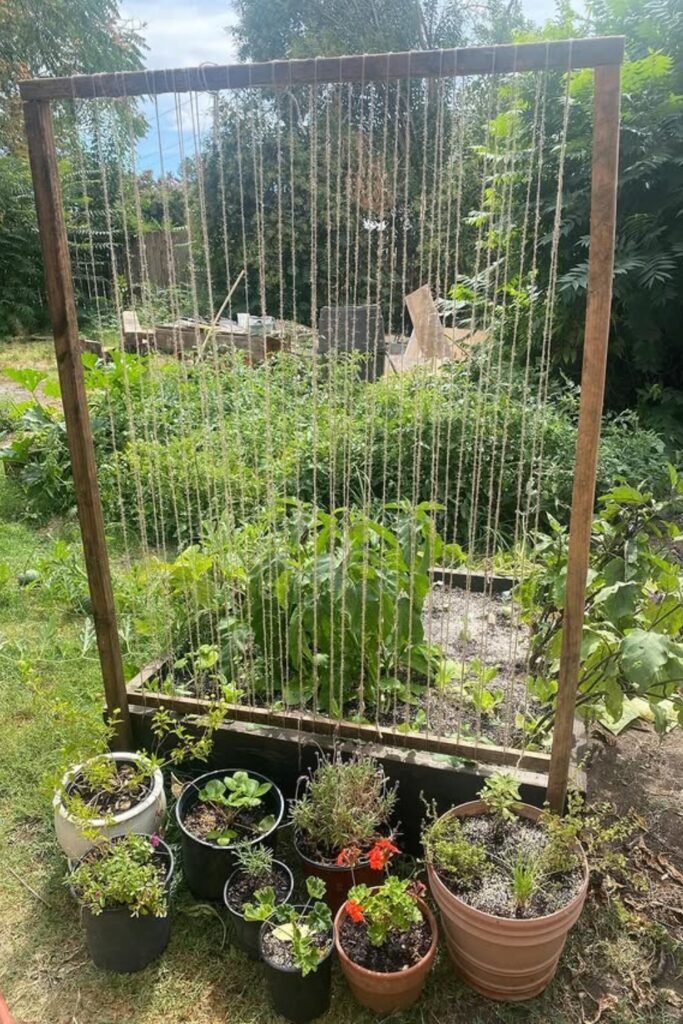
Tall wood frames with string lines are useful when you want a lightweight trellis for climbing vegetables without creating a bulky wooden wall.
The frame gives height, while the vertical strings guide vines upward and make it easier to train each plant from the bottom.
Use this for peas, beans, or cucumbers, and tighten the strings during the season because loose lines can sag under fast growth.
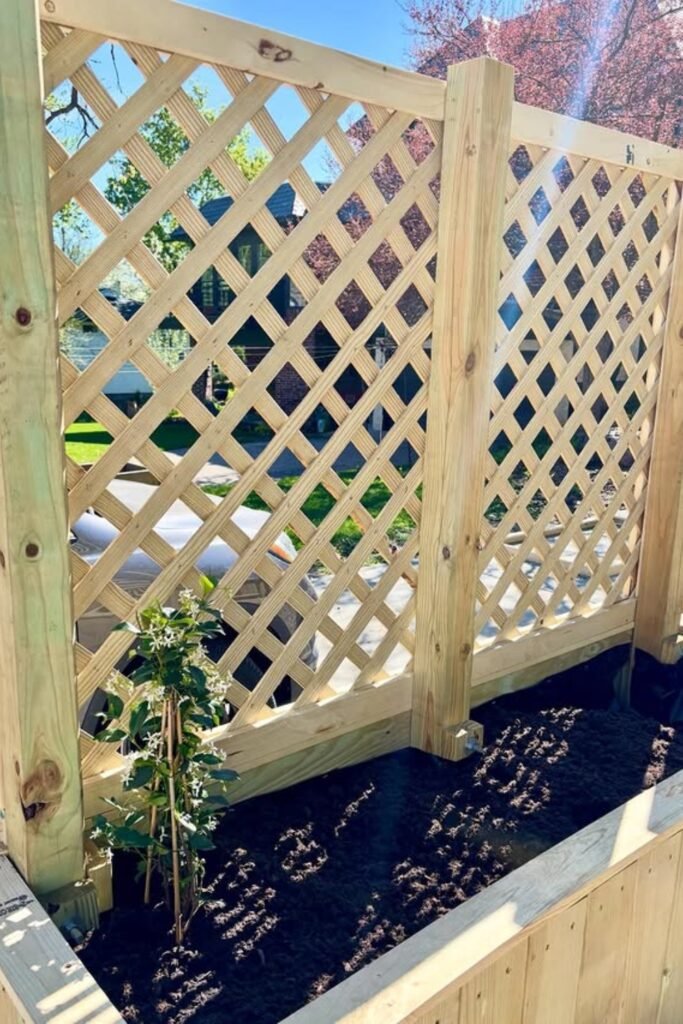
Add Privacy Lattice
Diamond lattice works well when your trellis needs to support plants and block a little view without turning the garden into a solid wall.
The strong posts make the panels feel secure, while the open pattern still lets light and airflow move through the planting area.
This is a smart choice for raised beds near patios, driveways, or neighbors where you want greenery and privacy together.
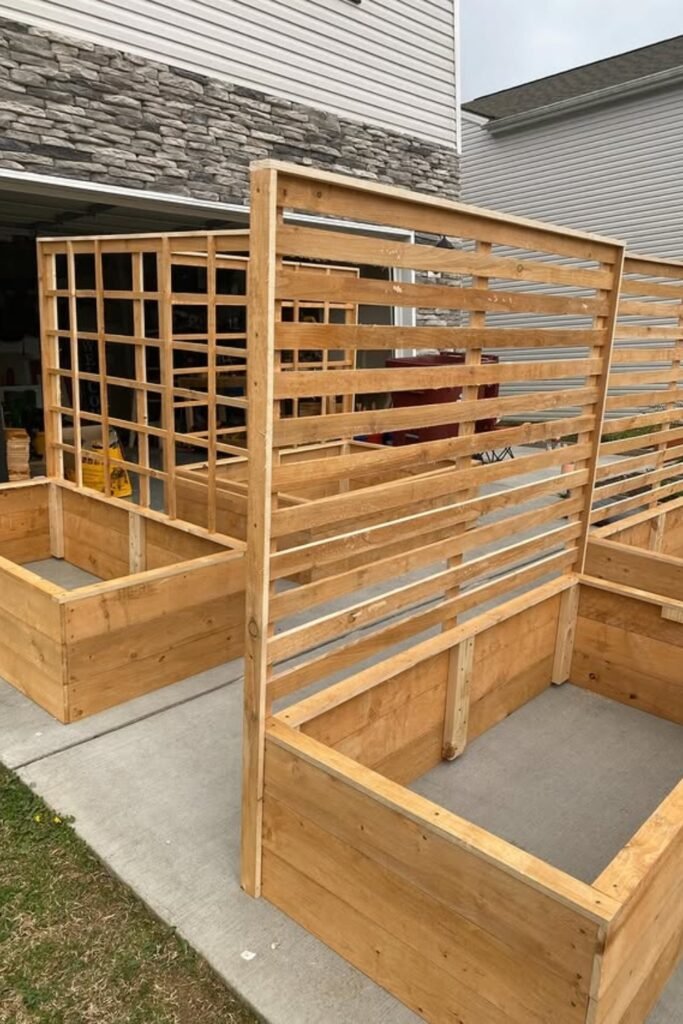
Create Patio Zones
Horizontal wood slat trellises work well when you want raised planters to feel like separate patio zones instead of random boxes on concrete.
The tall panels add privacy, block harsh views, and still leave slim gaps so light can move through the outdoor area.
Use this layout near a garage, driveway, or side patio where you need plants, structure, and screening in one clean build.
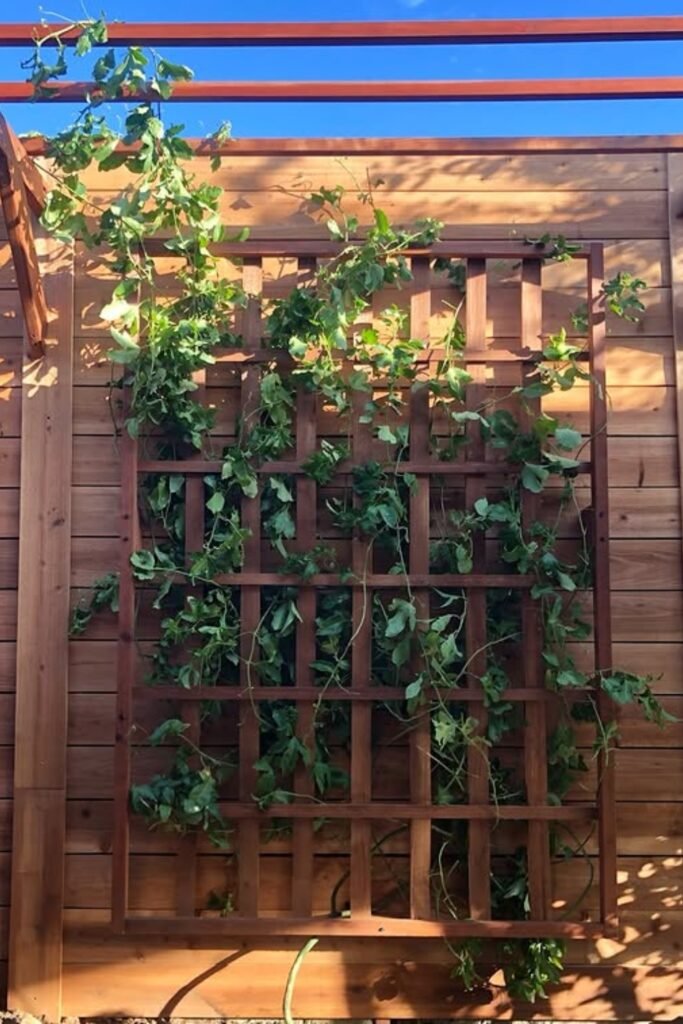
Fill a Flat Fence
A square wood grid can turn a plain fence into a climbing wall without forcing you to rebuild the whole backyard structure.
The vines get clear support points, while the matching wood tone helps the trellis blend into the fence instead of looking added later.
Try this behind peas, jasmine, or flowering climbers, and guide young stems early so the growth spreads evenly across the panel.
FAQs
What is the best wood to use for a DIY wood trellis?
Cedar is one of the best choices for a DIY wood trellis because it handles outdoor moisture better than many cheaper woods.
If you want a budget option, pine can also work, but you should seal or stain it before placing it outside.
For short-term garden projects, pallet wood or scrap wood can be useful, but check for rough edges, weak boards, and signs of rot before you build.
How do you keep a wood trellis from falling over?
Build the trellis for the full-grown plant, not the small plant you start with. Use strong posts, add cross supports, and anchor the base into soil, a raised bed, or a heavy planter box.
If you plan to grow cucumbers, beans, roses, or flowering vines, avoid thin decorative panels unless you add extra support behind them. Heavy plants and wind can pull weak frames out of place quickly.

Hi, my name is Ali Mehmood! I’m a passionate writer and DIY enthusiast who loves turning creative ideas into practical, hands-on projects.
I created this website to share inspiring, budget-friendly ideas that you can do yourself – whether it’s organizing your home, crafting something unique, or creating fun projects for kids and pets.
I believe DIY isn’t just a hobby – it’s a smart way to save money, reduce waste, and enjoy the satisfaction of making things with your own hands.
I’m excited to have you as part of this growing community, and I’ll continue bringing you helpful, realistic, and fun DIY ideas you can actually use.