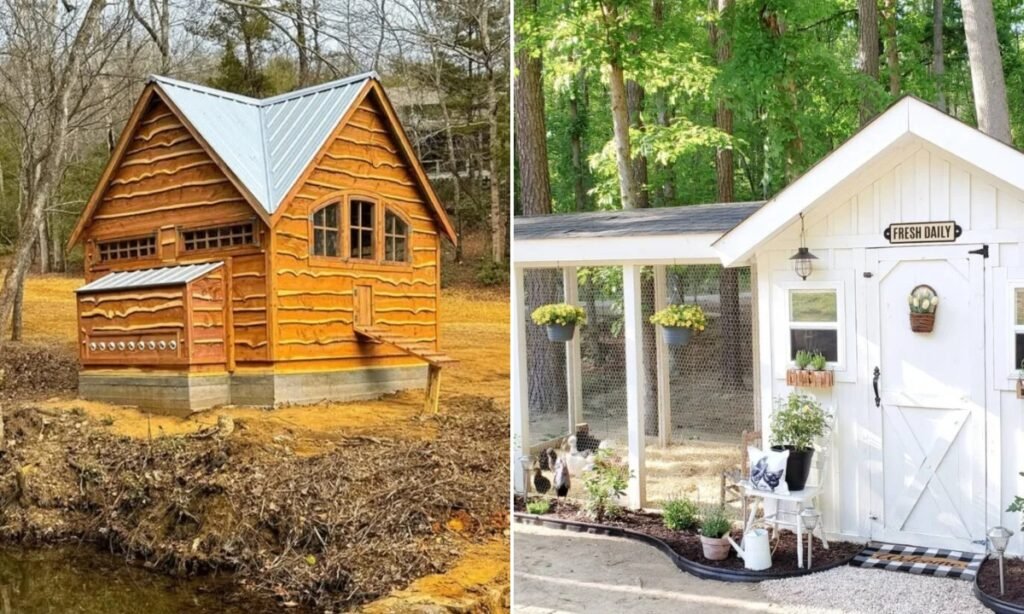
This post may contain affiliate links: read full affiliate disclosure.
Building a duck coop can look easy at first, but ducks can make a simple setup messy much faster than you expect.
They splash water, track mud, wet their bedding, and need a shelter that can handle moisture better than a basic chicken-style coop.
If the design is wrong, you may deal with bad smells, soggy flooring, poor airflow, and cleaning that feels like a daily headache.
That is why a good DIY duck coop should do more than just look nice in the backyard.
It should keep the sleeping area dry, give your ducks safe space, make cleaning easier, and protect them from predators at night.
Small details like drainage, ventilation, low entrances, strong wire, and a separate water area can make a big difference.
In this article, I am going to share DIY duck coop ideas that help you build a cleaner, safer, and more practical home for your backyard ducks.
Let’s dive in!

Cottage Coop
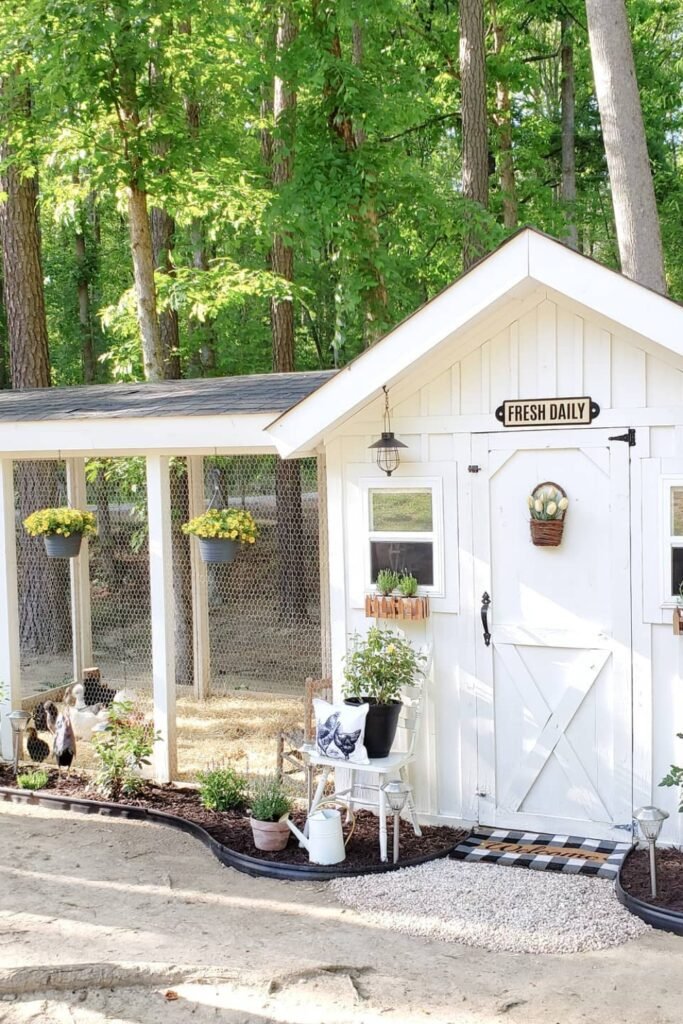
Make the duck coop feel like part of your yard by pairing a clean shelter with a covered run and simple landscaping around it.
This setup works well because the roofed run gives ducks shade, while the enclosed wire sides help keep the area safer.
The gravel path and garden edging also help control mud near the entrance, which makes the coop look cleaner after rainy days.
Pondside Shelter
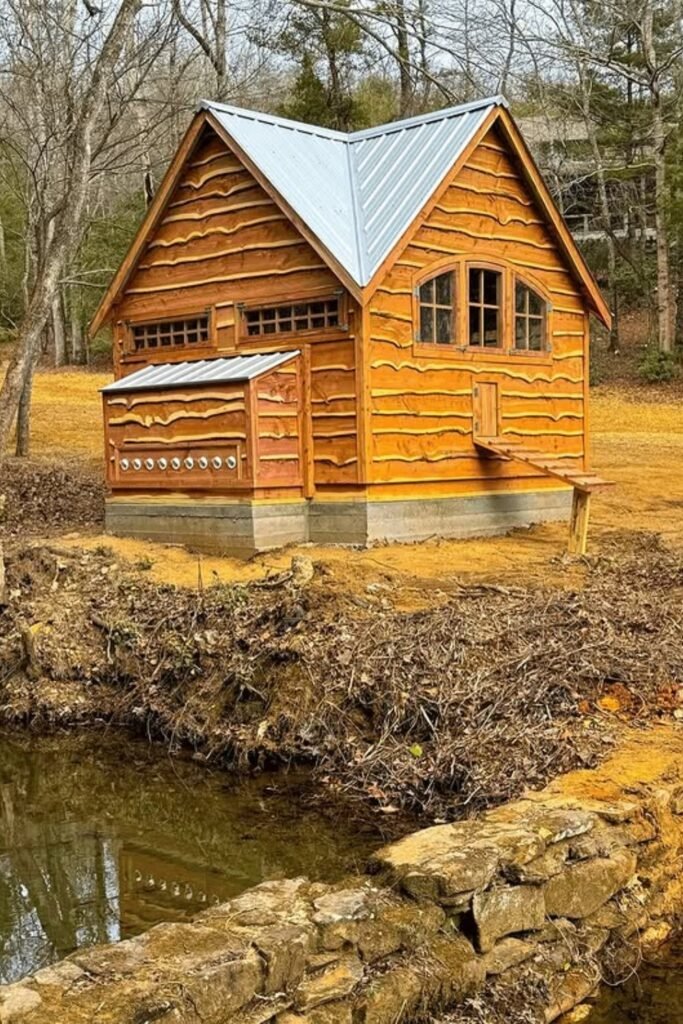
Place the duck house near water only when the sleeping area can stay raised, dry, and protected from the damp pond edge.
This cabin-style coop works because the structure sits higher than the waterline, so ducks can enjoy the pond without wet bedding.
Use this idea when you want a natural duck setup, but still need the main shelter to stay clean and comfortable.
Starter Setup
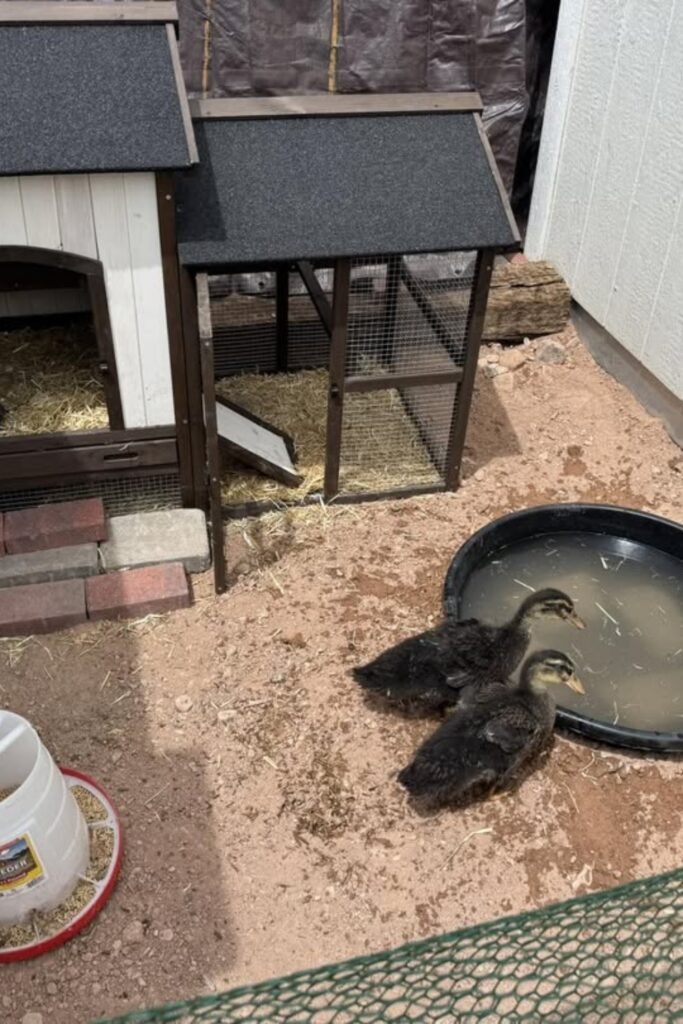
Start with a simple duckling area where you can easily see the shelter, feeder, bedding, and shallow water dish in one place.
This layout helps during early care because everything stays close, and you can quickly notice spills, mess, or wet bedding.
Keep the water dish away from the sleeping corner, so the ducklings still have a dry place to rest after splashing.
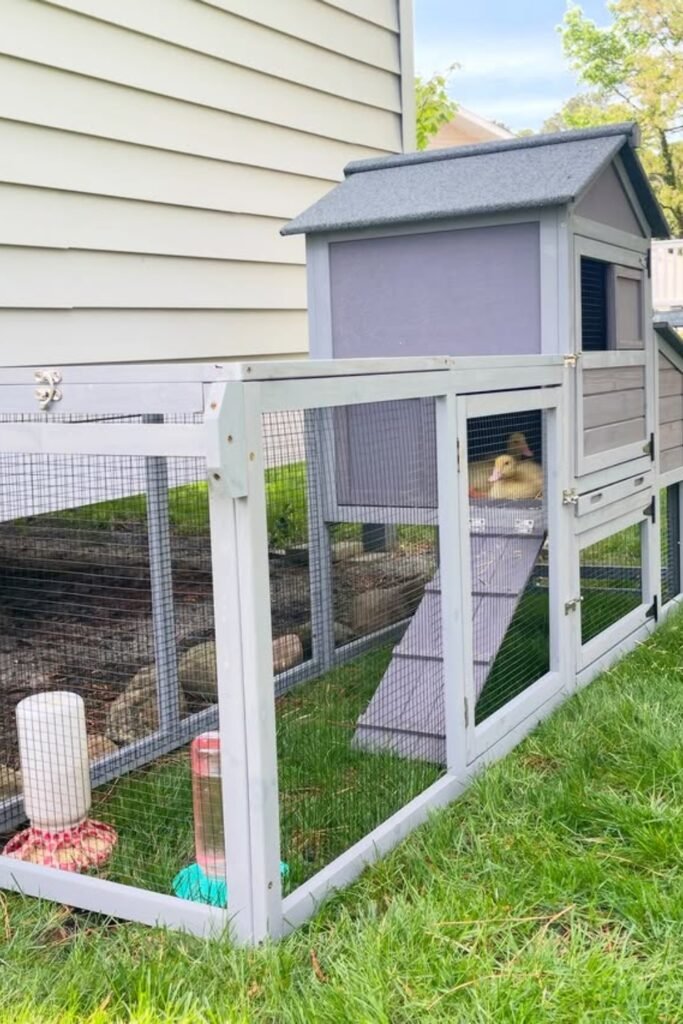
Attached Run
Choose an attached run when you want ducks to move outside safely without giving them full access to the whole backyard.
The raised house gives them a protected night space, while the wire run adds airflow, grass access, and daytime movement.
Add a low textured ramp because ducks need steadier footing than chickens, especially when the ramp gets damp or muddy.
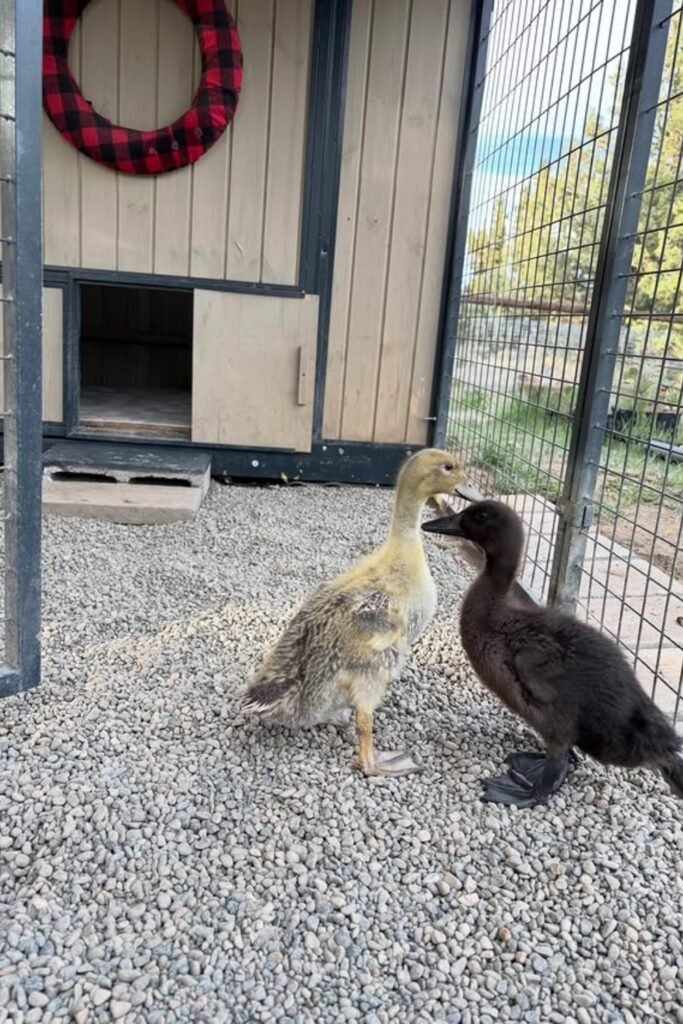
Gravel Floor
Use gravel under the covered run when your biggest problem is wet ground, muddy feet, and bedding that feels dirty too quickly.
The small stones help water drain down instead of sitting on the surface, which keeps the duck area cleaner after splashing.
Pair this with a low door and secure wire panels, so ducklings can move safely while the coop stays easier to maintain.
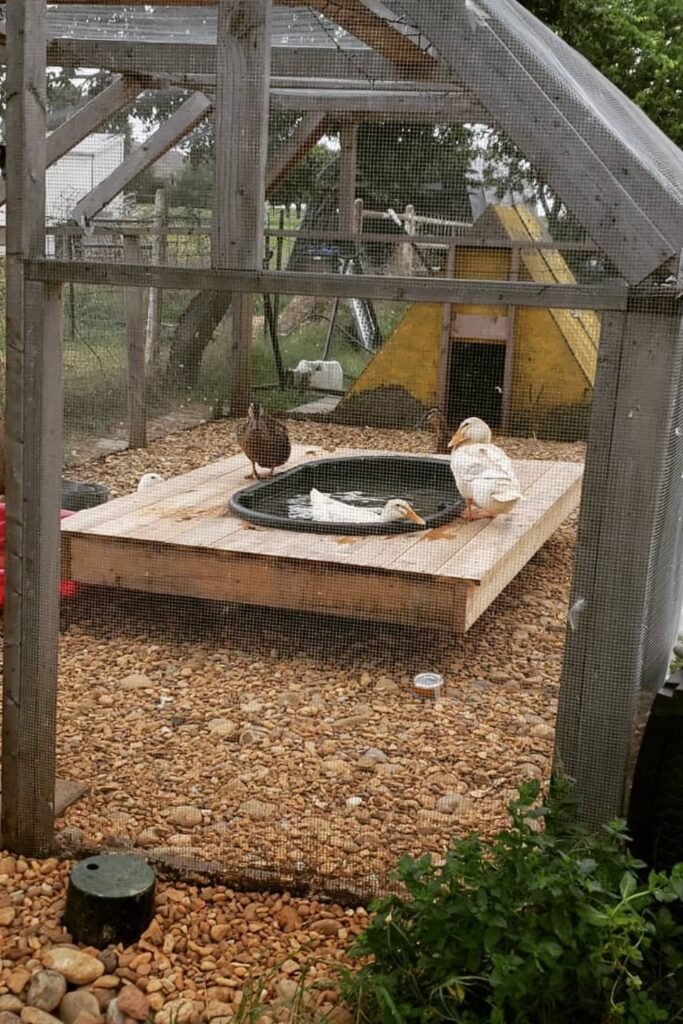
Pool Platform
Build the pool area on a raised platform when you want ducks to splash without turning the whole run into wet mud.
The gravel base underneath helps drain extra water, while the wire-covered frame keeps the space safer from predators and wandering animals.
Keep the duck house separate from this wet zone, so the sleeping area stays dry even when the pool gets used all day.
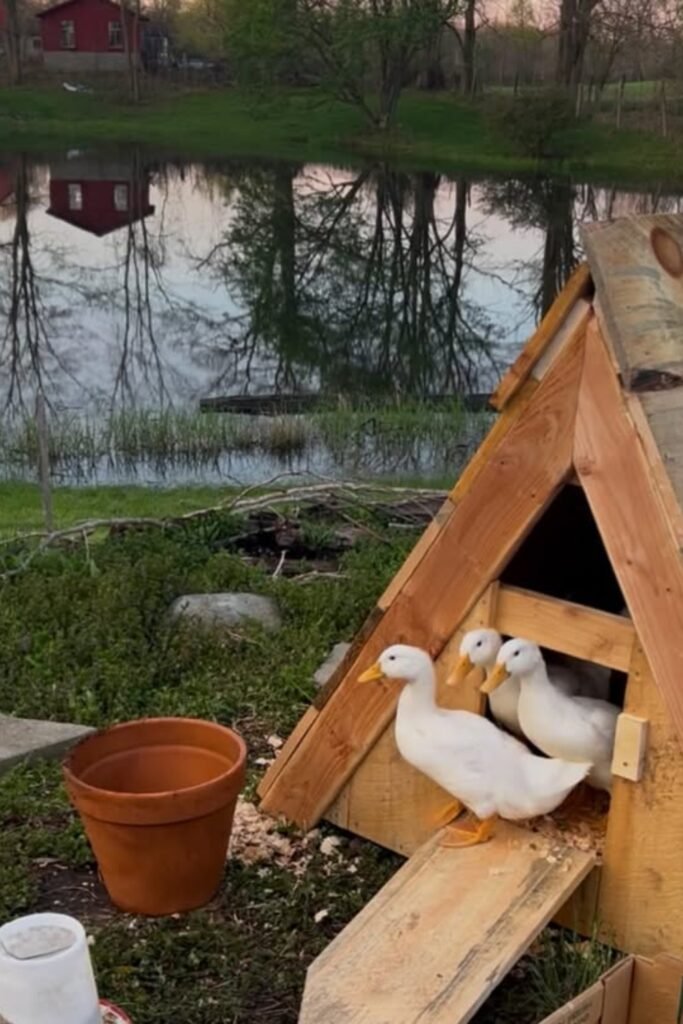
Pondside A-Frame
Place an A-frame near the pond only when the entrance stays dry, raised, and clear enough for ducks to walk in safely.
This simple wooden shelter gives ducks quick access to water, but the sleeping area still needs straw and good airflow.
A wider ramp helps heavier ducks move in and out without slipping, especially when the ground near the pond gets damp.
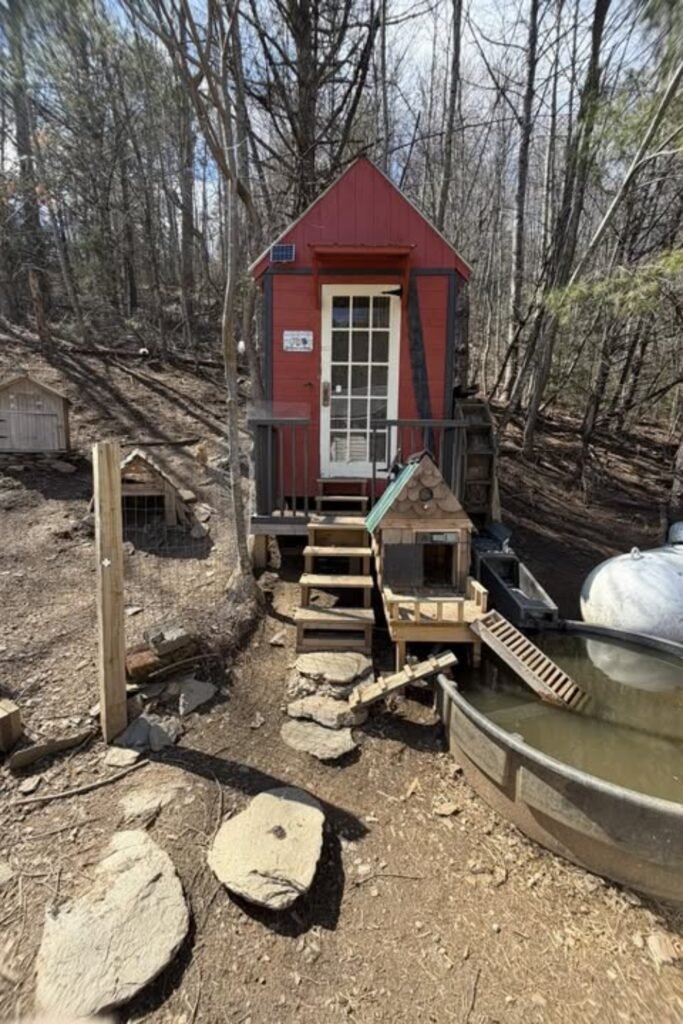
Raised Cabin
A raised cabin setup works best on uneven land because it lifts the main shelter away from mud, runoff, and wet ground.
The steps, small ramps, and separate water tub create different zones, so ducks can rest, move, and splash without crowding.
Use this idea when your backyard has slopes or woodland edges, but keep fencing strong because predators often travel through those areas.
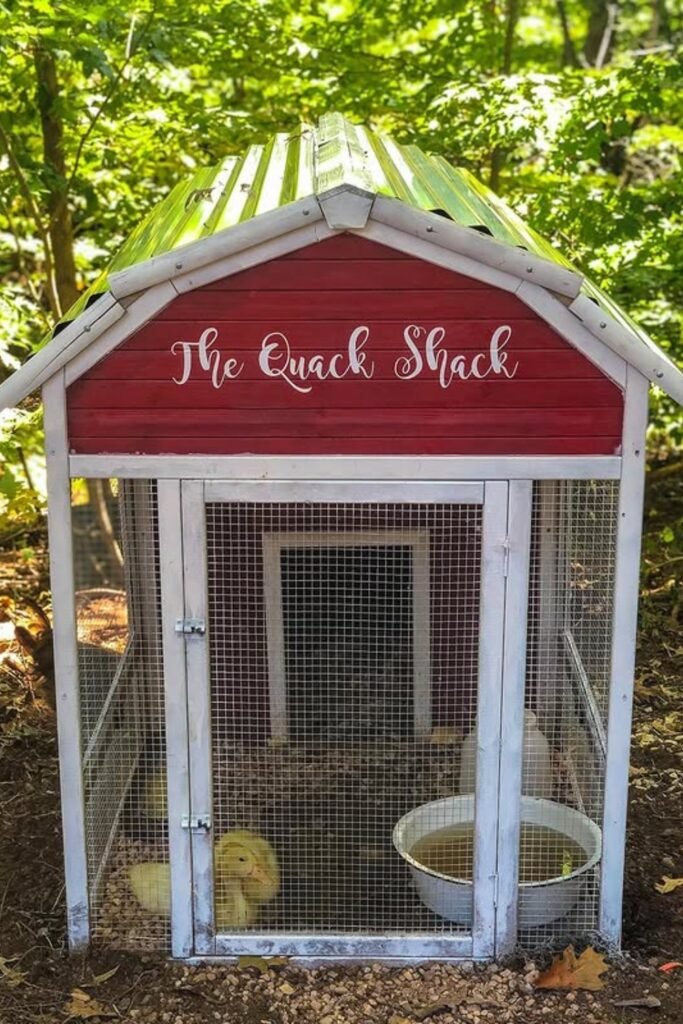
Compact Shack
A compact coop like this works well when you need one protected duck zone that combines shade, airflow, and a small water spot inside safely.
The front mesh keeps the space open enough for ventilation, while the solid back shelter gives ducklings a darker resting corner during warm afternoons outside.
Keep the bowl shallow and easy to remove, because small coops get messy fast when water sits too close to bedding near the doorway area.
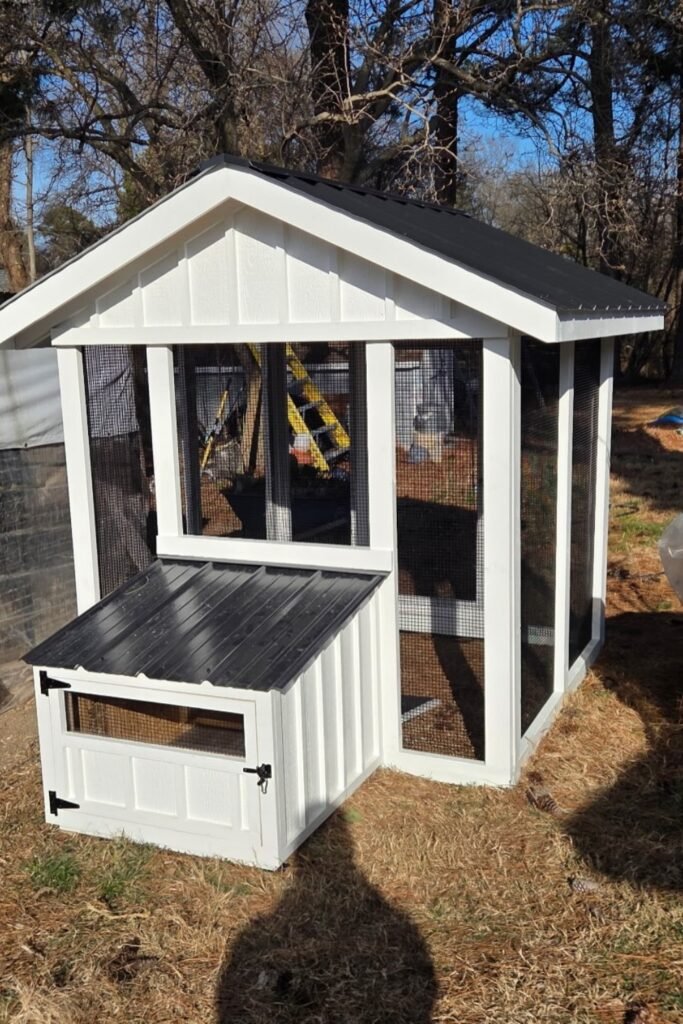
Walk-In Shelter
A walk-in style coop makes daily cleaning less frustrating because you can reach the bedding, doors, water area, and corners without crawling inside the run.
The tall screened walls bring in airflow, while the roof and lower box give ducks a protected place during rain or harsh afternoon sun spells.
Use strong hardware cloth on every open side, since beautiful open coops still need real protection from raccoons, dogs, and nighttime predators around the yard.
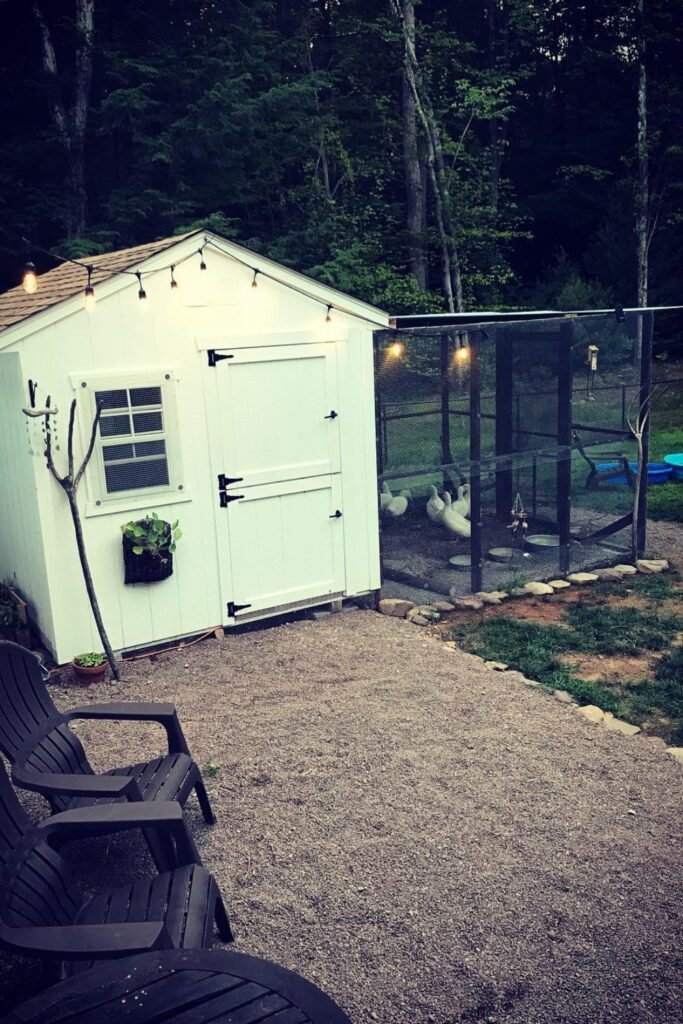
Backyard Coop
Turn the duck coop area into a backyard feature by adding a clean shed, attached run, gravel patio, and simple seating nearby for daily checks.
This layout works because the ducks stay contained in the run, while the gravel ground helps reduce mud around the main entrance after rainstorms outside.
Keep the string lights decorative, not your main safety plan; secure latches and tight wire matter more once the sun goes down behind wooded areas.
Long Run
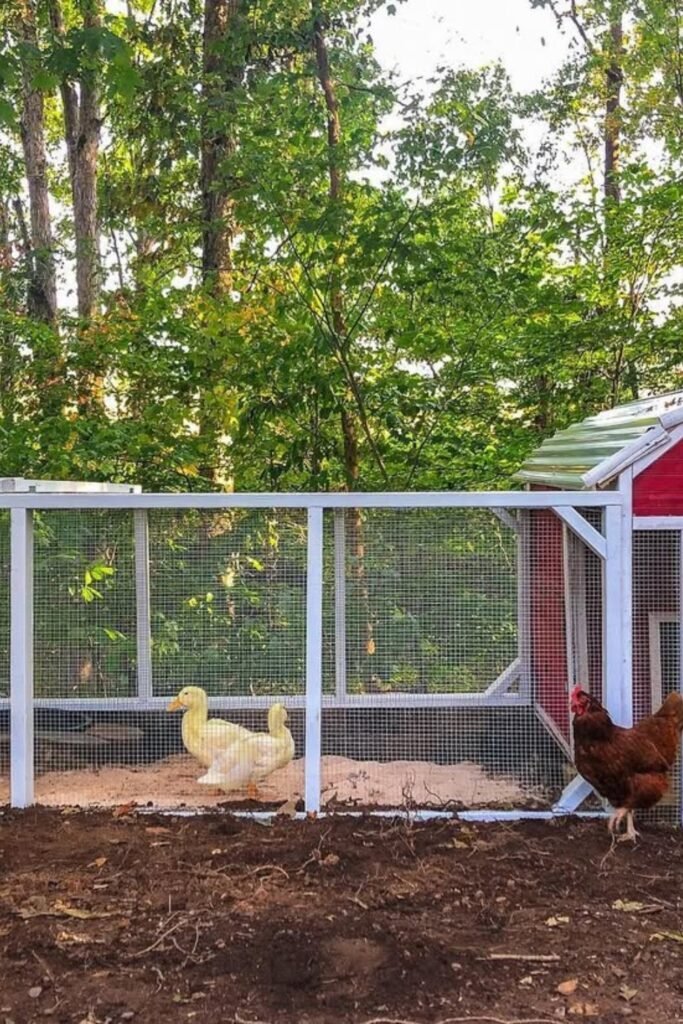
Give ducks more walking room by stretching the run beside the shelter instead of making the sleeping house do all the work for them daily.
The long wire section lets them move, forage, and dry off outside, while the small coop stays focused on rest and nighttime protection inside only.
Add a covered corner or shade panel if the run sits under trees, so rain and falling leaves do not soak everything during wet weeks.
Low Ramp
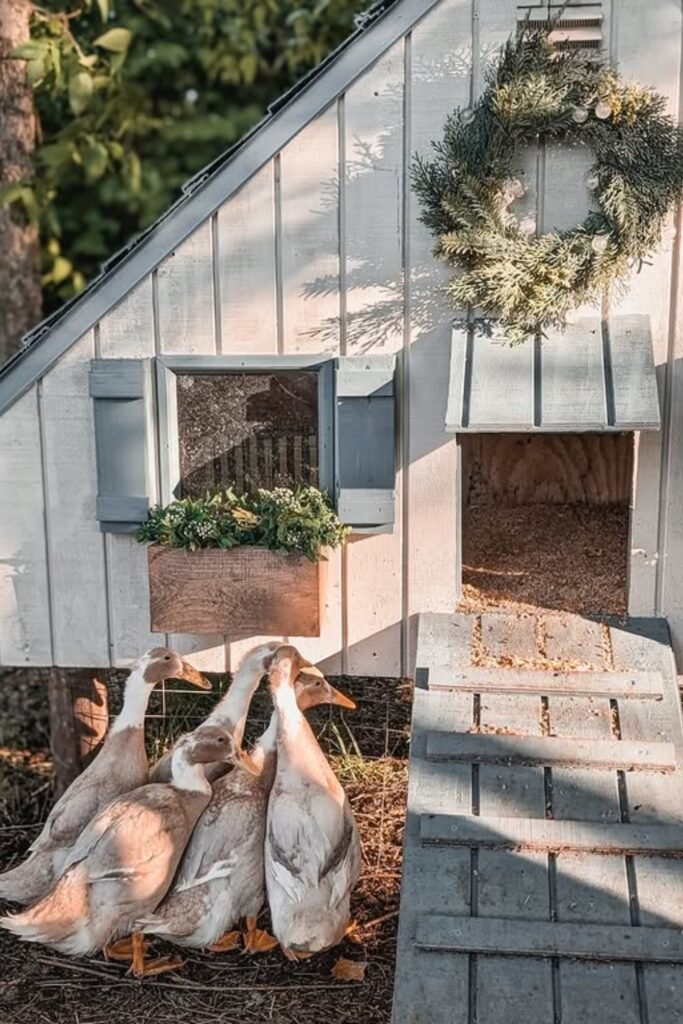
Make the entrance easy for ducks by using a wide, textured ramp instead of a steep step that only works well for chickens backyard coops.
The raised doorway keeps bedding tucked inside, while the ramp gives heavier ducks a safer path when their feet are wet from water bowls nearby.
Add grooves or small cleats across the board, so ducks can grip better during rain, mud, or early morning moisture around the coop entrance area.
Rustic Shelter
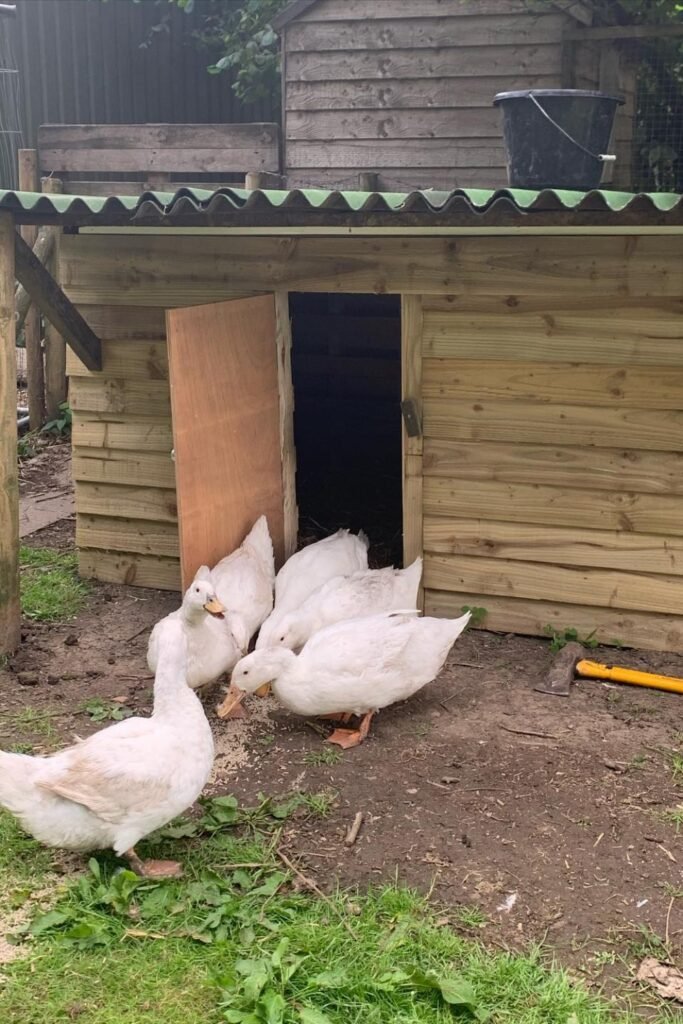
A simple wooden shelter can work well when the main goal is shade, dry bedding, and enough doorway space for several ducks at once daily.
The corrugated roof extends forward, which helps protect the entrance from rain while giving ducks a covered spot before they step inside during wet weather days.
Keep the ground in front firm with gravel or pavers, because soft soil around feeding areas can turn muddy very quickly after ducks gather there.
Pond House
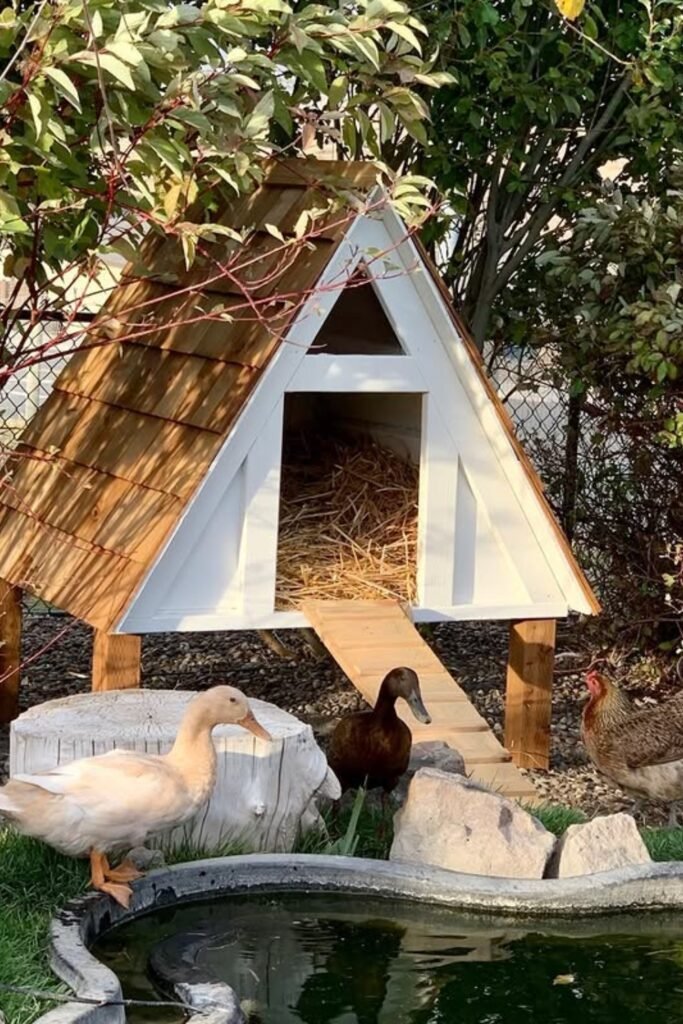
Set the duck house slightly above the pond area, so ducks can swim nearby without dragging constant moisture into their bedding every single day outside.
The raised A-frame keeps the sleeping space off damp ground, while the short ramp still feels simple for ducks to use after water time daily.
Place rocks near the pond edge to reduce slippery mud, but keep enough open space for ducks to enter safely and step out safely afterward.
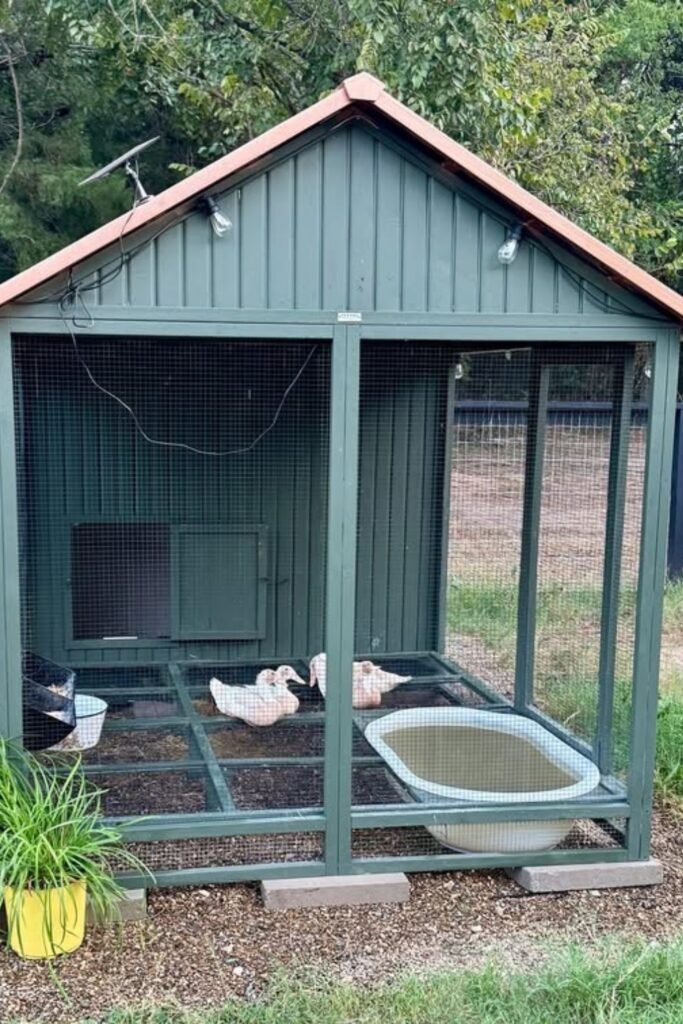
Screened Coop
A screened coop like this gives ducks fresh air while still keeping the water tub, feeder, and resting area inside one protected zone for nights.
The raised mesh floor helps the mess fall through, which can make cleaning easier if you place drainage or gravel underneath the entire coop frame properly.
Keep the pool on one side, so splashing stays away from the darker shelter corner where ducks need dry rest after active daytime water play.
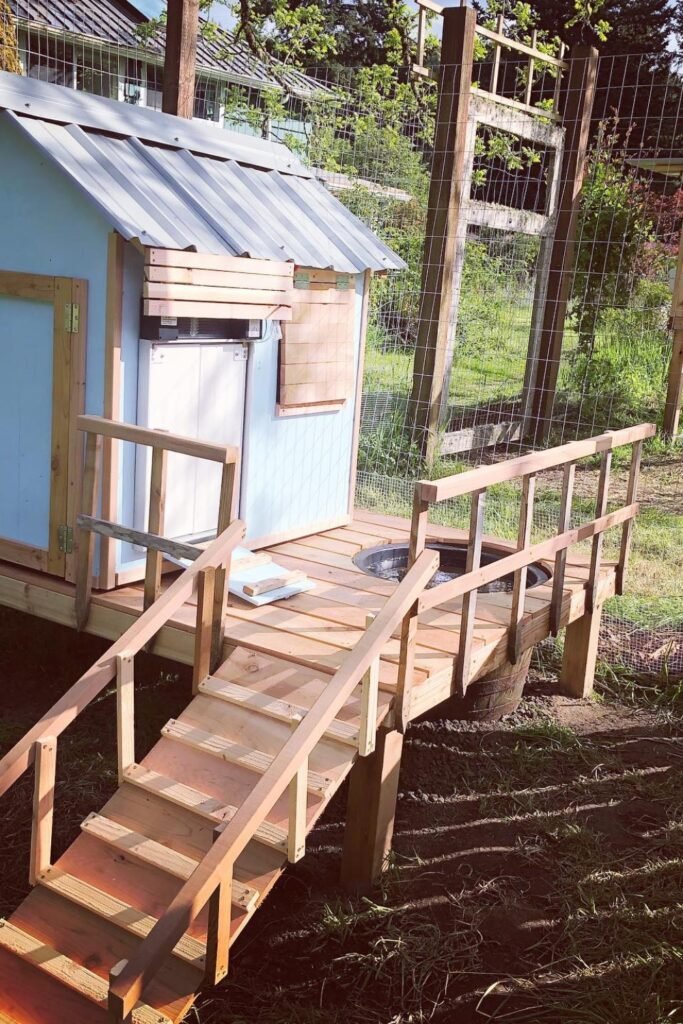
Raised Deck
Build a raised deck when you want the duck house, water tub, and entrance path lifted away from soggy ground after rain.
The stairs and railings make the setup feel structured, while the metal roof helps protect the sleeping area from direct weather.
Keep the water tub on the outer platform, so ducks can splash without soaking the bedding inside the main house every day.
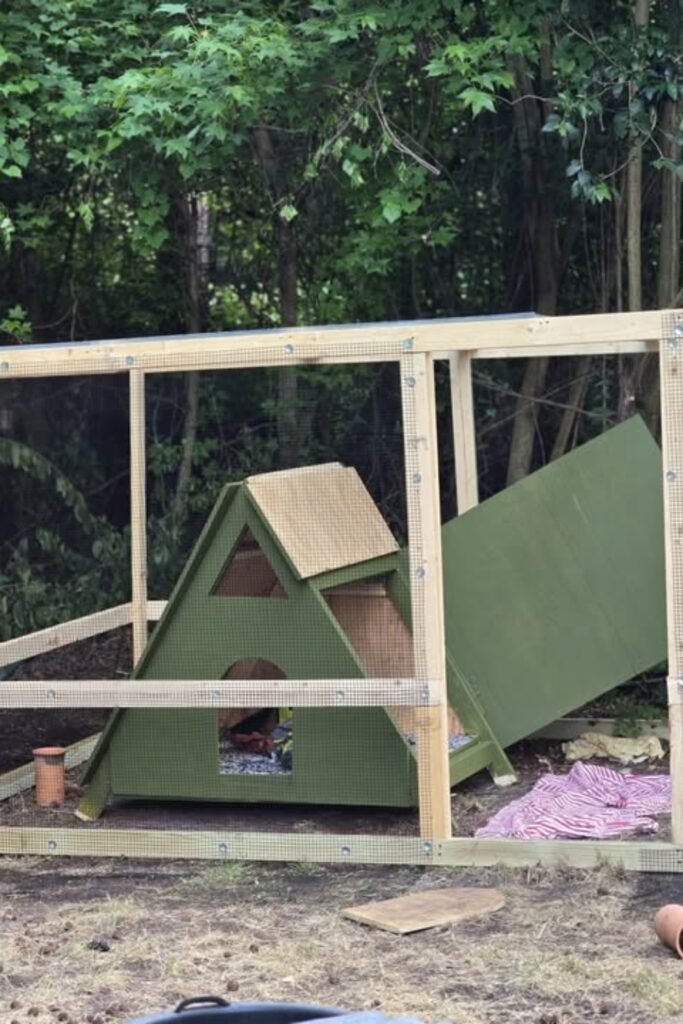
Divided Run
Separate the sleeping shelter from the open run when you need ducks to move freely without making every corner messy at once.
The small A-frame gives them a darker resting spot, while the larger fenced section allows airflow, walking room, and outdoor activity.
Use this layout if your yard has wooded edges, but check every wire gap because predators can test weak spots overnight.
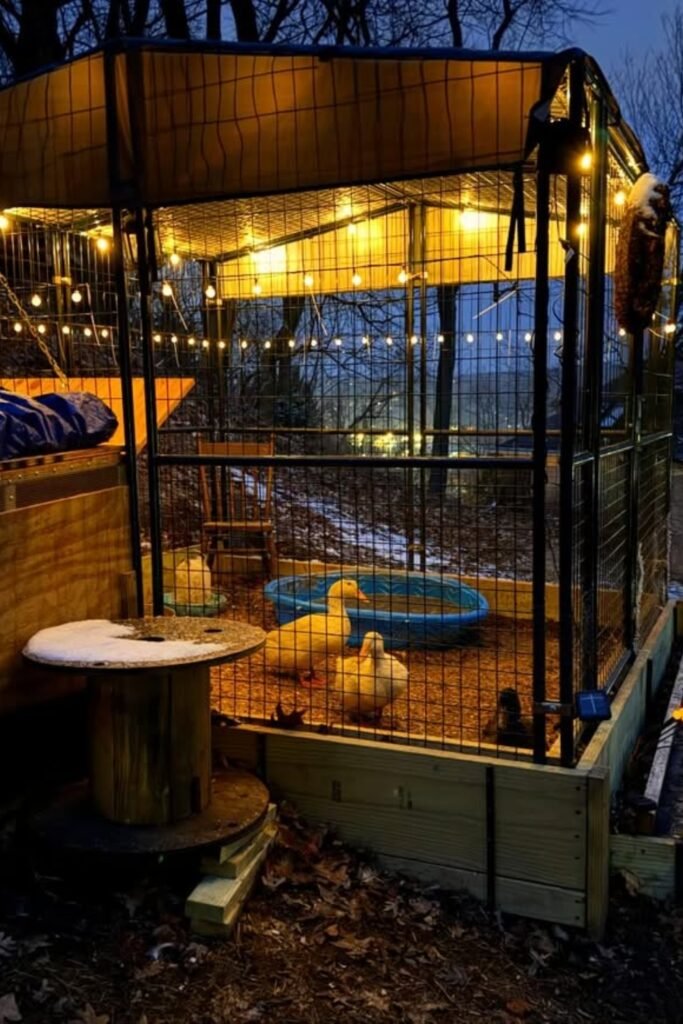
Night Run
Lighting can make a duck run look cozy, but the real value here is the covered frame and secure sides at night.
This setup keeps ducks contained on a sloped yard, while the roof helps block rain, snow, and falling debris from above.
Add lights only after safety comes first, because strong wire, firm posts, and locked doors matter more than decoration.
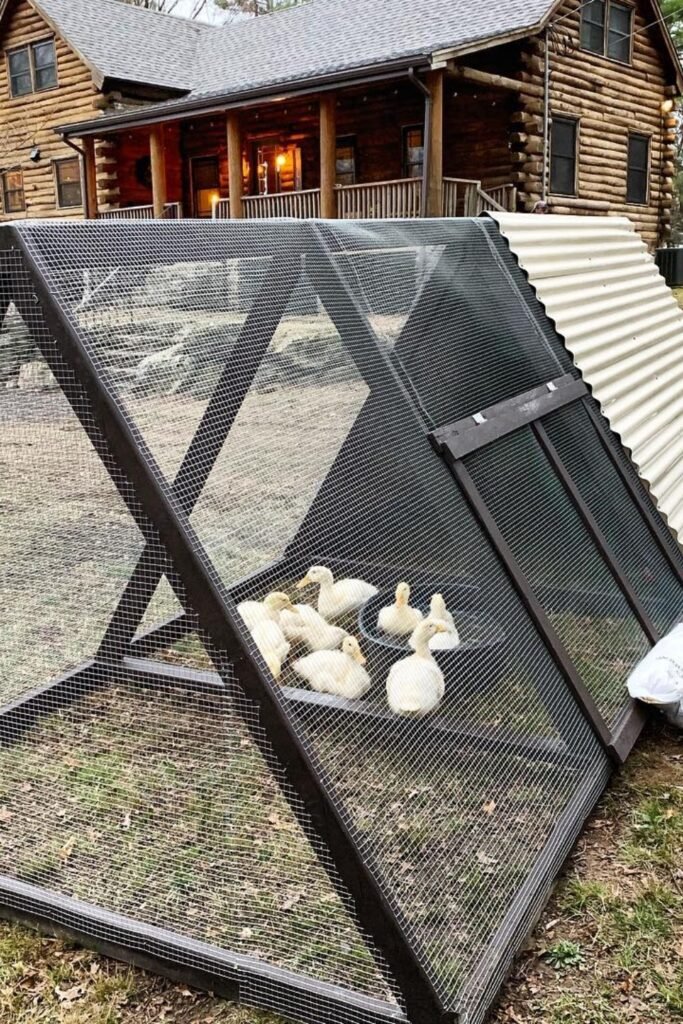
Hoop Shelter
A hoop-style run gives ducks a wide walking space without building a full wooden coop from the ground up first.
The curved roof shape helps rain slide off, while the mesh sides keep the space airy and easy to watch during daytime.
This works well for a small flock, but add a dry covered corner so ducks have shelter when wind or rain hits.
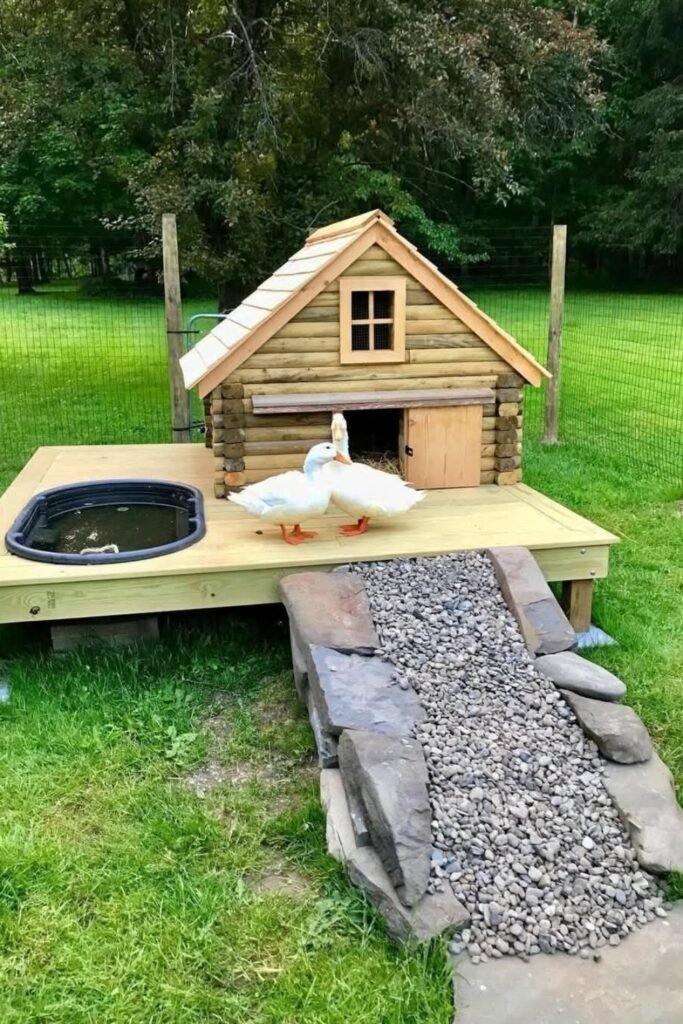
Gravel Walkway
A gravel walkway solves one of the messiest duck problems by giving wet feet a cleaner path between water and shelter.
The raised platform keeps the house and pool above the grass, while the stone ramp drains better than plain soil.
Use larger border rocks along the sides, so the gravel stays in place when ducks walk, splash, and shake off water.
FAQs
What should I focus on first when building a DIY duck coop?
Start with the parts that solve daily problems: dry bedding, easy cleaning, safe fencing, and good airflow.
Ducks splash water and create more moisture than chickens, so a cute coop can become messy fast without drainage.
Keep the water area away from the sleeping space, use strong wire for protection, and make the entrance low enough for ducks to use comfortably.
How do I keep a duck coop from getting muddy and smelly?
Place water bowls, tubs, or small pools outside the main sleeping shelter, then add gravel, sand, pavers, or a raised platform where ducks walk most.
Also make sure the coop has ventilation, because trapped moisture can make bedding smell faster. A simple design that stays dry will always be easier to manage.

Hi, my name is Ali Mehmood! I’m a passionate writer and DIY enthusiast who loves turning creative ideas into practical, hands-on projects.
I created this website to share inspiring, budget-friendly ideas that you can do yourself – whether it’s organizing your home, crafting something unique, or creating fun projects for kids and pets.
I believe DIY isn’t just a hobby – it’s a smart way to save money, reduce waste, and enjoy the satisfaction of making things with your own hands.
I’m excited to have you as part of this growing community, and I’ll continue bringing you helpful, realistic, and fun DIY ideas you can actually use.