This post may contain affiliate links: read full affiliate disclosure.
Cheap DIY water fountains look easy until you start building one and realize the small details matter.
The pot may leak, the pump may feel too weak, the water may splash outside the bowl, or the whole setup may look more like a random container than a finished garden feature.
That is where most beginners get stuck because they do not just need pretty ideas; they need simple fountain ideas that actually work in a real patio, porch, balcony, or backyard.
A good water fountain does not have to cost much or need complicated plumbing.
You only need the right container, a basic pump, smart placement, and a few styling choices that make cheap materials look intentional.
In this article, I am going to share easy and cheap DIY water fountain ideas that can help you create a relaxing water feature without making the project feel confusing or expensive.
Let’s dive into it!
Tiered Pot Fountain
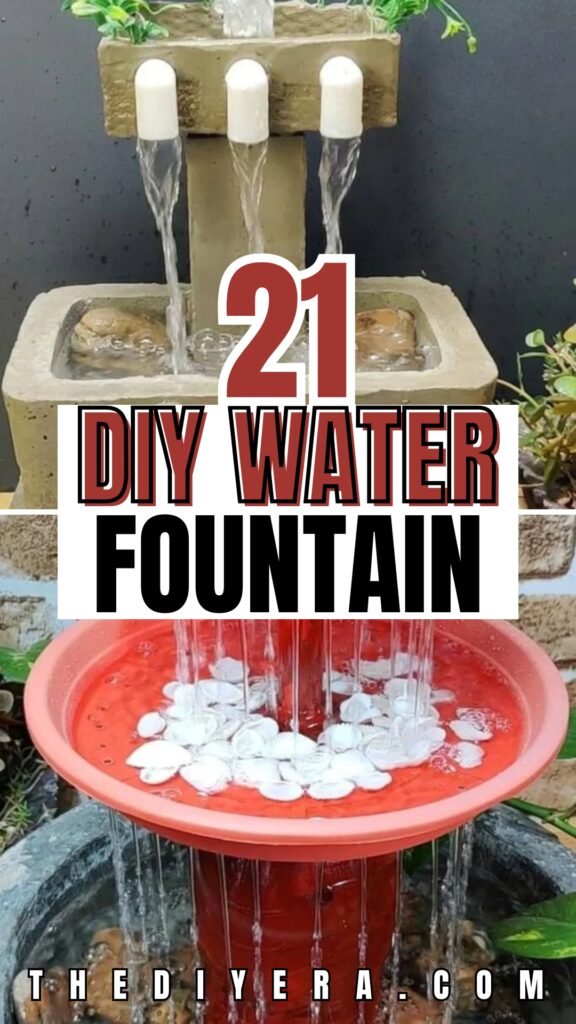
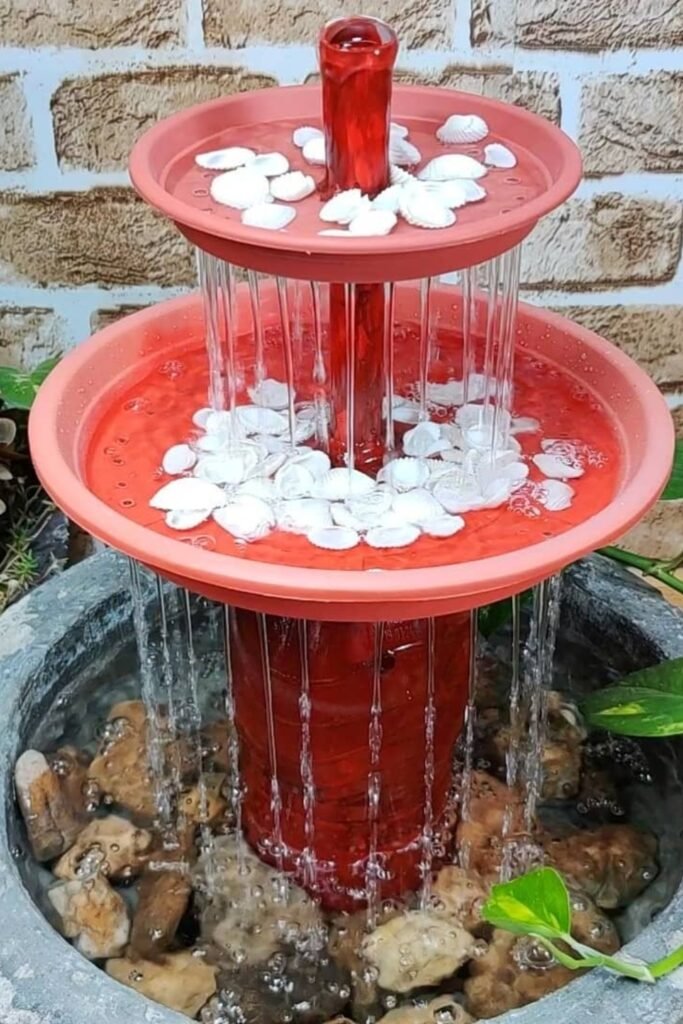
A tiered pot fountain works well when you want visible water movement without building a complicated backyard feature from scratch or buying expensive pieces online.
Use shallow saucers, a center pipe, and a hidden pump so each level sends water down in thin, clean streams without needing difficult tools outside.
White shells or smooth stones on the trays help cover empty space and make the cheap stacked design feel more decorative beside nearby plants too.
Indoor Bowl Fountain
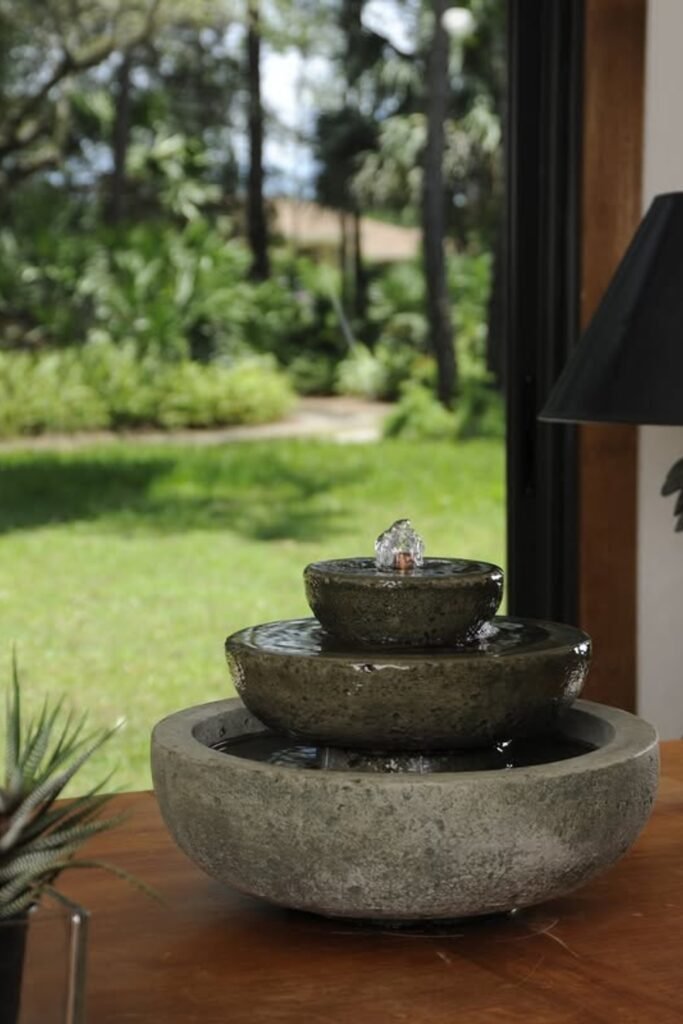
A low bowl fountain is better when you want a soft water sound instead of a dramatic outdoor splashy feature near your window corner inside.
Stack wide stone-style bowls from large to small, then keep the pump flow gentle so water moves without jumping over the edges during daily use.
This setup suits a covered patio, sunroom, or indoor table where you want the fountain to feel quiet, polished, and easy to maintain every week.
Multi-Spout Fountain
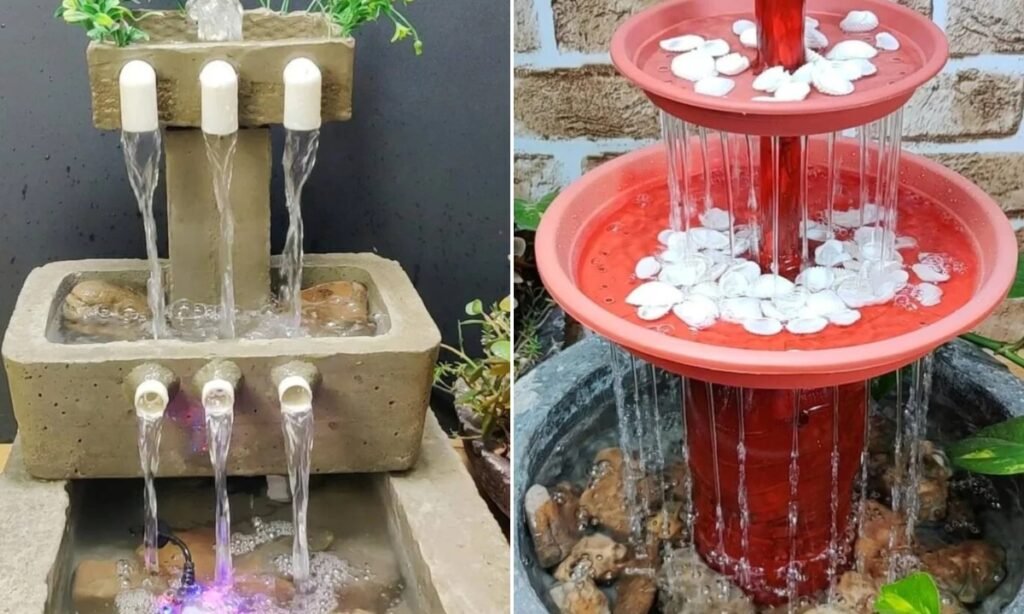
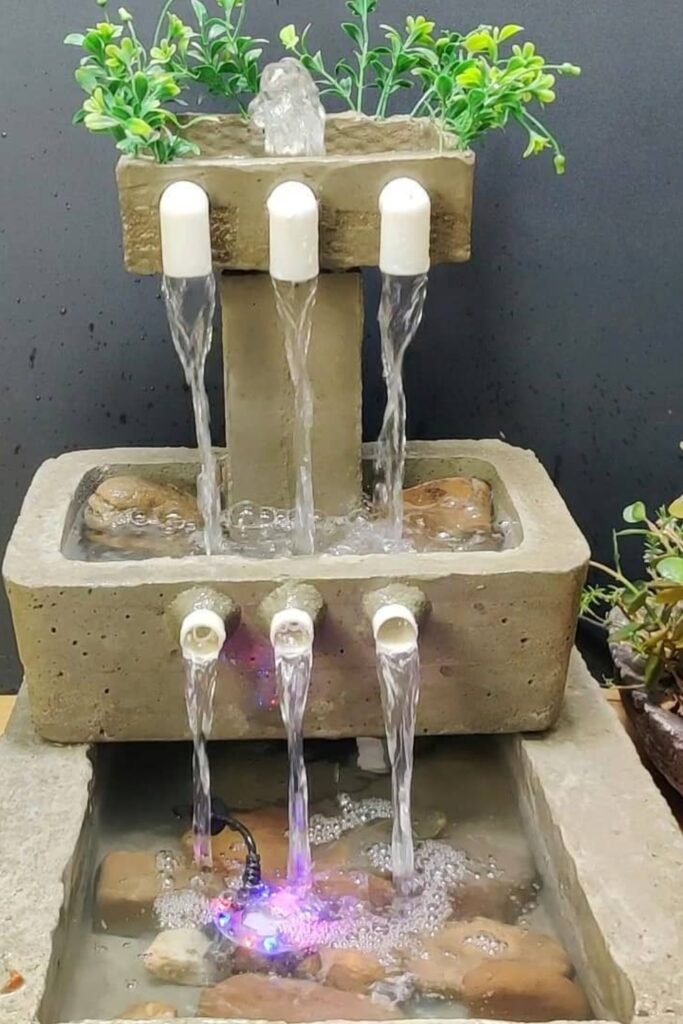
A multi-spout fountain is a smart choice when you want stronger sound and movement without relying on one dramatic stream in the center of your patio.
Use PVC outlets and a boxy basin so each pipe pours separately, which helps the fountain feel fuller even with a budget pump inside it.
Keep rocks inside the lower reservoir and tuck the cord behind the structure, so the DIY setup looks cleaner against a plain wall or fence.
Statement Frame
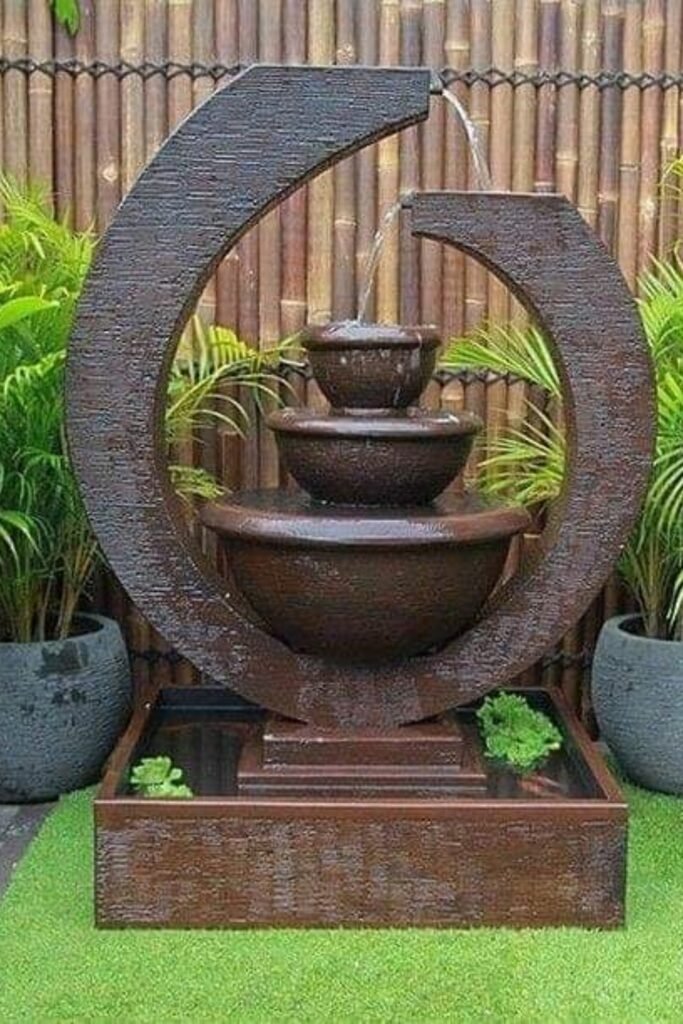
A sculptural frame works best when your patio needs one bold focal point instead of several small decorative items fighting for attention near seating areas.
Place tiered bowls inside a curved frame to get height, water movement, and a custom look without designing a large pond from scratch outside yourself.
Match the base with nearby planters, bamboo fencing, or artificial grass so the fountain feels styled rather than randomly placed outdoors in the corner space.
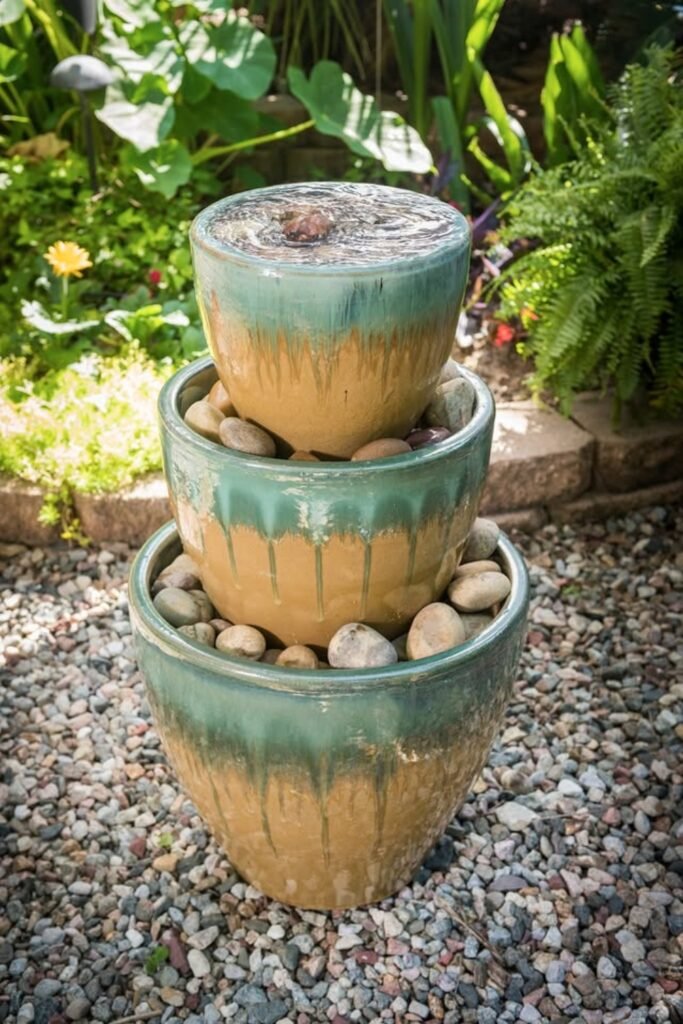
Glazed Pot Stack
Glazed pots are great when you want a cheap fountain to look polished before you even add plants, lights, or extra decoration around it outside.
Stack three rounded planters with river rocks between each level, then let the water bubble softly from the top pot instead of splashing too high.
This works especially well in garden beds because the ceramic color adds charm while the rocks help hide tubing and pump access from plain view.
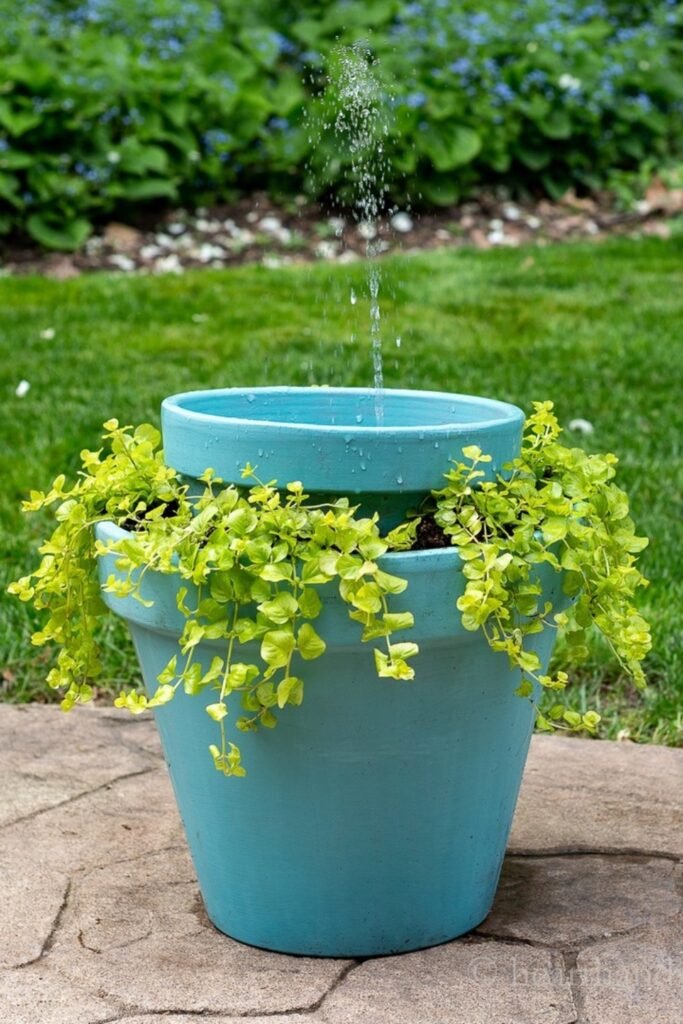
Fountain Planter
A fountain planter is useful when you want water movement and greenery in one project instead of adding a separate plant display nearby on the patio.
Use a wide pot, place trailing plants around the rim, and keep the spray centered so water falls back into the container without wasting water.
This idea fits patios and small lawns because the bright container adds color while the plants soften the simple fountain shape for easy outdoor styling.
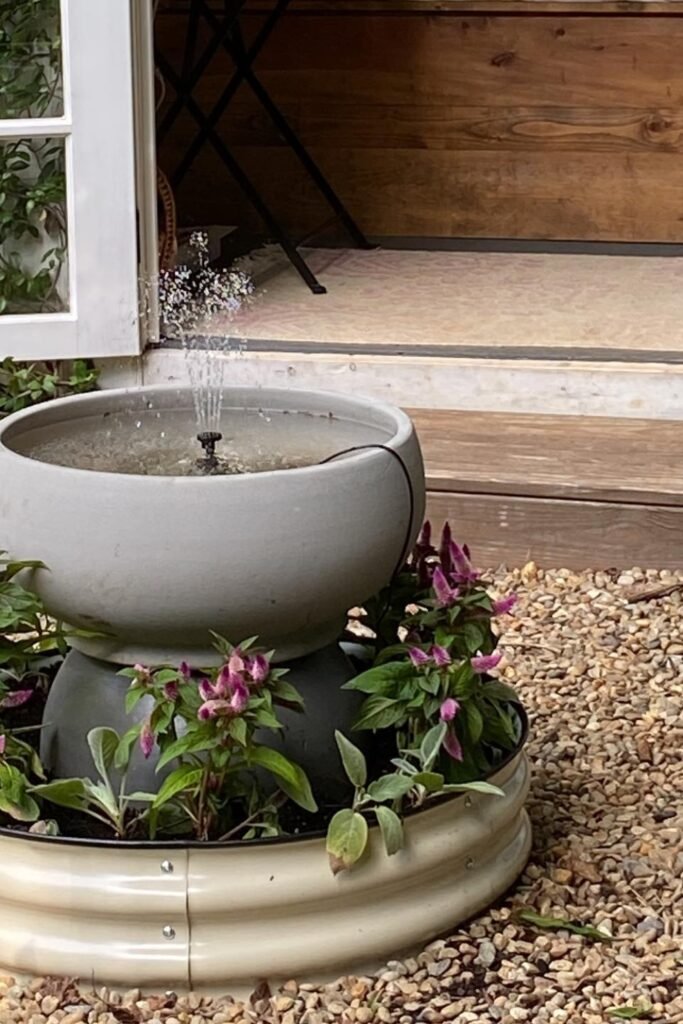
Planter Ring Fountain
A raised planter ring is a clever way to mix flowers and water without needing a separate garden bed around your fountain setup.
Place a round bowl fountain in the center, then plant low flowers around the base so the hard edges feel softer and more natural.
This works well near steps or entrances because the water adds movement while the plants make the whole corner feel more welcoming.
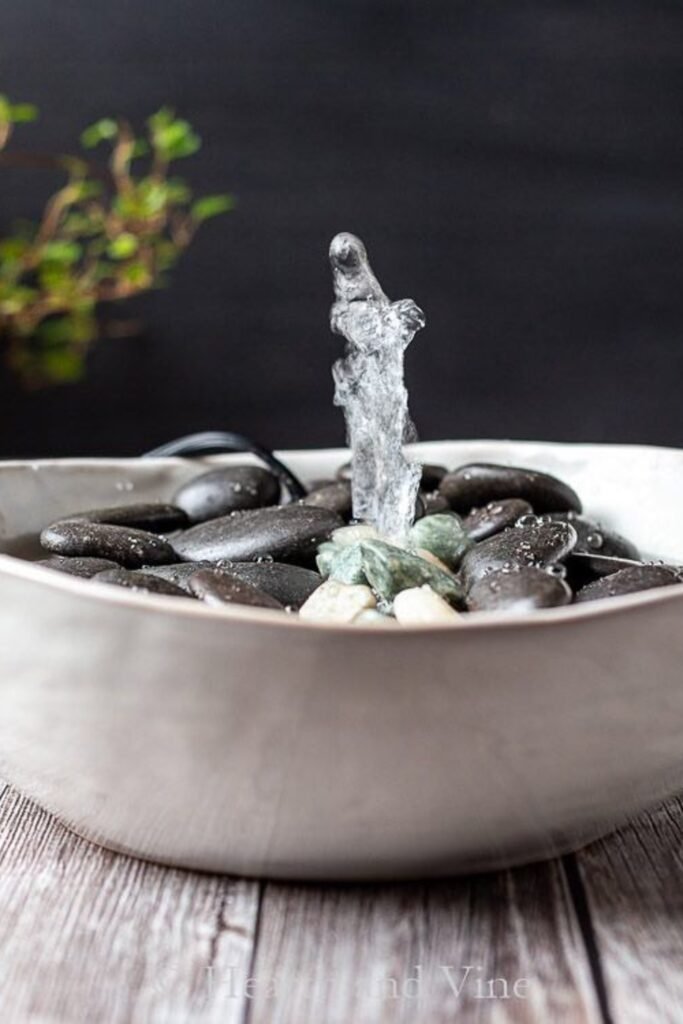
Pebble Bowl Fountain
A simple pebble bowl is perfect when you want the easiest fountain possible without stacking pots, drilling pieces, or building a heavy base.
Choose a wide shallow bowl, hide the pump under smooth stones, and keep the water stream low so it stays neat on a table.
This idea fits small patios, balconies, or indoor corners because it gives you the fountain sound without taking over the whole space.
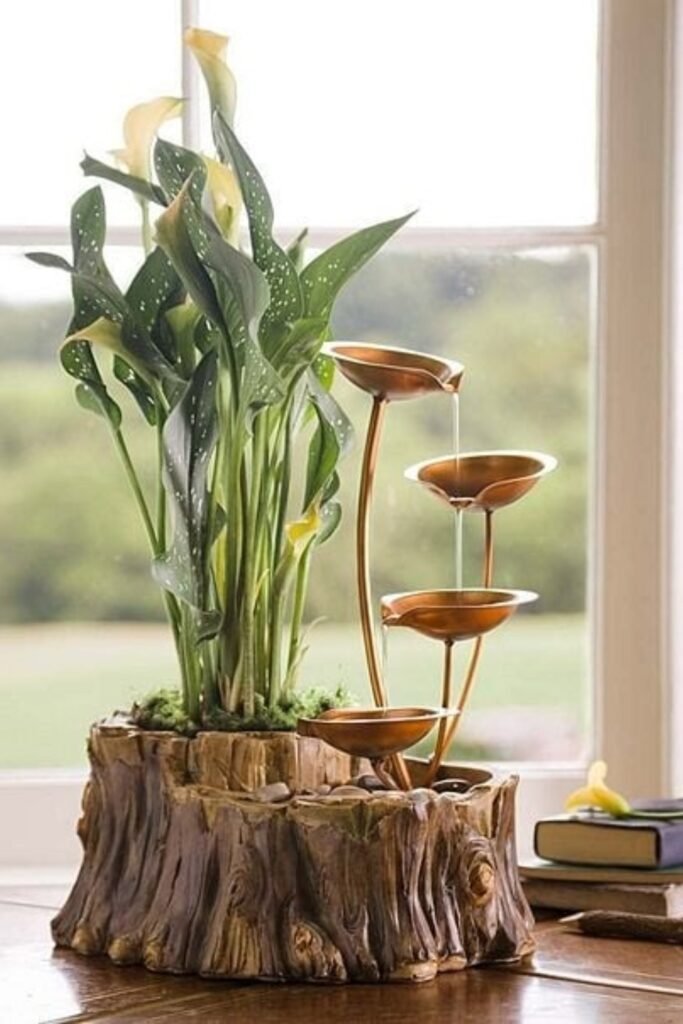
Window Plant Fountain
A plant fountain can make an indoor corner feel fresh when you want greenery and water movement together in one small display.
Use a stump-style base or planter box, then add tall plants beside the small cascading cups so the fountain feels fuller and balanced.
This works best near a bright window where the plants get light and the water feature becomes part of the room’s natural view.
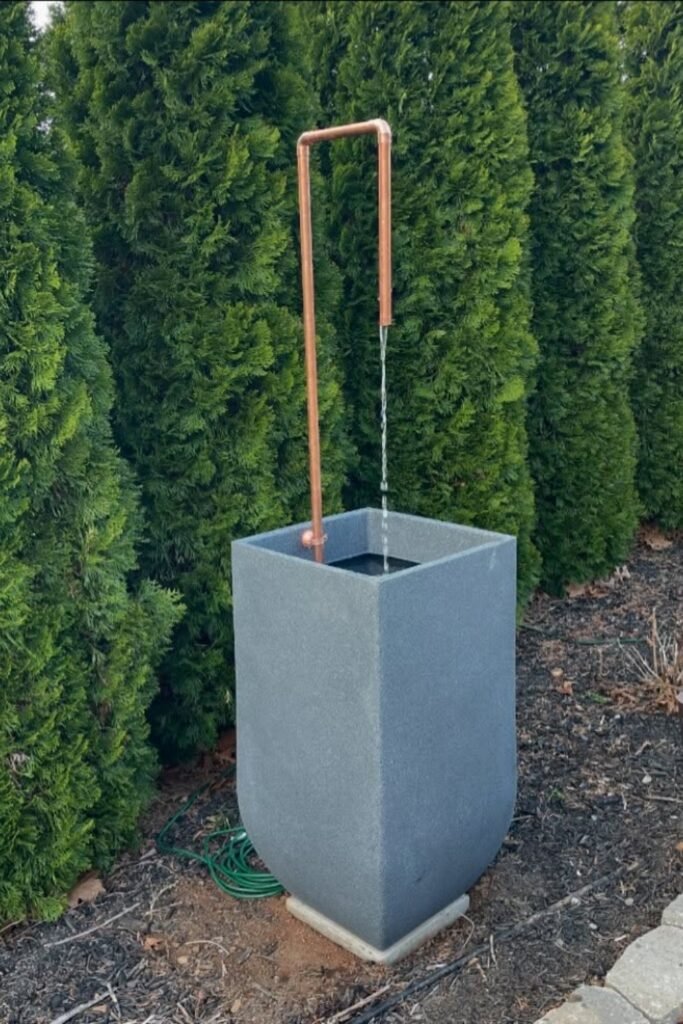
Copper Pipe Fountain
A tall copper pipe fountain works well when you want a modern water feature that feels simple, clean, and inexpensive beside privacy hedges in your yard.
Use a square planter as the reservoir, then run the pipe upward so water drops neatly back into the basin without wide splashing or messy overflow.
This design looks best near tall greenery because the copper adds height while the gray container keeps everything grounded and uncluttered for modern garden corners outside.
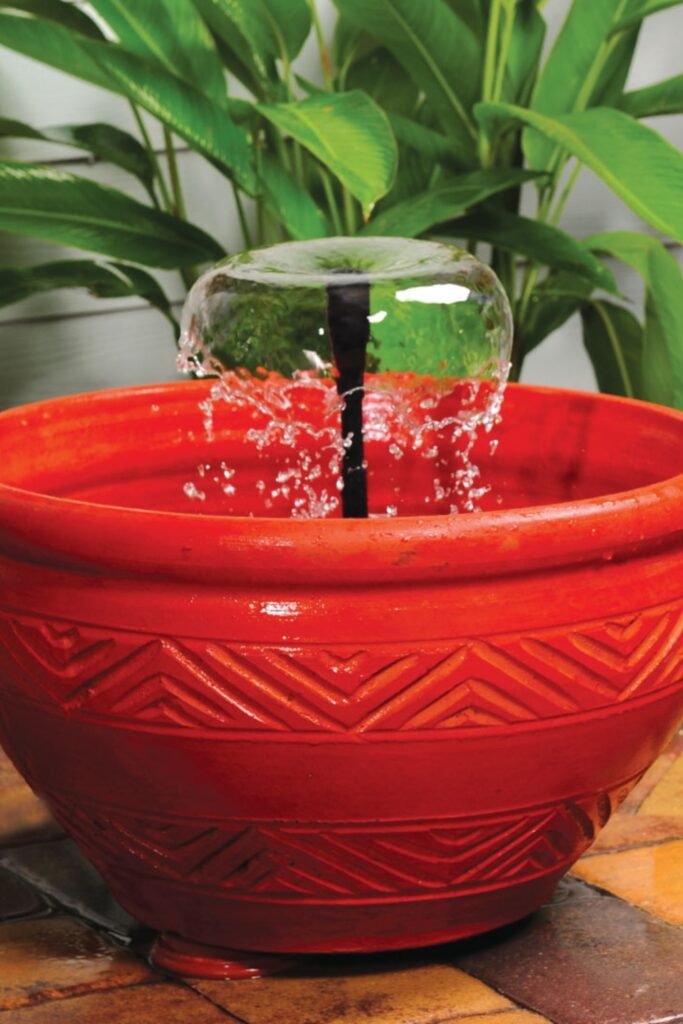
Red Bowl Fountain
A bright bowl fountain is an easy way to add color first, then let the water movement make the setup feel lively on a patio.
Place the pump under an upside-down glass bowl or clear dome so water spills evenly around the top instead of shooting too high outside daily.
This idea suits warm outdoor corners because the red planter becomes the main feature without needing extra rocks, flowers, or complicated styling around it later.
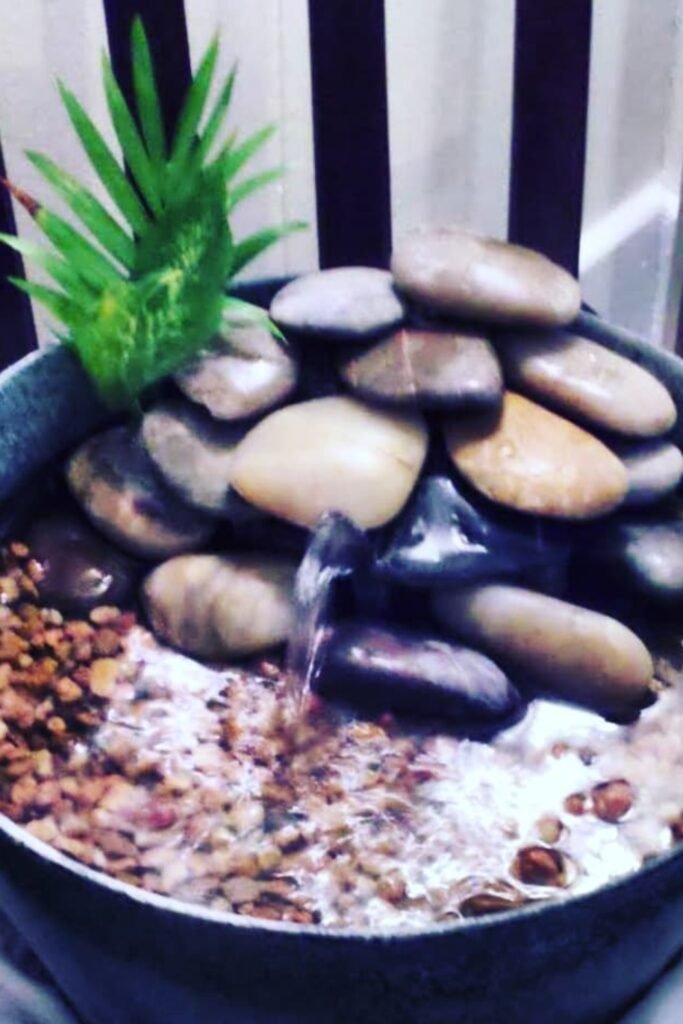
Mini Rock Fountain
A stacked rock fountain is great for a balcony because it creates natural water sound without using a large container or heavy materials around it.
Build the slope with smooth flat stones, hide the tube behind them, and let the water pour from one small opening near the front edge.
Keep the gravel on one side so the pump area stays covered, but the fountain still feels relaxed and handmade instead of crowded inside small spaces.
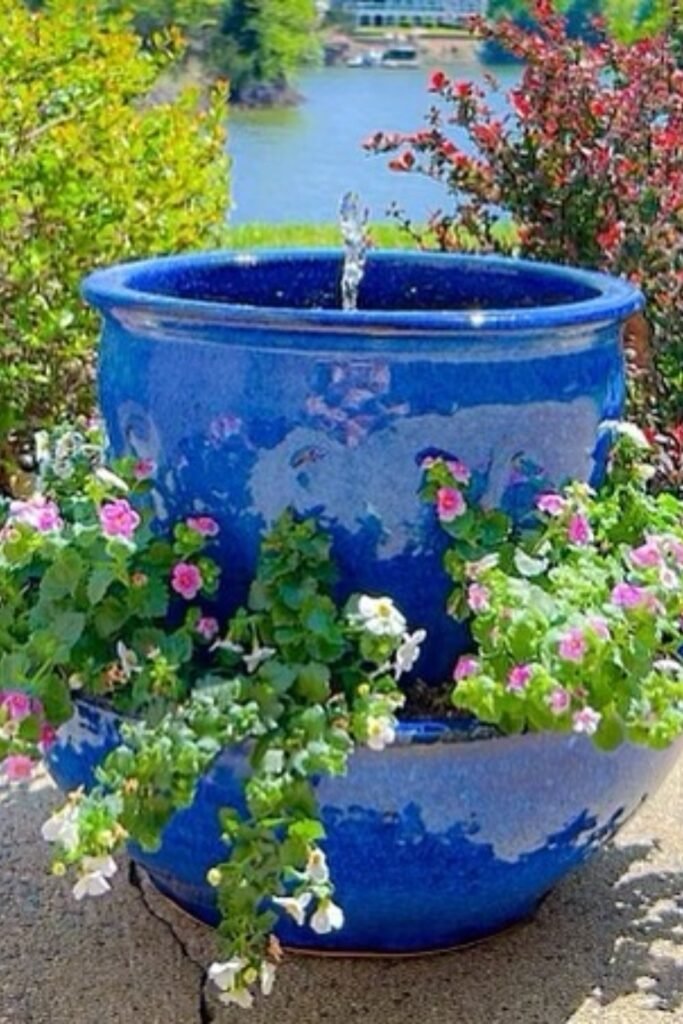
Blue Planter Fountain
A large blue planter fountain can turn a plain garden edge into a cheerful focal point without building a pond or digging deeply outside first.
Add trailing flowers around the rim, then keep the water spray centered so the fountain looks full while still staying easy to refill and clean.
This setup works beautifully near pathways or open views because the glossy pot, flowers, and soft water movement all feel intentional without extra decor nearby.
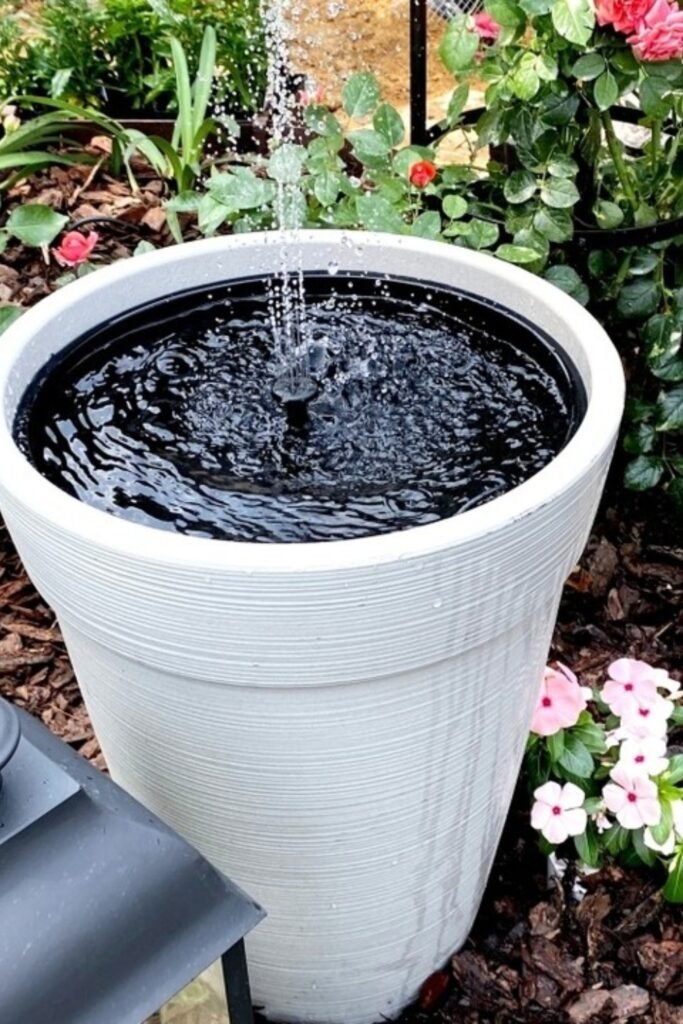
Tall Planter Fountain
A tall planter fountain works well when you want water movement inside a flower bed without building anything wide, heavy, or difficult to place.
Choose a deep lightweight pot, keep the pump centered, and let the dark water surface create contrast against the pale container outside.
Place it near roses, mulch, or low flowers so the simple fountain blends into the garden instead of looking like a plain pot.
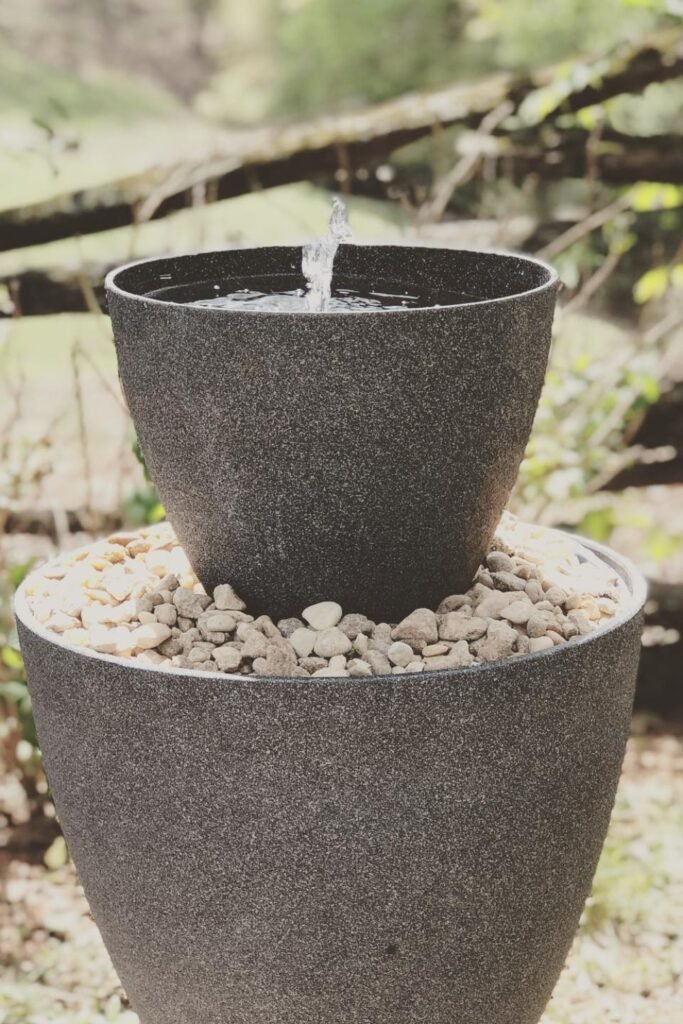
Gravel Stack Fountain
A stacked planter fountain is useful when you want height, texture, and water sound without creating a large splash zone in your yard.
Use one smaller pot inside a wider base, then cover the middle area with gravel so the pump setup stays hidden from view.
This style works best with neutral planters because the stone texture, soft spray, and pebble layer already give the fountain a finished look.
Simple Bowl Spray
A simple bowl fountain is a good choice when you want a budget water feature that does not need stacking, rocks, or plants.
Keep the nozzle low and test the spray before placing it outside, because shallow bowls can lose water quickly when the pump runs high.
This idea fits open lawns or garden corners where you want a clean fountain shape that feels relaxed instead of heavily decorated.
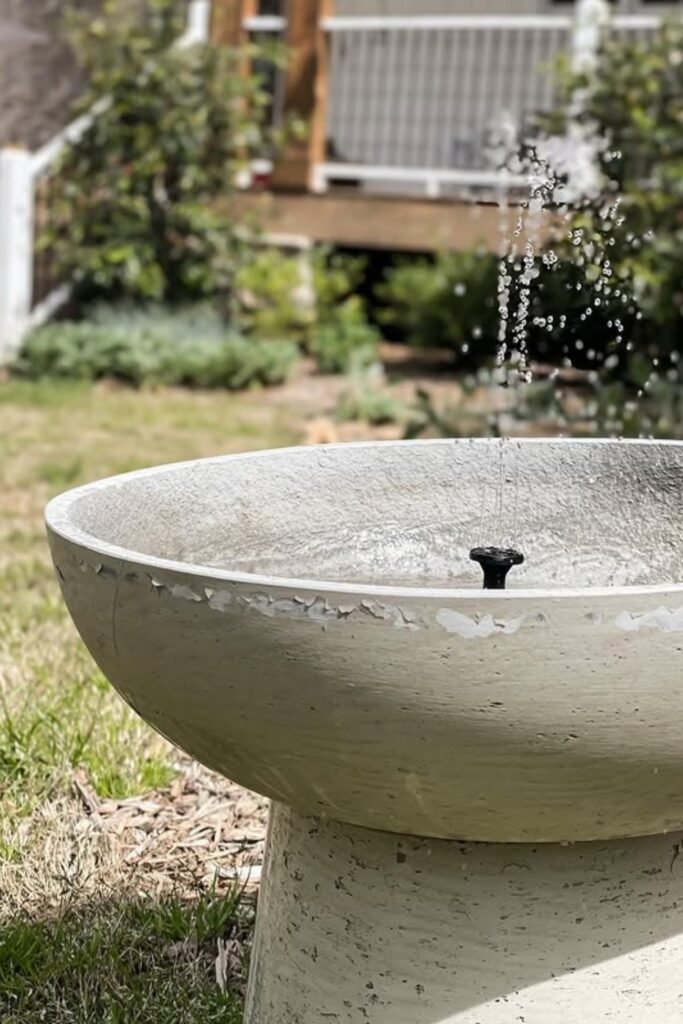
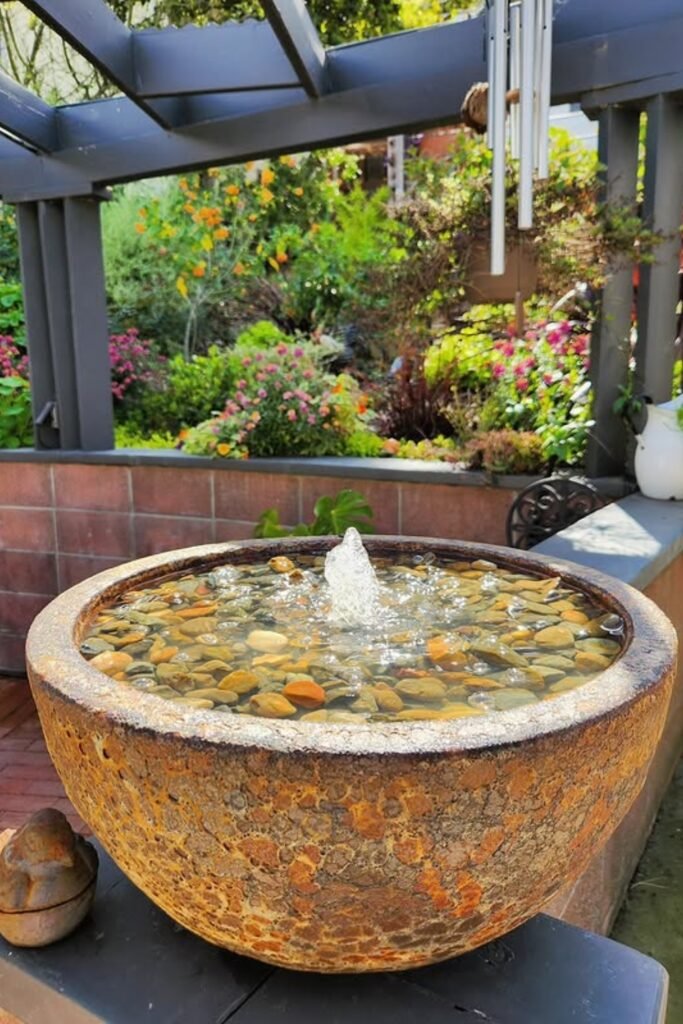
Pebble Patio Bowl
A wide pebble bowl fountain can make a patio feel calmer because the water spreads across the surface instead of rushing down tiers.
Fill the bowl with rounded stones, then keep the bubbling spray in the center so every drop falls back into the basin neatly.
This setup looks especially good on a raised stand, where the textured bowl becomes a natural focal point near seating or garden views.
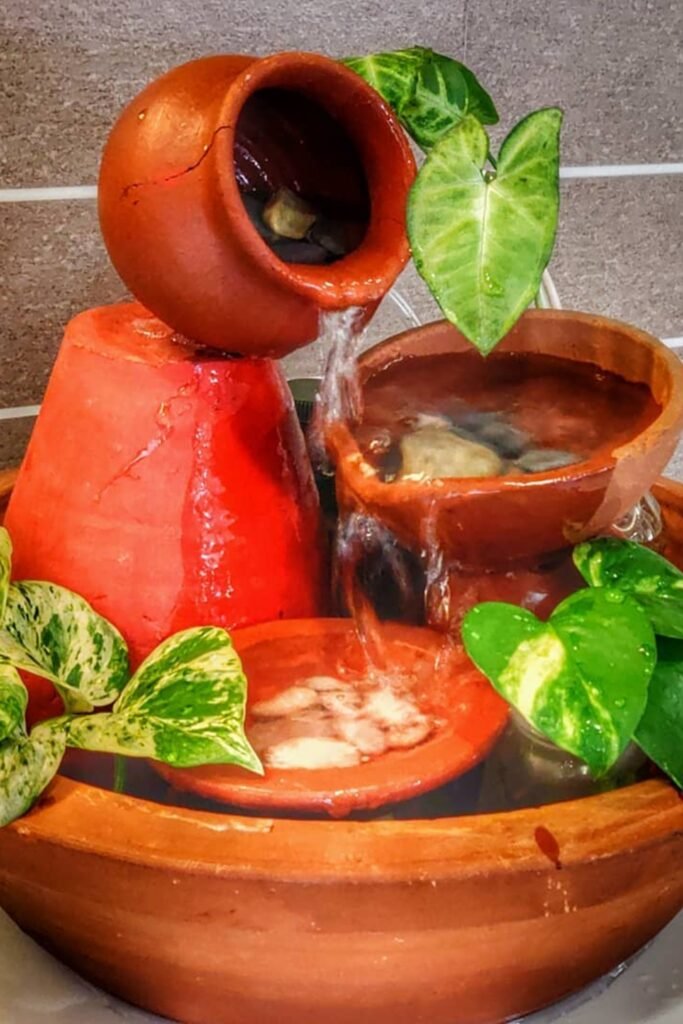
Terracotta Pour Fountain
Terracotta pots are perfect when you want a fountain that feels handmade, warm, and easy to build with affordable garden pieces you already have.
Tilt the top pot slightly, then guide the water into a side bowl so each pour feels natural instead of forced or messy.
Add leafy plants around the basin to soften the clay color and make the whole setup feel fresh for patios, balconies, or indoor corners.
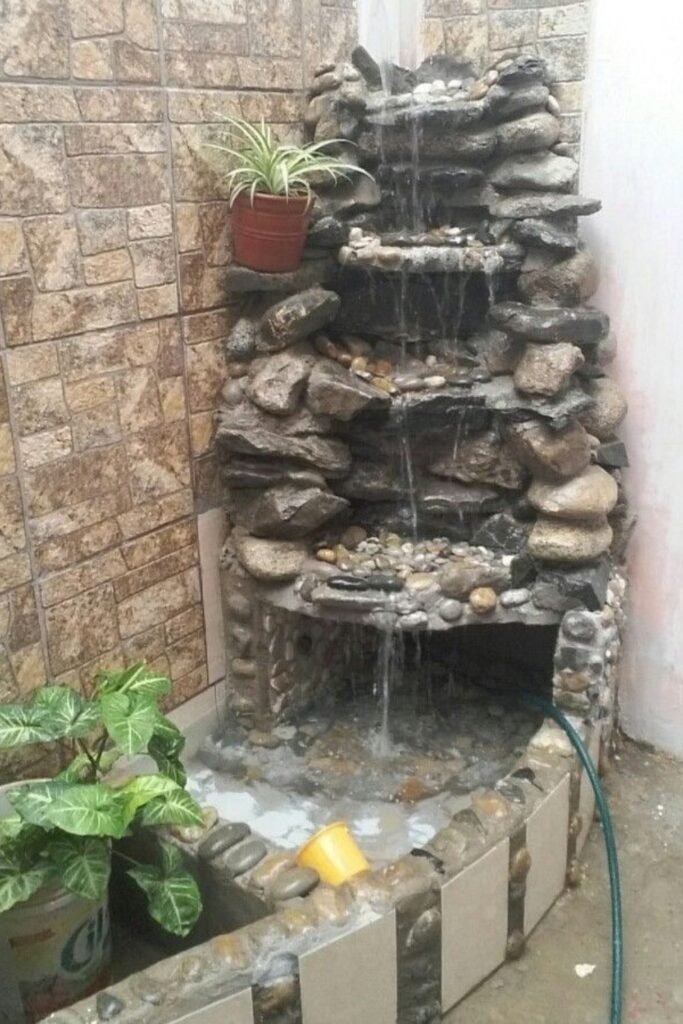
Wall Rock Fountain
A rock wall fountain is a strong choice when you have a blank corner and want the water feature to feel built-in.
Layer flat stones into small shelves, then let the water fall step by step so the sound feels fuller in narrow outdoor spaces.
Use pebbles on each ledge and add a plant nearby, so the structure feels natural instead of looking like plain stacked rocks.
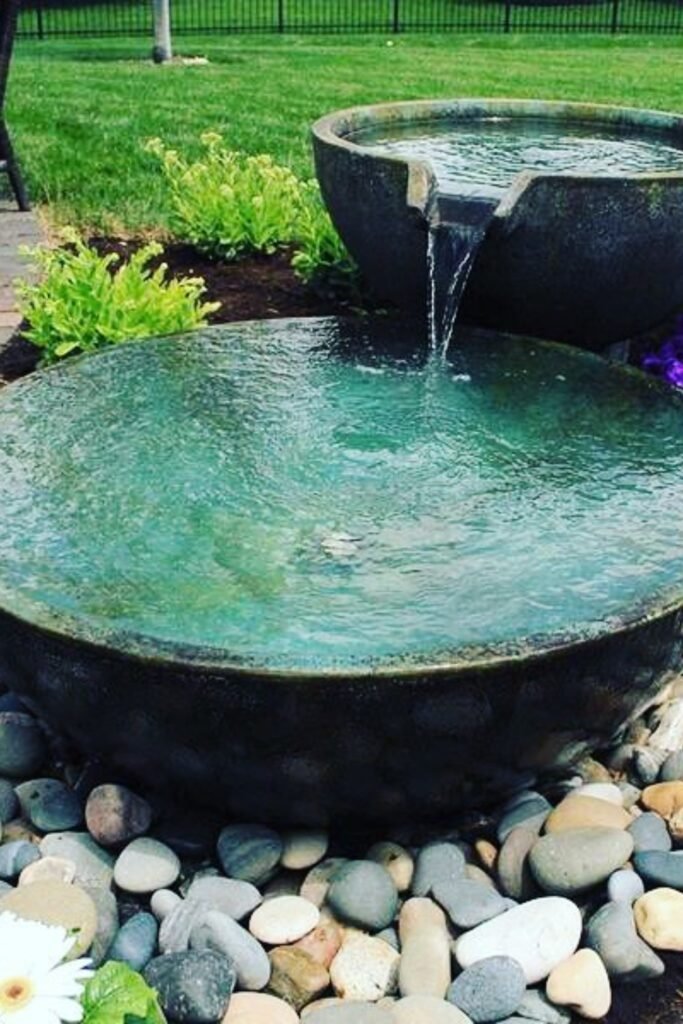
Overflow Bowl Fountain
Two large bowls can create a clean modern fountain when you want water movement without using too many small decorative pieces.
Let the upper bowl spill through one cut opening, then catch the water in a wider lower basin for a smooth, controlled flow.
Surround the base with river rocks and low flowers, so the fountain blends into the garden bed instead of standing alone.
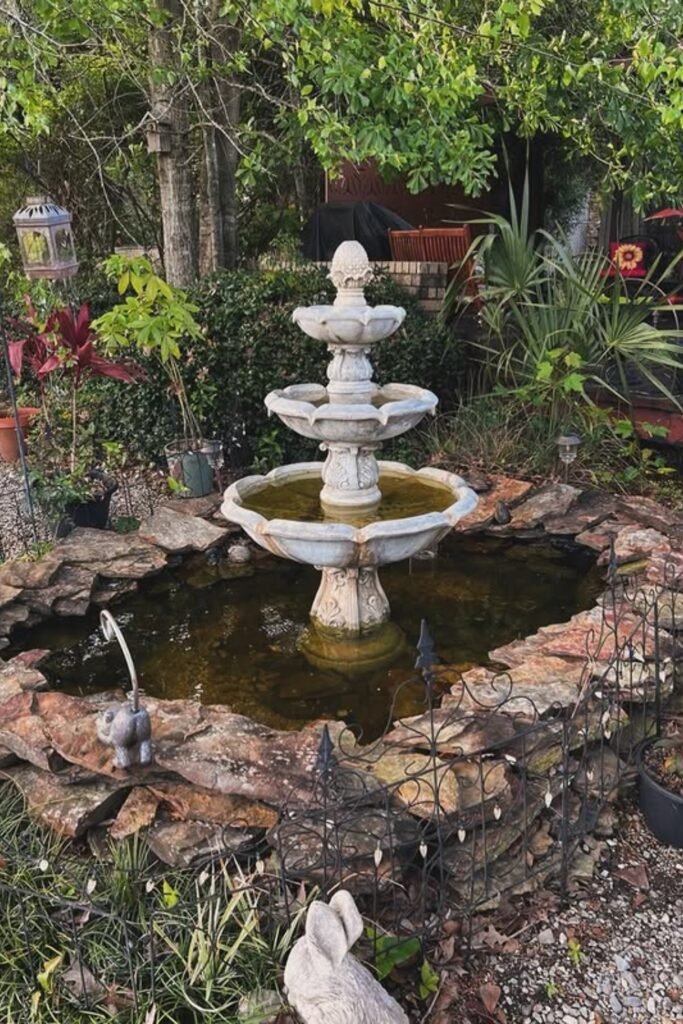
Pond Center Fountain
A tiered fountain inside a small pond works best when you want one main feature that feels classic and more established.
Use natural stones around the pond edge to hide the liner, soften the shape, and make the water area feel less artificial.
Keep plants, lanterns, or small garden figures around the border, so the fountain becomes part of the whole backyard scene.
FAQs
Can I make a DIY water fountain without spending a lot of money?
Yes, you can make a simple DIY water fountain with a basic container, a small submersible pump, tubing, water, and decorative stones.
The cheapest options usually come from items you may already have, like old flower pots, bowls, buckets, or garden planters.
The main thing is to choose a container that holds water properly and a pump that matches the size of your fountain.
Start small if this is your first project, because a simple bowl or pot fountain is much easier to test, fix, and maintain than a large backyard water feature.
Why does a DIY water fountain stop working properly?
Most DIY fountains stop working because the pump gets clogged, the water level drops too low, the tubing bends, or the pump is not strong enough for the height of the fountain.
Before you replace anything, clean the pump intake, refill the basin, and check if the water can move through the tube freely.
If the water splashes outside the container, lower the pump flow or use a wider bowl. A cheap fountain can work well, but it needs the right setup and simple maintenance.

Hi, my name is Ali Mehmood! I’m a passionate writer and DIY enthusiast who loves turning creative ideas into practical, hands-on projects.
I created this website to share inspiring, budget-friendly ideas that you can do yourself – whether it’s organizing your home, crafting something unique, or creating fun projects for kids and pets.
I believe DIY isn’t just a hobby – it’s a smart way to save money, reduce waste, and enjoy the satisfaction of making things with your own hands.
I’m excited to have you as part of this growing community, and I’ll continue bringing you helpful, realistic, and fun DIY ideas you can actually use.