This post may contain affiliate links: read full affiliate disclosure.
Cucumbers look easy to grow until the vines start crawling across the soil, hiding fruit under thick leaves, and turning one small garden bed into a tangled mess.
That is usually when many gardeners realize the problem is not the cucumber plant – it is the support system.
A weak trellis can lean, sag, or collapse once the vines get heavy, especially after the plant starts producing full-size cucumbers.
A good DIY cucumber trellis should do more than look nice in the garden.
It should save space, keep fruit off the ground, improve airflow, and make harvesting easier without forcing you to search under leaves every day.
The right setup depends on your garden space, cucumber variety, and the materials you already have.
In this article, I am going to share practical cucumber trellis DIY ideas that can help you grow cleaner cucumbers, control messy vines, and build a stronger support system.
Let’s dive into it!
Overhead Wood Frame
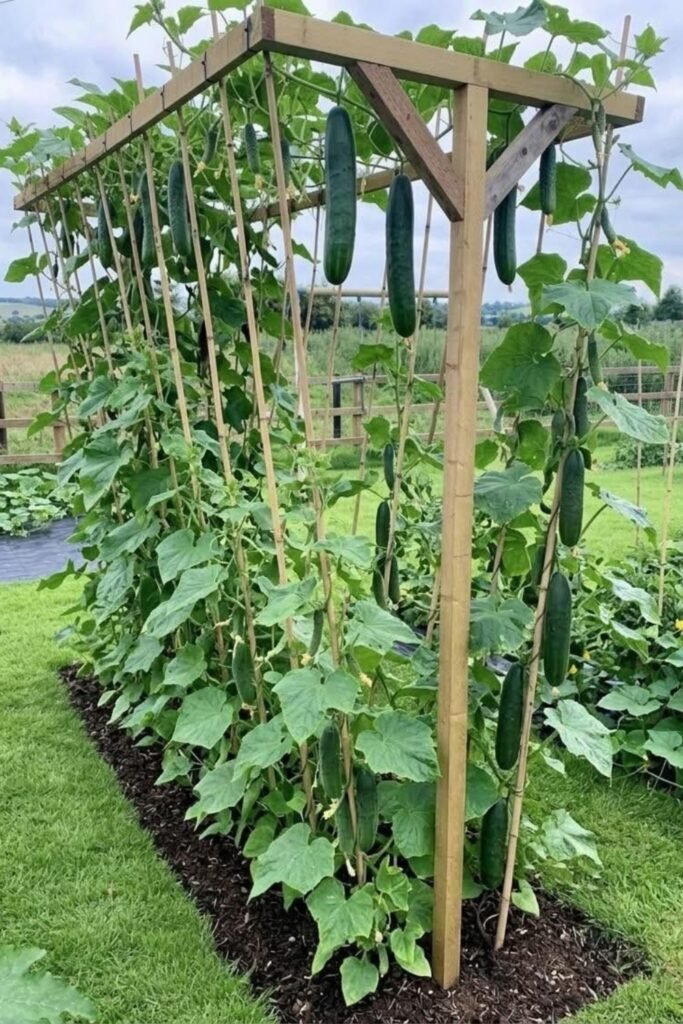
Use a tall wood frame when your cucumber vines need room to climb high without pulling the whole support forward later in the growing season.
The top beam lets fruit hang clearly, so you can spot mature cucumbers before they turn oversized, yellow, or hidden under heavy leaves during harvest.
Place it over a long bed and tie vertical strings tightly because this design works best when every vine gets its own climbing lane upward.
Low Net Support
A low net trellis helps when you want a quick support system without building a tall frame or blocking access to your cucumber row daily.
Keep the net pulled tight between sturdy posts, since loose netting can sag once the vines start carrying several cucumbers during peak harvest.
This setup works well for shorter plants, but leaves enough space around the base so leaves do not trap moisture near the soil after watering.

Raised Arch Rows
Use repeated arch supports when you want cucumbers to grow in organized raised-bed rows without vines spilling into walking paths or nearby planting areas daily.
The curved shape lets fruit hang down along the sides, so you can harvest faster without digging through dense leaves after every watering session outside.
Keep each arch firmly anchored inside the bed frame because heavy cucumber vines can pull lightweight hoops sideways once growth becomes thick and fruiting starts.

Container Teepee
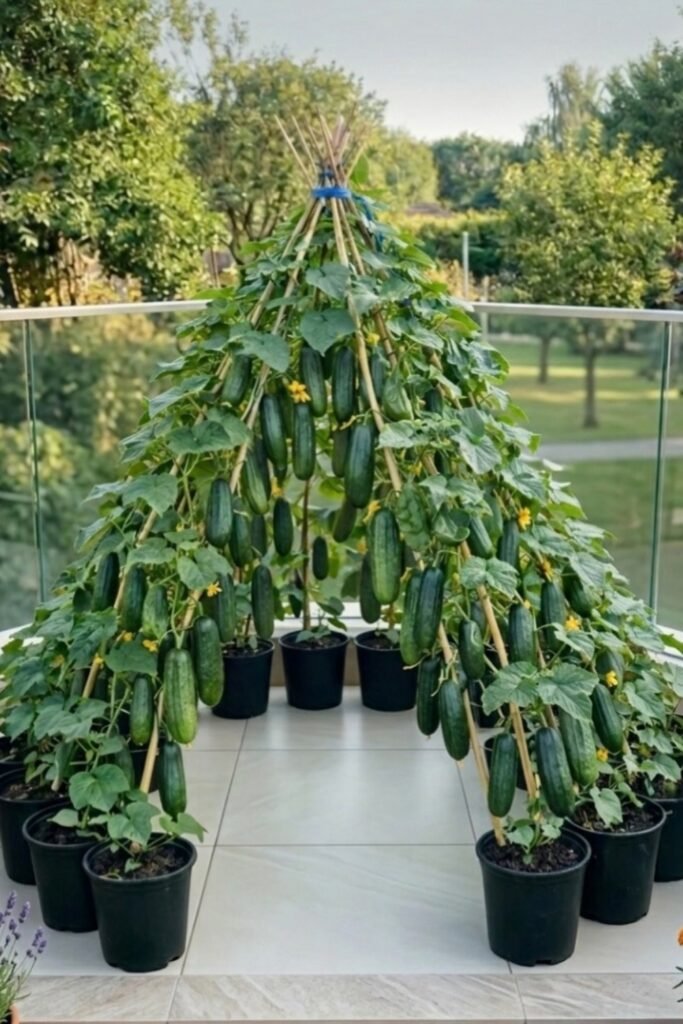
A bamboo teepee is perfect when you grow cucumbers in pots and need vertical support without taking over the whole balcony floor space around it.
Tie the poles tightly at the top, then guide each vine around a separate pole so the plant does not collapse inward under fruit weight.
Use heavier pots or group containers together because tall cucumber growth can catch wind quickly on patios, terraces, and open balconies during summer storms too.
Rustic Ladder
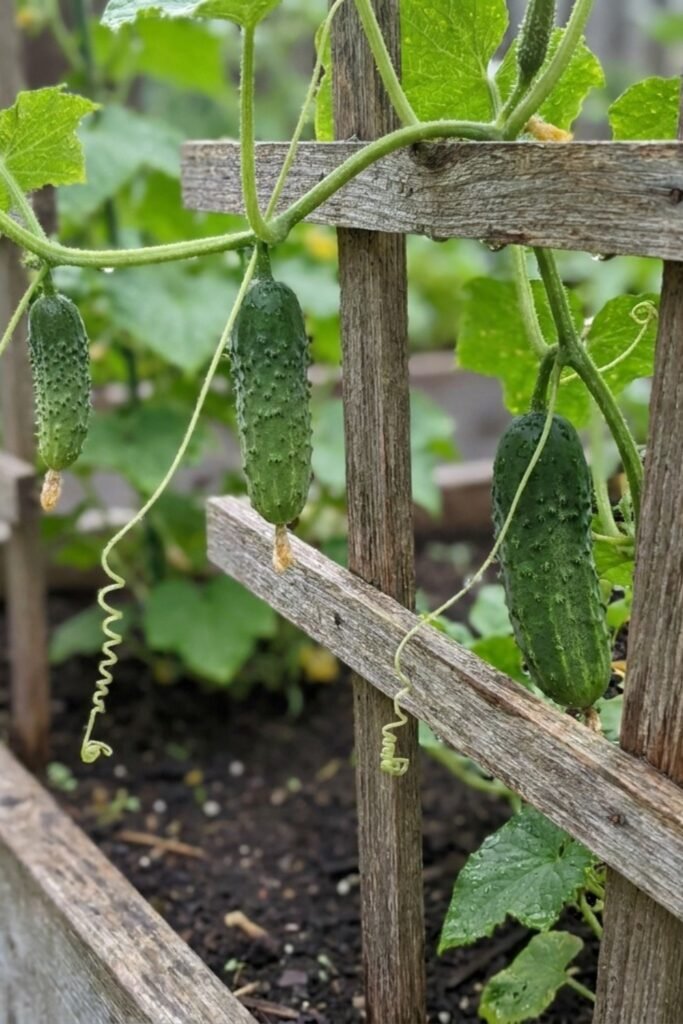
Old wood slats can become a practical cucumber ladder when you want a simple support that blends naturally into a raised garden bed without fuss.
Let the vines grab the horizontal rails, but keep checking new growth so stems do not bunch on one side only during fast summer growth.
This works best for smaller cucumber varieties, especially if you want an easy build using leftover lumber instead of buying new garden supports this season.
Garden A-Frame
Try an A-frame trellis when you want cucumbers lifted high enough to hang cleanly while still keeping both sides easy to reach from the garden bed.
The slanted shape spreads vine weight better than straight stakes, which helps the frame stay steadier as leaves and fruit become heavier through the season.
Plant low flowers around the base if you want the cucumber bed to look finished while keeping the trellis area neat and accessible for harvesting.

Bamboo Wall Frame
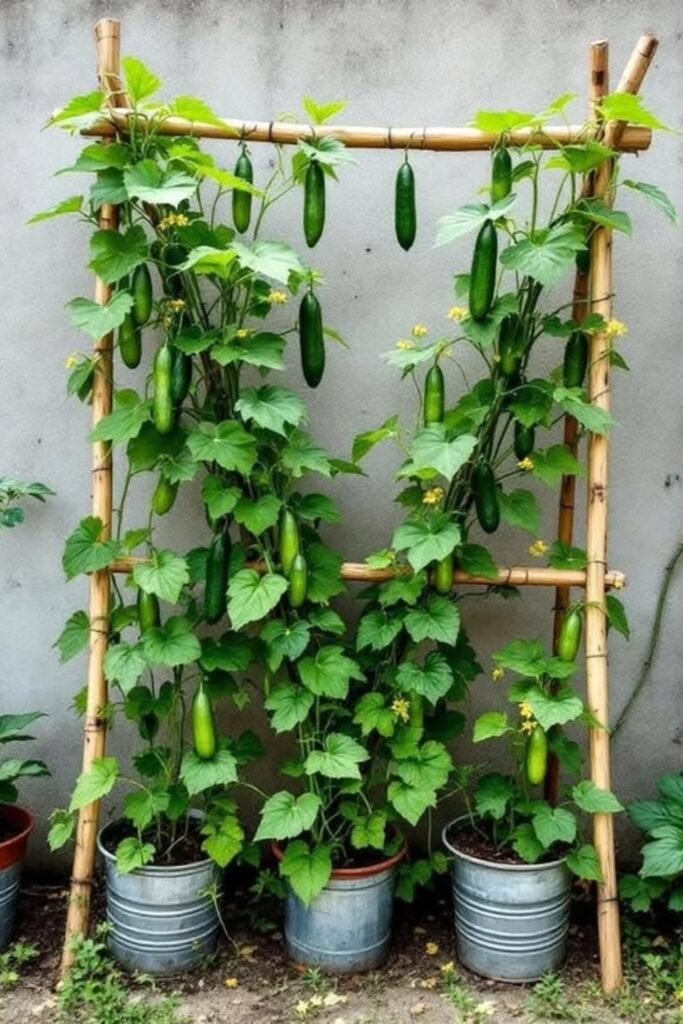
Use a bamboo frame against a plain wall when you need vertical cucumber support but do not have space for a full garden bed.
The side poles keep the vines upright, while the top rail gives hanging cucumbers room to grow straight and stay easy to see.
Choose deep containers for this setup because shallow pots can dry fast and may not balance tall cucumber vines once the frame fills out.
Walkway A-Frame
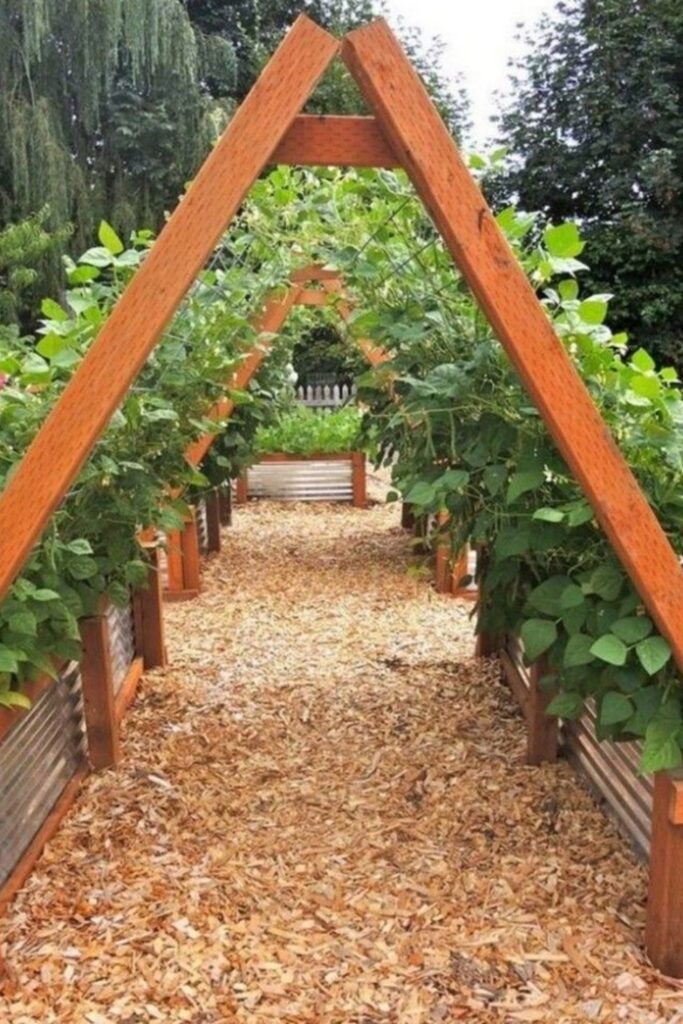
A tall A-frame walkway gives cucumber vines serious support while turning the space between raised beds into a useful garden path.
This design works especially well when you want vines to climb from both sides without spreading across the walkway or crowding nearby vegetables.
Keep the frame wide enough for easy access, because harvesting becomes much simpler when you can walk under the structure and reach both sides.
Wall Pot Row
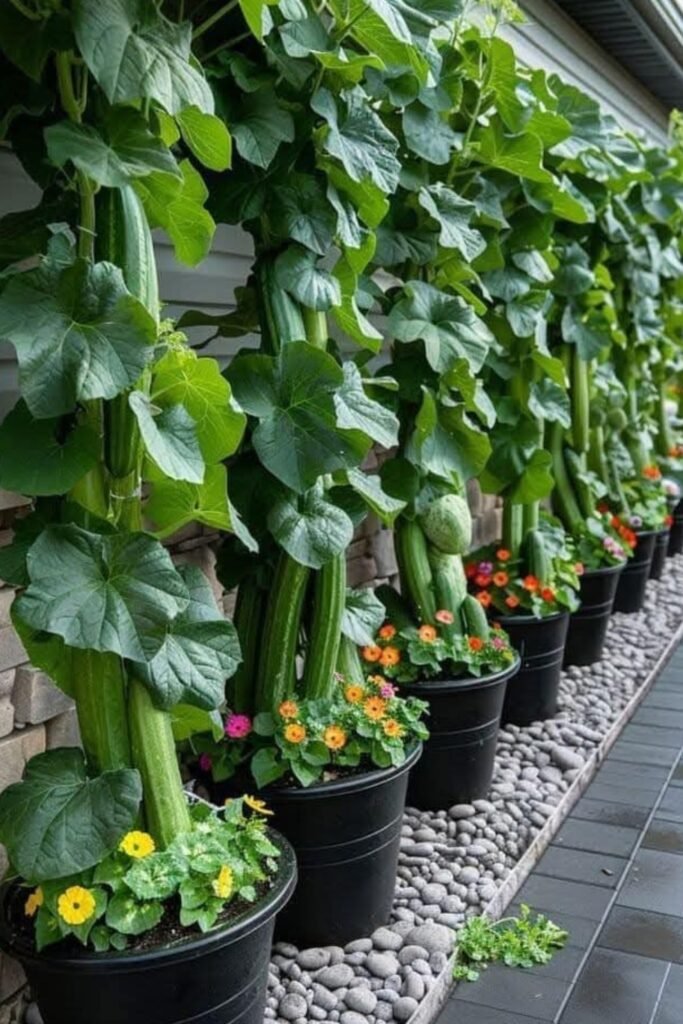
Line up containers along a sunny wall when you want cucumber vines to grow upward without using extra ground space in a small yard.
The wall helps shield the plants from strong wind, while each pot keeps the root space separate and easier to manage.
Add strong vertical supports behind every container, because heavy cucumber vines can lean forward once the fruit starts hanging from the top growth.
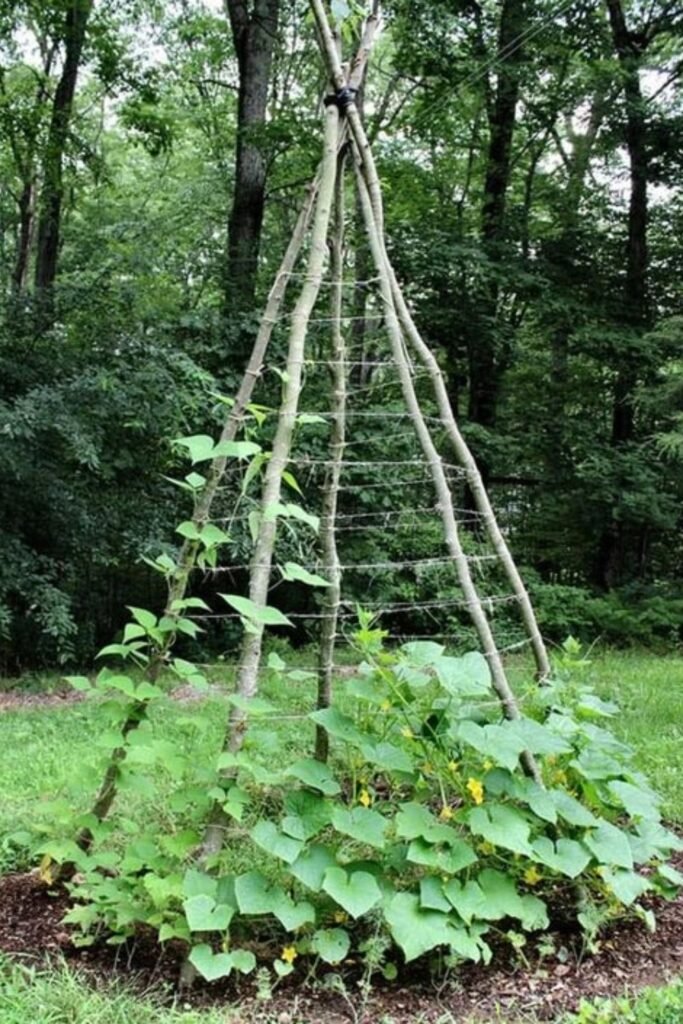
Branch Teepee
A branch teepee is a smart choice when you want a natural trellis that costs almost nothing and still gives cucumbers climbing height.
Tie the branches firmly near the top, then add cross twine around the frame so young vines have more places to grip.
This works best in open garden soil, where the wide base can stay steady and the cucumbers have room to spread before climbing upward.
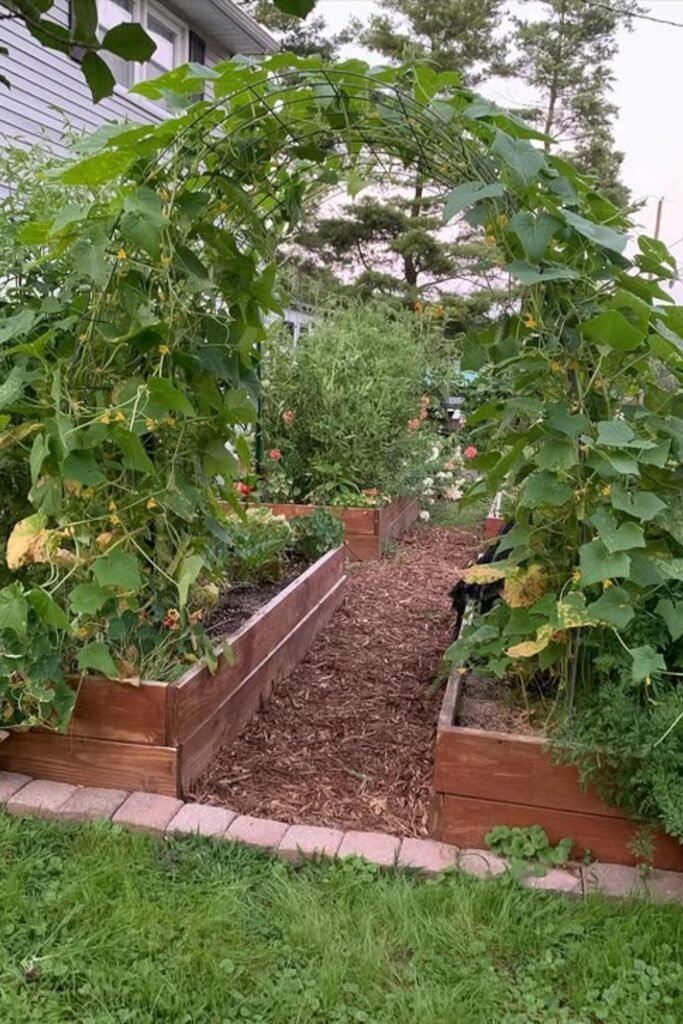
Raised Bed Arch
Turn two raised beds into one productive cucumber zone by bending a wire panel over the walkway and securing both ends inside the soil.
This setup gives vines a wide climbing surface, while cucumbers hang along the arch where you can spot them without moving leaves around.
Keep the walking path open underneath because this design works best when you can reach both beds easily for watering, pruning, and quick harvesting.
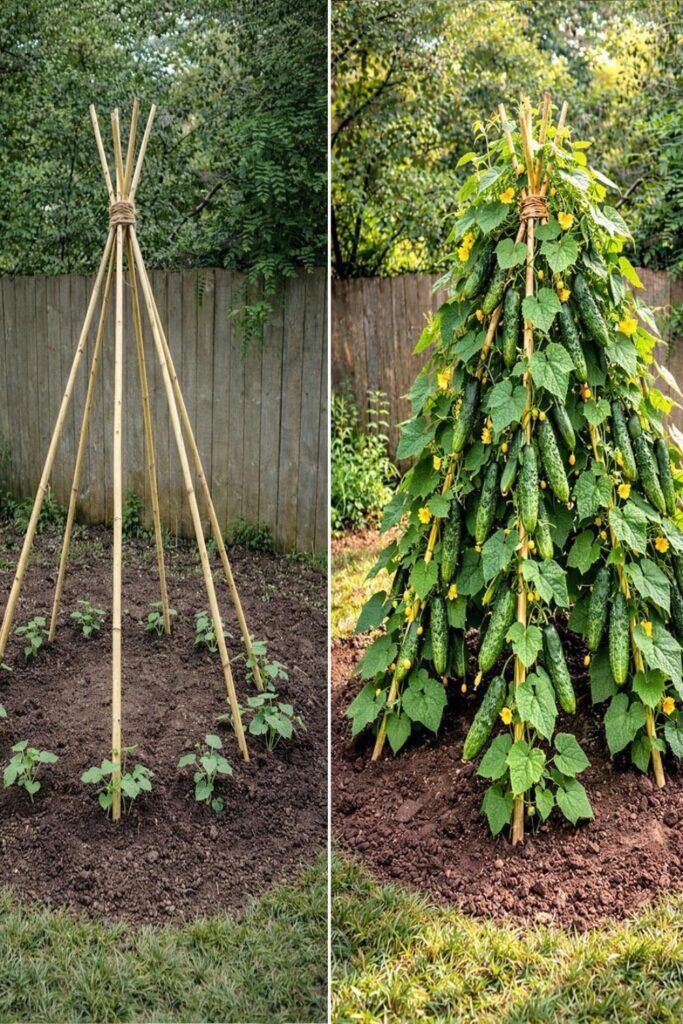
Bamboo Tripod
Start with a simple bamboo tripod if you want a beginner-friendly cucumber trellis that shows exactly how much growth one structure can handle.
The before-and-after style proves why wide spacing matters, because each vine needs its own pole before the whole frame turns full and leafy.
Tie the poles tightly near the top and plant cucumbers around the base, so every plant has a clear path upward from the start.
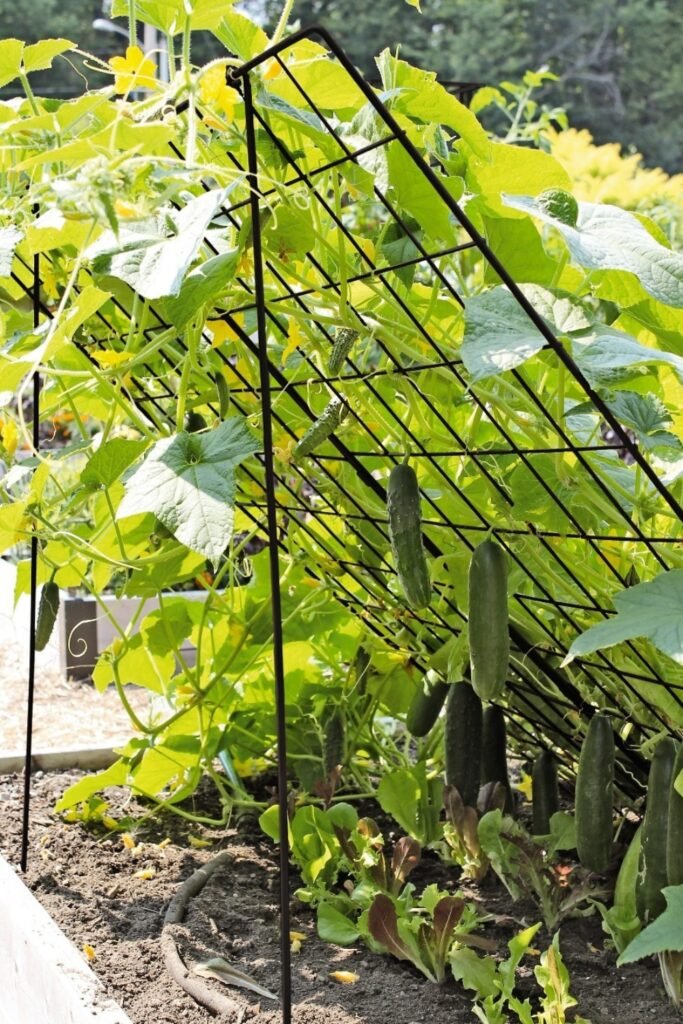
Angled Wire Grid
Use an angled wire grid when you want cucumbers lifted off the soil but still low enough to reach without stretching over the bed.
The sloped panel lets fruit hang underneath, which keeps cucumbers cleaner and makes it easier to harvest before they become too large.
Anchor the bottom edge well because vines can pull the grid forward as leaves thicken and cucumbers start adding weight to one side.
Wooden Net Frame
A sturdy wooden net frame works well when you want something reusable, clean-looking, and strong enough for a busy vegetable garden.
The rope grid gives cucumber tendrils easy places to grab, while the wide wooden sides keep the support stable through heavier growth.
Build it before planting if possible, so young vines can climb early and you avoid pushing posts near delicate cucumber roots later.
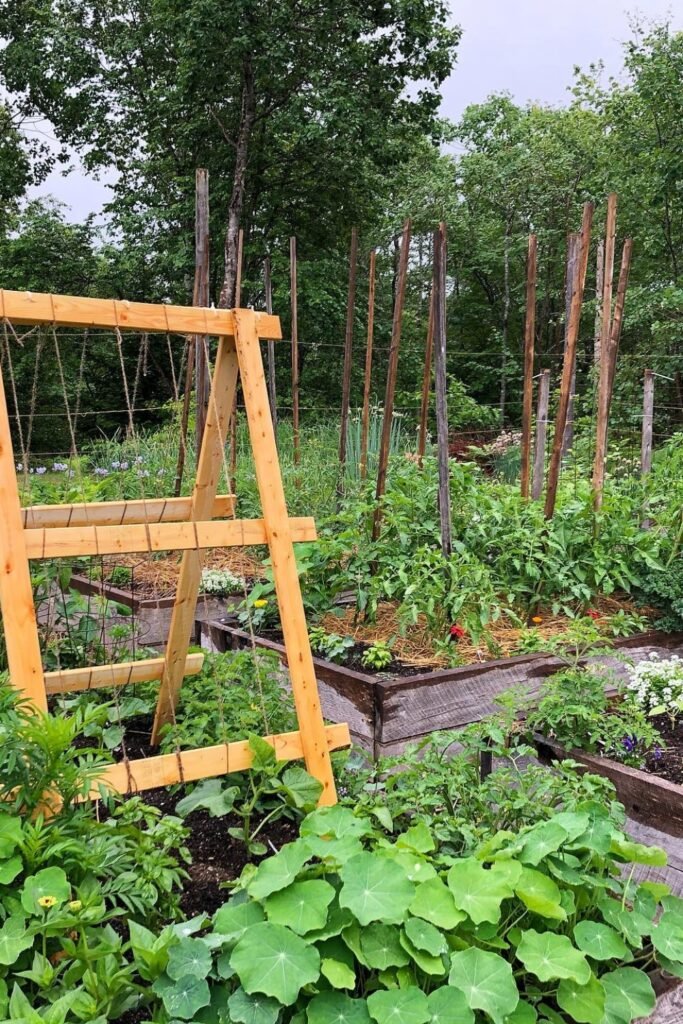
Vertical Pallet
Use a tall pallet-style trellis when you want cucumber vines to climb in one narrow spot without spreading across the whole garden bed.
The open slats give tendrils plenty of places to grab, while the height keeps fruit visible and easier to pick from one side.
Secure the base deeply or brace it from behind because a loaded cucumber wall can become heavy once vines cover the entire frame.
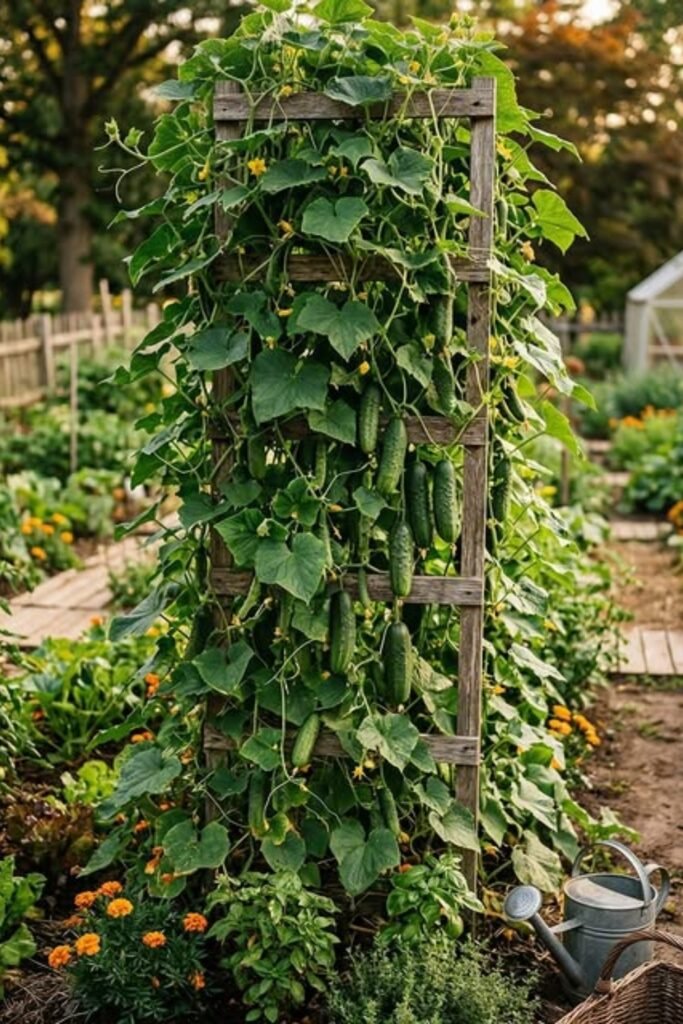
Flower Bed Frame
A slanted frame works well when you want cucumbers lifted above the soil while still keeping the bed pretty with flowers around it.
The angled support lets cucumbers hang in straight rows, which makes harvesting easier and keeps fruit from sitting on damp garden mulch.
Leave a small working gap around the frame, so you can reach underneath the vines without stepping on flowers or compacting the soil.
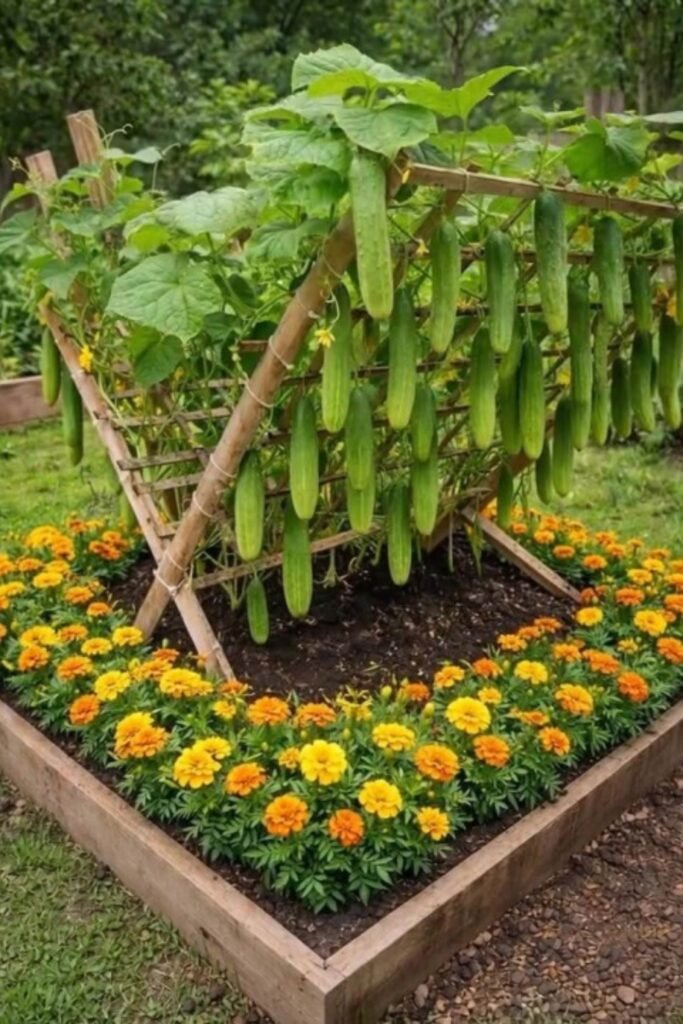
Round String Tower
Try a round string tower when you grow cucumbers in a large pot and need support that spreads weight evenly around the plant.
The vertical ropes guide vines upward from every side, while the top ring keeps the structure balanced instead of leaning forward.
Use this only with a heavy container, because a light pot can tip once tall vines catch wind or carry several cucumbers.
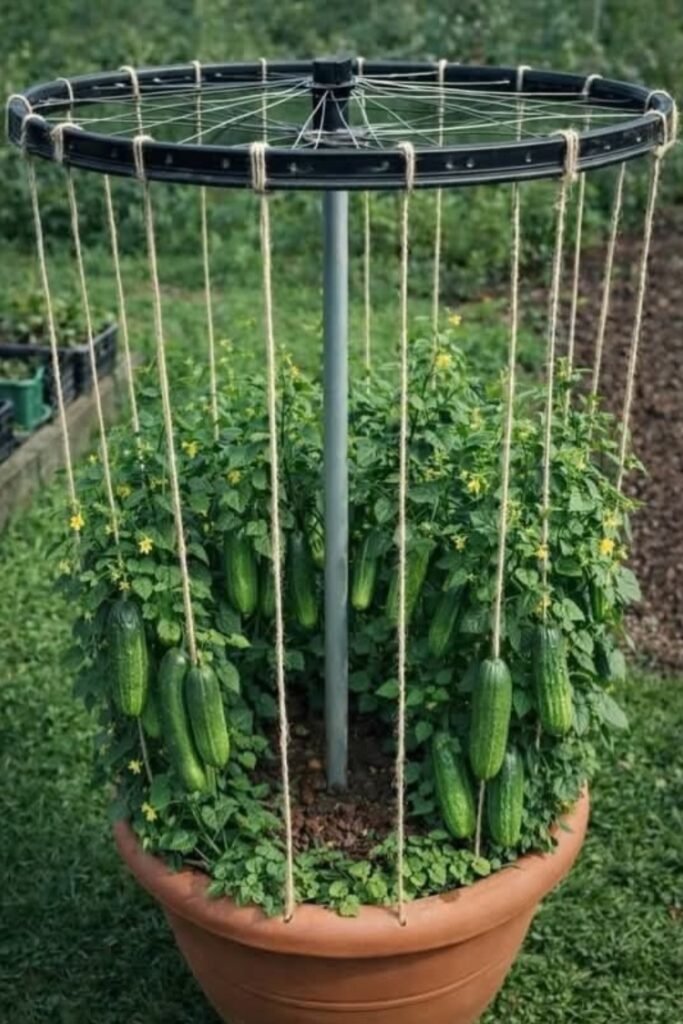
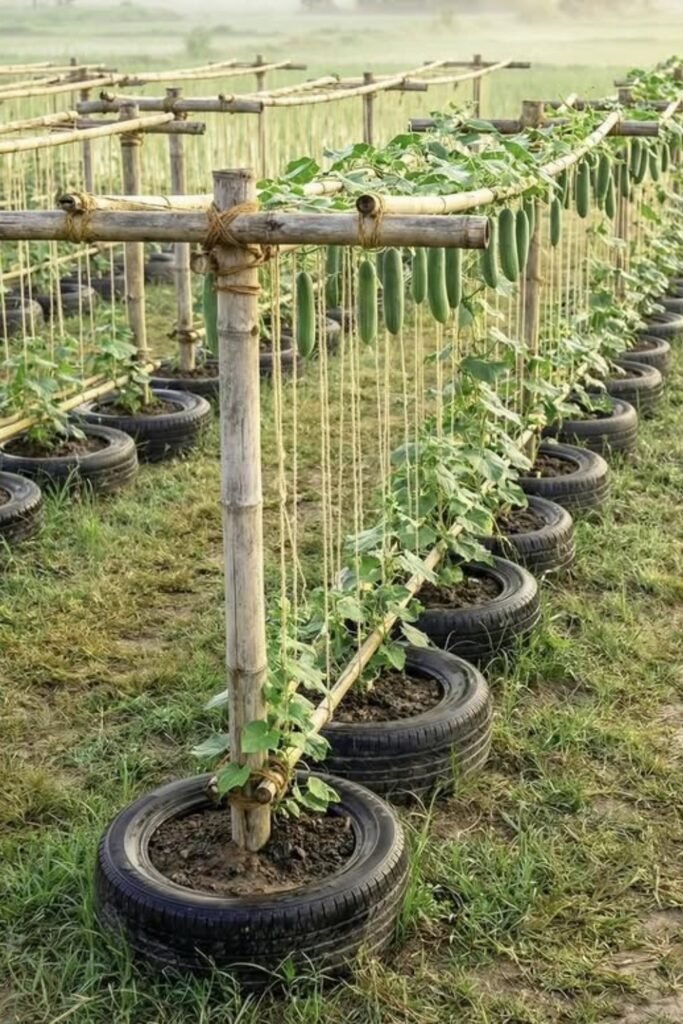
Tire Row Frame
Repurpose old tires as planting pockets when you want a long cucumber row that stays tidy without building traditional raised beds from lumber or blocks.
The bamboo rails and hanging strings give each vine a straight path upward, while the tires help separate roots and hold soil in place well.
Keep the top rail level across the row because uneven strings can make vines lean, tangle, or crowd one side during harvest later in summer.
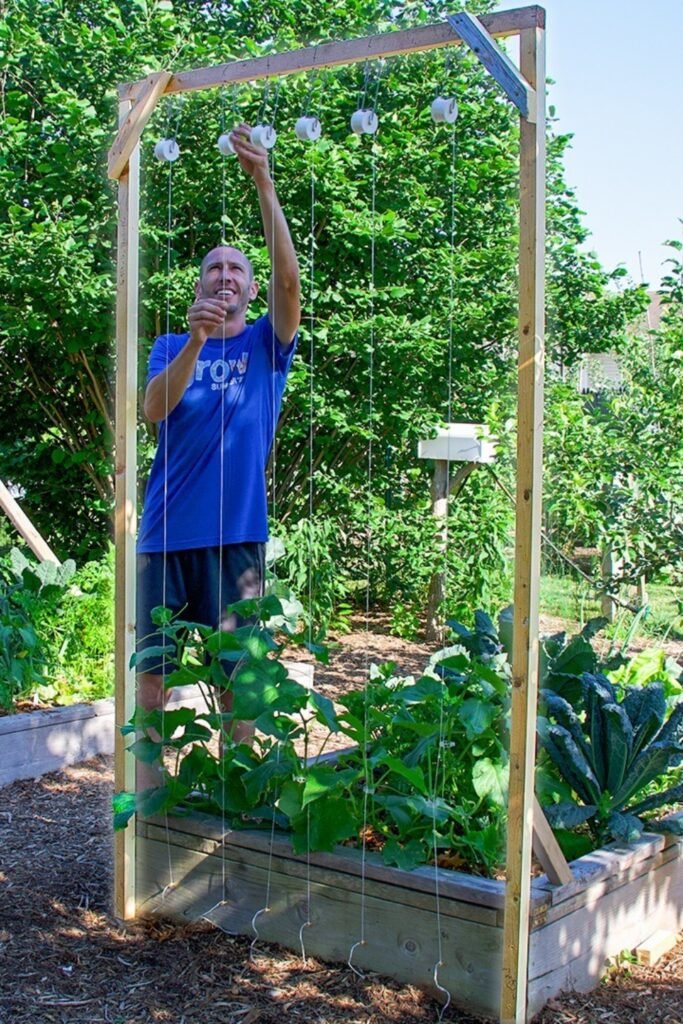
Adjustable String Frame
Use an adjustable string frame when you want a clean trellis system that lets you guide cucumber vines without bulky panels or heavy fencing nearby.
The hanging lines give every plant its own climbing route, which helps prevent crowded vines from twisting together as growth speeds up in warm weather.
Tighten or adjust the strings as needed, because loose vertical support can let stems slide down before tendrils grab properly and hold their weight well.
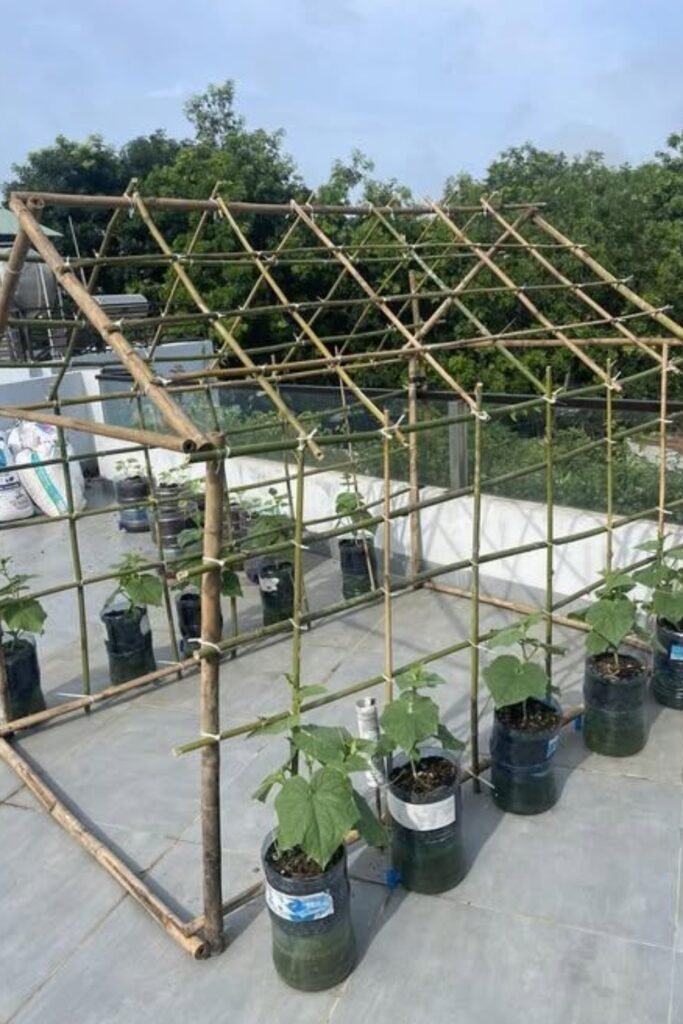
Bamboo House Frame
A bamboo house frame is useful when you grow cucumbers in containers but still want a full climbing structure above the pots on patios too.
The sloped roof gives vines more surface to spread across, so fruit can hang from the sides instead of crowding low around each container base.
Tie every bamboo joint securely, since this wide design depends on firm corners to stay steady once cucumbers cover the frame and catch wind outside.
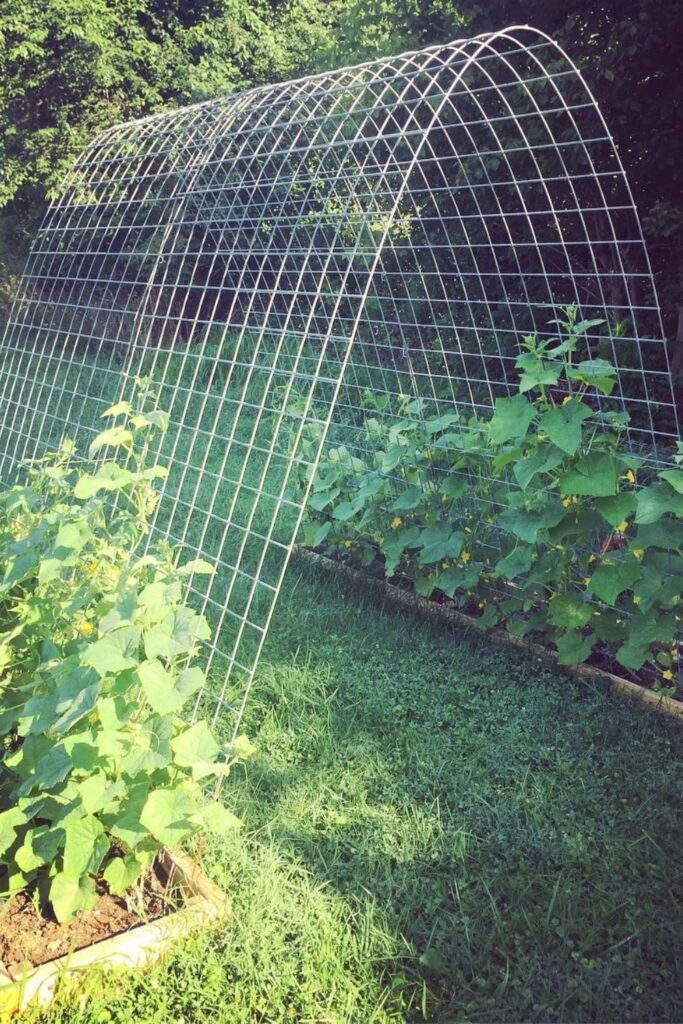
Cattle Panel Tunnel
Choose a cattle panel tunnel when you want the strongest option for heavy cucumber vines and a walkway that stays usable underneath all season long.
The large wire grid gives tendrils plenty of grip, while the arch shape lets fruit hang where it is easy to spot and pick quickly.
Set both ends deep inside raised beds or fasten them to stakes, because loose panels can spring back or shift under vine weight later too.
Compact Ladder
Use a narrow ladder trellis when you want cucumbers to grow upward in one tight garden spot instead of spreading across open soil nearby beds.
The horizontal rungs hold vines at different levels, so fruit stays visible and heavy growth does not slide down the center during harvest each week.
Set the post deep or brace it well because this vertical style becomes top-heavy once leaves and cucumbers collect near the upper rails in summer.
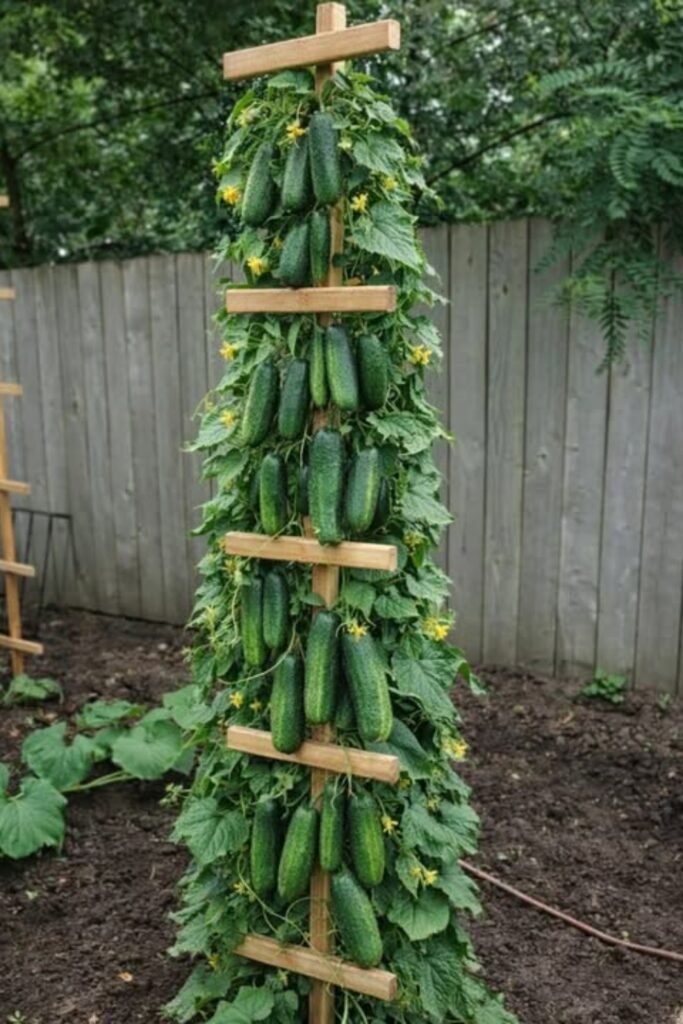
Folding Panel
Try folding wire panels when you want a reusable cucumber support that can stand in a raised bed and store flat after the season ends.
The angled frame gives vines a strong climbing surface, while the open mesh lets tendrils grab without much tying from you as they grow upward.
Place it before seedlings stretch too far, since young cucumber stems train easier when the support is already sitting beside them inside the garden bed.
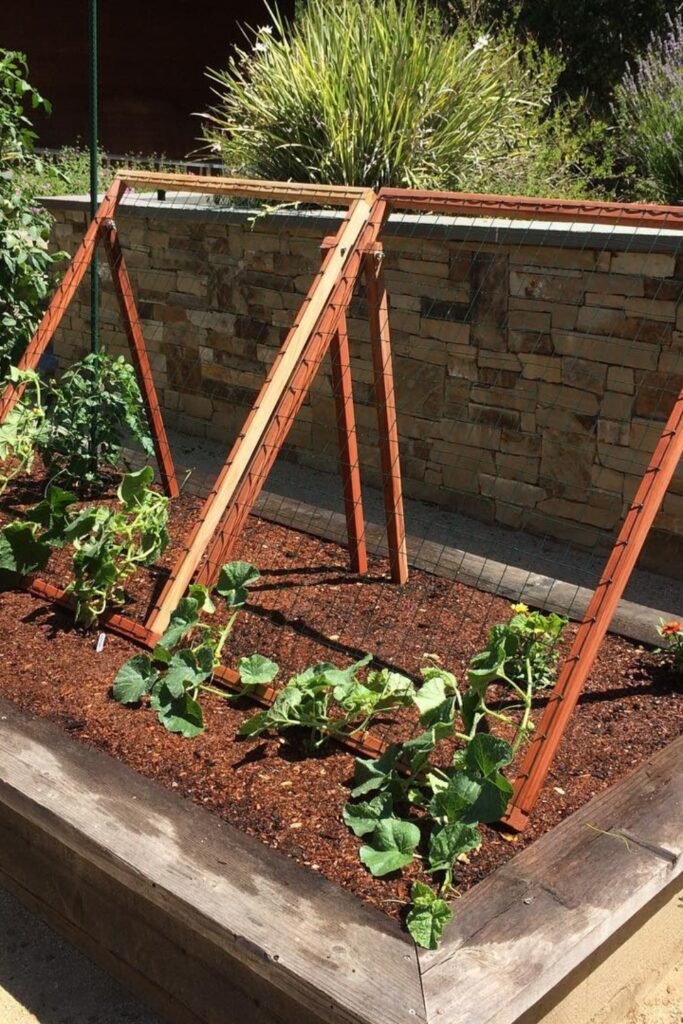
Sloped Metal Grid
A sloped metal grid works beautifully when you want cucumbers to hang in rows instead of disappearing behind thick leaves inside the bed all season.
The lean gives fruit space underneath, so you can pick from the front without reaching deep into the plant or crushing nearby young vines accidentally.
Use sturdy metal if your vines produce heavily, because thin frames can bend once several cucumbers pull on the same section during peak harvest time.
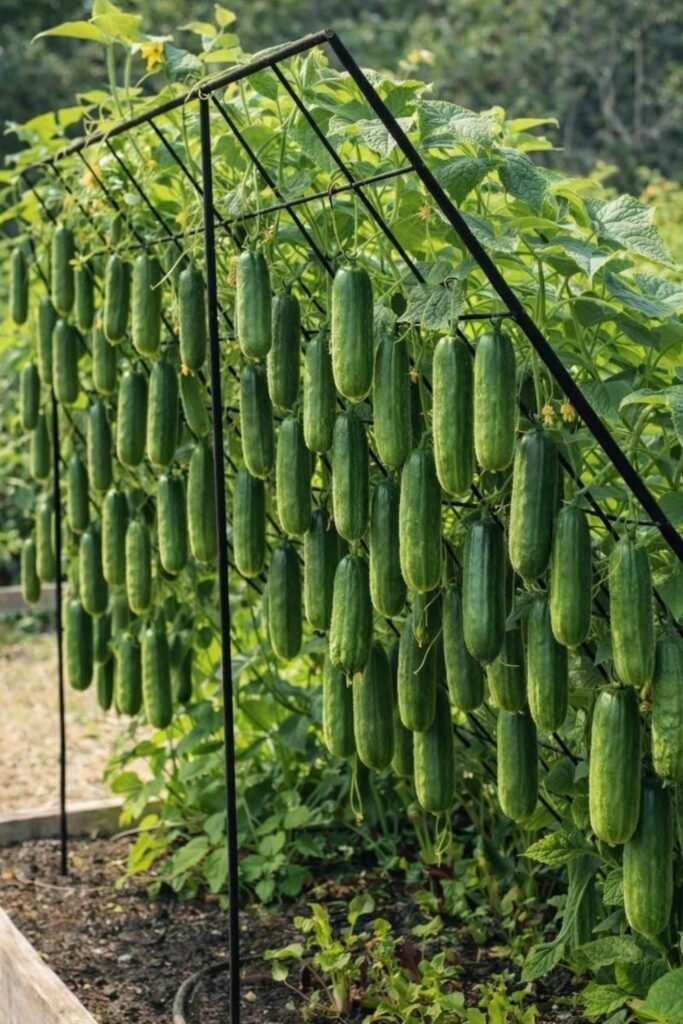
Greenhouse String Trellis
Use a greenhouse string trellis when you want cucumber vines to climb straight upward while staying protected from harsh wind, rain, and sudden weather changes.
The overhead frame gives you a strong place to tie strings, so each cucumber plant can grow in its own neat vertical lane.
Keep the strings tight and check vines often, because greenhouse cucumbers can grow quickly and may need gentle guiding before tendrils attach properly.
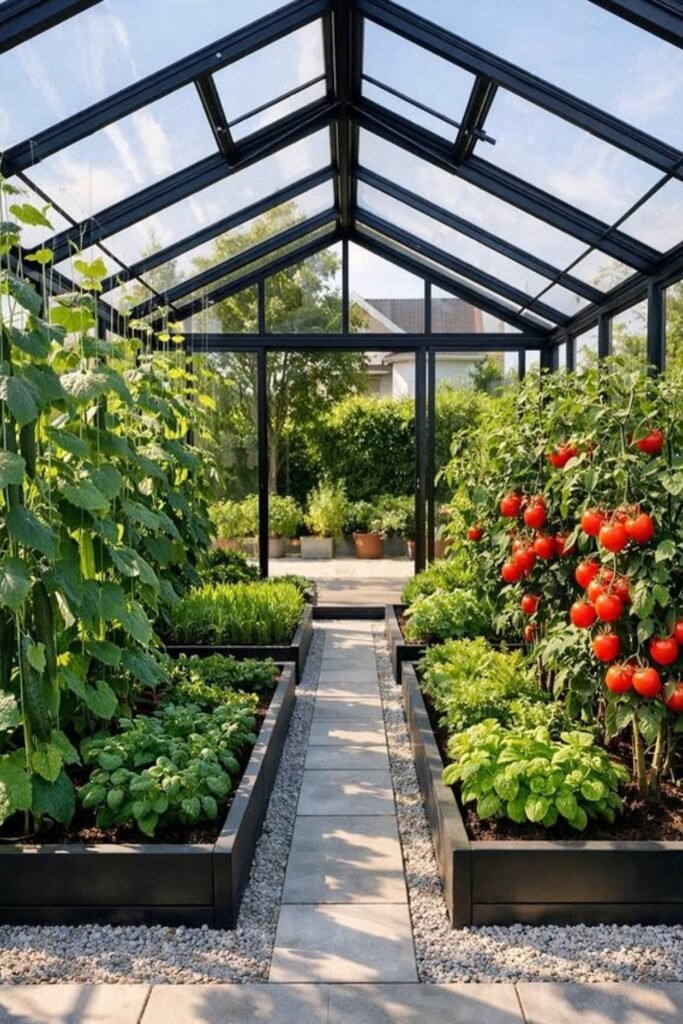
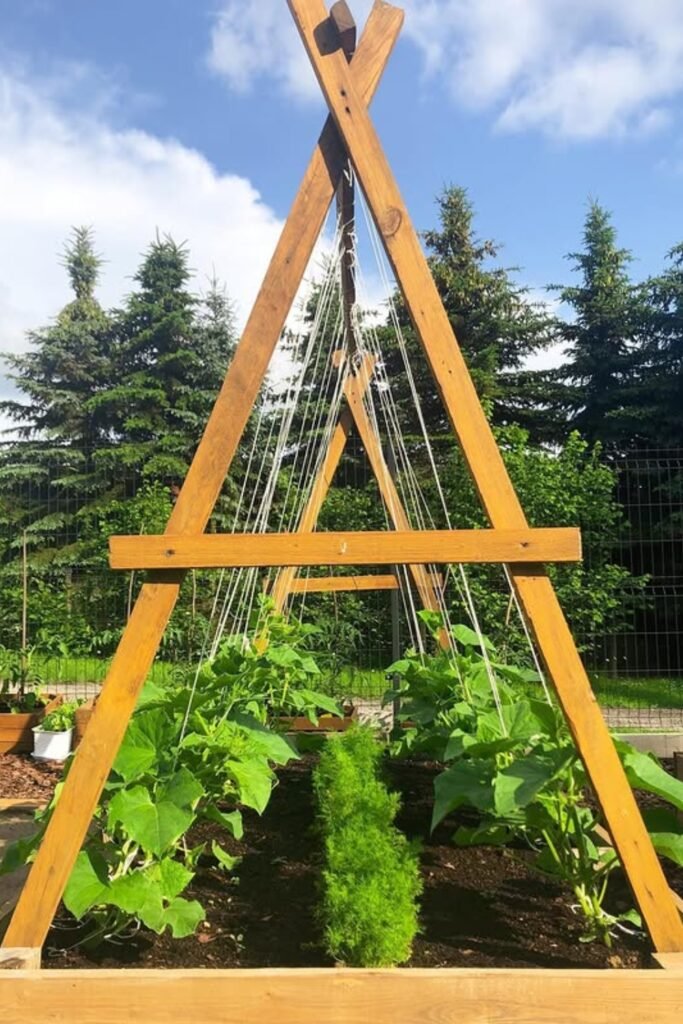
String A-Frame
Build a tall string A-frame when you want a clean, open trellis that gives cucumber vines height without blocking sunlight or garden access around them.
The hanging lines help separate each plant, which makes the vines easier to guide before they twist together in the middle during fast growth weeks.
Keep the base wide and the top joint strong, since this shape depends on tension to hold heavy vines steady through windy summer days outside.
FAQs
What is the best DIY trellis for cucumbers?
A cattle panel arch, wooden A-frame, or sturdy wire grid usually works better than weak sticks or loose netting.
Cucumbers can produce a lot of weight in a short time, so choose a trellis that has firm posts, tight support, and enough height for the vines to climb without falling over.
Can I grow cucumbers on a trellis in pots?
Yes, you can grow cucumbers on a trellis in pots, but the container needs to be large and stable. A small pot can tip over once the vines climb and fruit starts to hang.
Use a deep container, add the trellis early, and place the pot near a wall or fence if your area gets wind.
Bamboo teepees, string towers, and compact wire frames work well for container cucumbers.

Hi, my name is Ali Mehmood! I’m a passionate writer and DIY enthusiast who loves turning creative ideas into practical, hands-on projects.
I created this website to share inspiring, budget-friendly ideas that you can do yourself – whether it’s organizing your home, crafting something unique, or creating fun projects for kids and pets.
I believe DIY isn’t just a hobby – it’s a smart way to save money, reduce waste, and enjoy the satisfaction of making things with your own hands.
I’m excited to have you as part of this growing community, and I’ll continue bringing you helpful, realistic, and fun DIY ideas you can actually use.