This post may contain affiliate links: read full affiliate disclosure.
Your sunniest window may be exactly where your plants want to grow, but a narrow sill can run out of room after just a few pots.
Moving the extras onto tables takes up valuable floor space, while placing them farther from the window may leave them struggling for enough light.
A DIY window shelf helps you use that empty vertical space without turning the whole room into a plant stand.
You can build around your window size, pot collection, available light, and even how often you need to open the window.
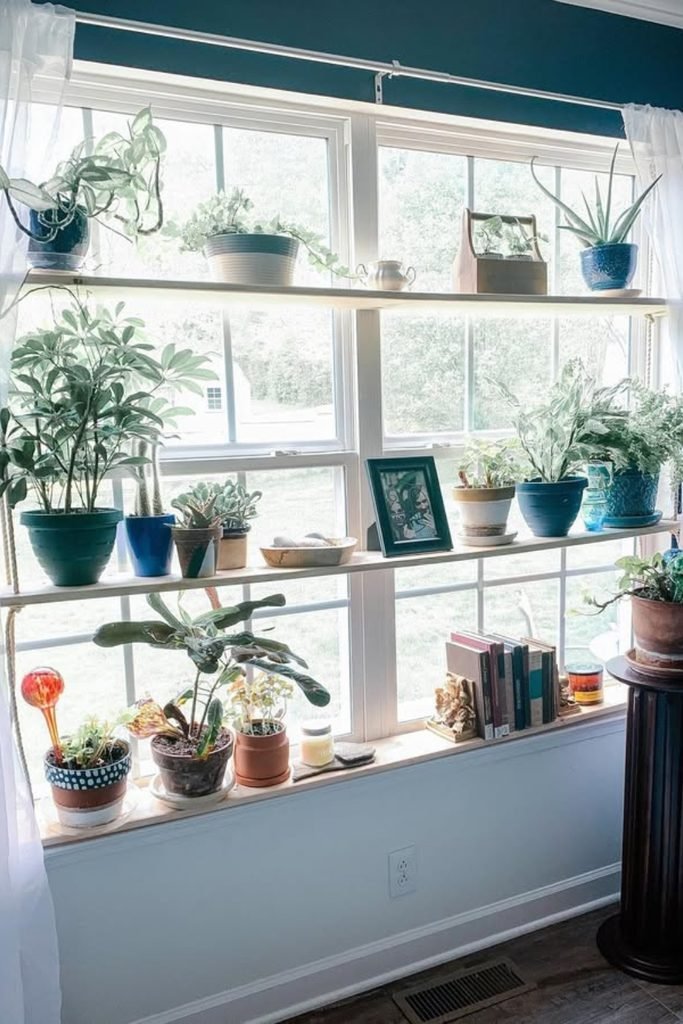
Layered Window Shelves
When one sunny window needs to serve several plants, slim shelves spread pots vertically without stealing additional floor space from the room.
Leave generous gaps between levels so taller foliage has growing room while sunlight can still travel toward plants sitting underneath.
Using shallow boards also makes watering easier, while the existing sill can handle heavier pots that benefit from a sturdier base.
Deep Sill Extension
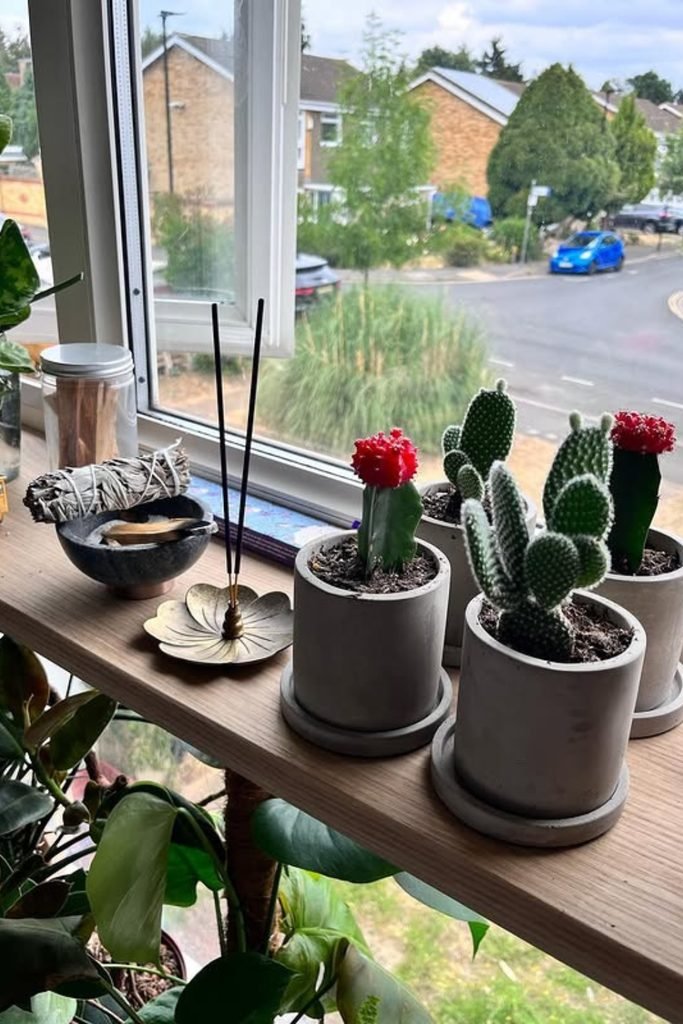
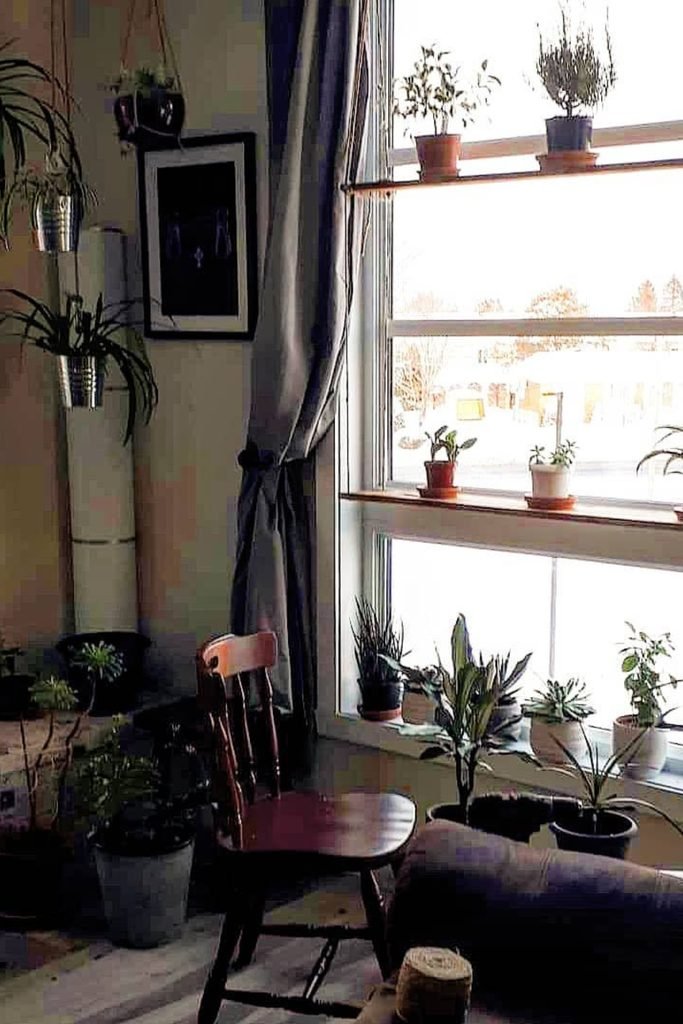
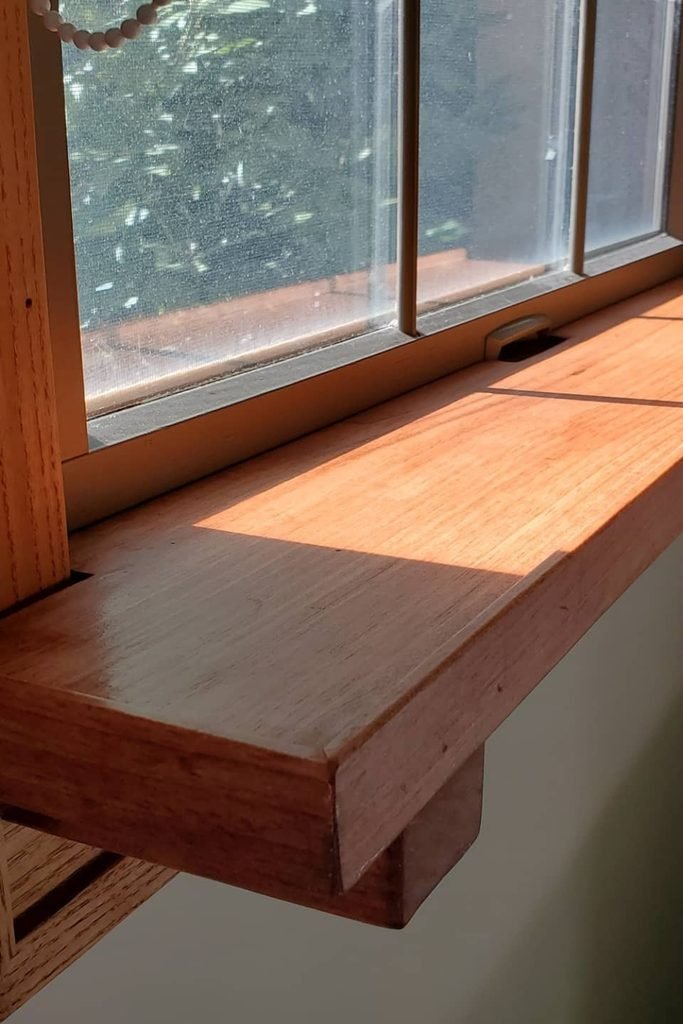
A deeper wooden ledge can turn an almost useless narrow sill into enough growing space for medium pots and grouped succulents.
Cut the board around the window width, then support its projecting edge properly so wet soil and heavier containers cannot cause tipping.
Place sun-loving smaller plants nearest the glass, leaving enough clearance around handles whenever you still need to open the window.
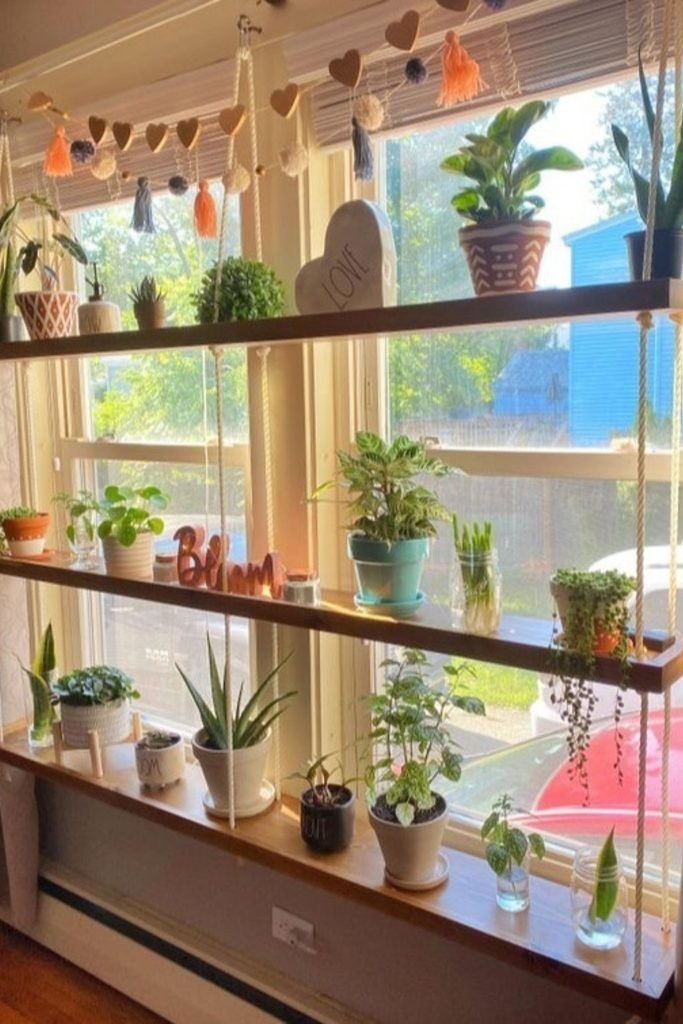
Hanging Plant Shelves
Rope suspension is worth considering when side brackets would damage decorative trim or make an already busy window frame feel cluttered.
Drill matching holes near each board corner, then level every tier individually before tightening knots and adding the weight of plants.
Vary the vertical gaps around taller plants rather than spacing all three boards equally, giving growing foliage somewhere comfortable to expand.
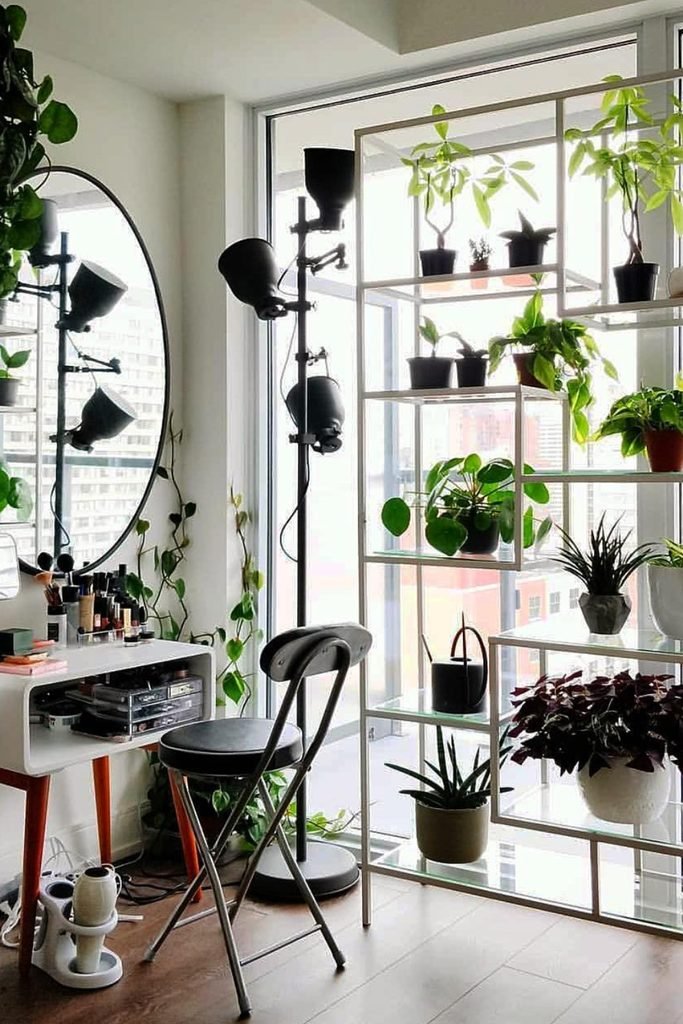
Open Frame Stand
Renters can bring shelving directly against a bright window with a freestanding frame, avoiding screws through trim or surrounding walls entirely.
Build staggered platforms instead of continuous boards so plants receive their own pockets of light without one shelf heavily shading another.
A narrow base preserves valuable floor area, but makes the frame stable enough that reaching for upper pots cannot shift it forward.
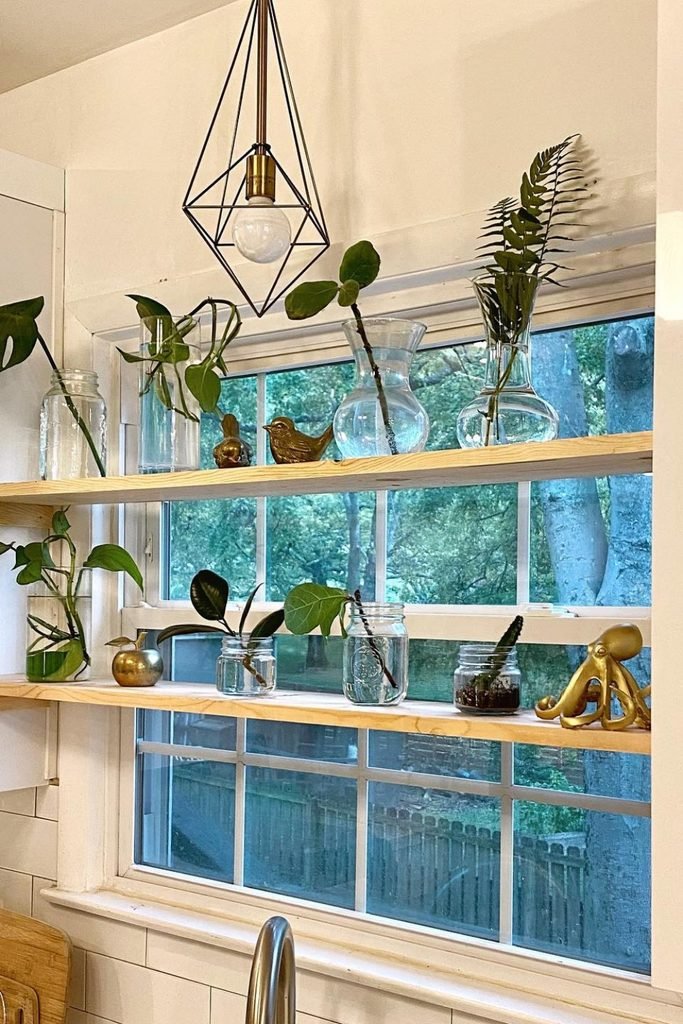
Propagation Ledges
Propagation jars deserve their own sunny station, and slim wooden ledges give cuttings plenty of light without demanding space for bulky pots.
Mount the boards across sturdy side supports, leaving enough clearance above each jar so developing stems can grow without hitting another shelf.
Because water-filled glass adds weight quickly, spread containers across the ledge rather than clustering every heavy jar around one mounting point.
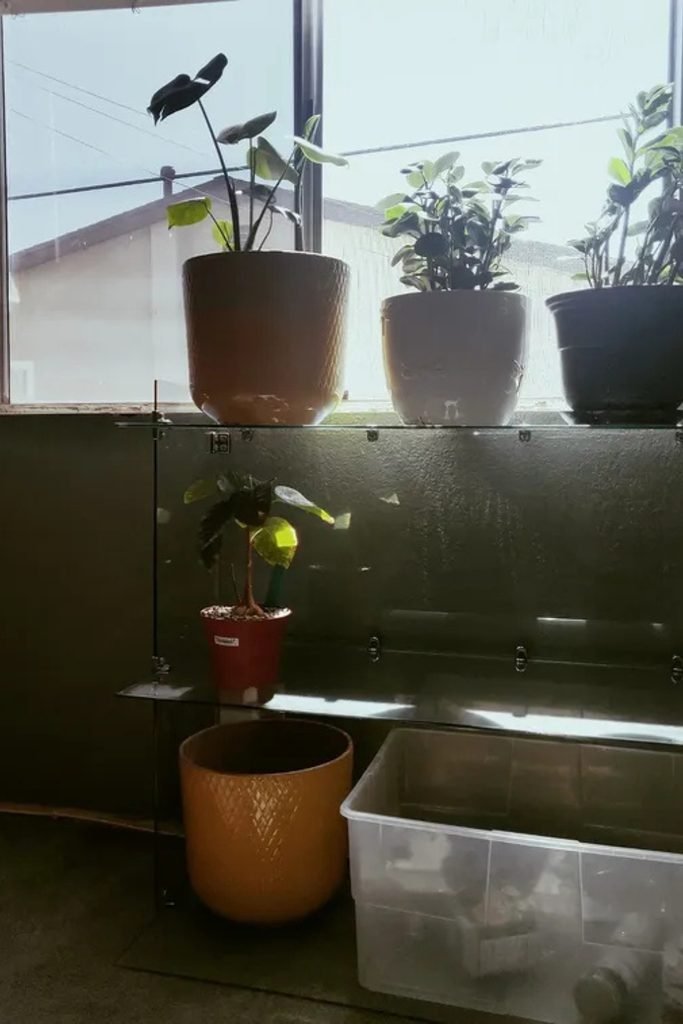
Adjustable Glass Shelf
If your plant collection changes often, adjustable glass shelving lets you shift the growing levels instead of rebuilding around every taller newcomer.
Secure vertical tracks beside the window, then position brackets at different heights so each shelf matches the plants currently using that level.
Transparent surfaces also reduce heavy shadows below, making this approach useful when several compact plants must share one bright window.
Slim Hanging Ledges
A pair of narrow hanging ledges can add growing room across a tall window while leaving the existing sill available below.
Suspend each board from secure upper mounting points, then position the tiers far enough apart for foliage to develop without crowding.
Narrow boards suit smaller pots best, since limiting shelf depth reduces visual bulk and leaves more of the outdoor view uncovered.
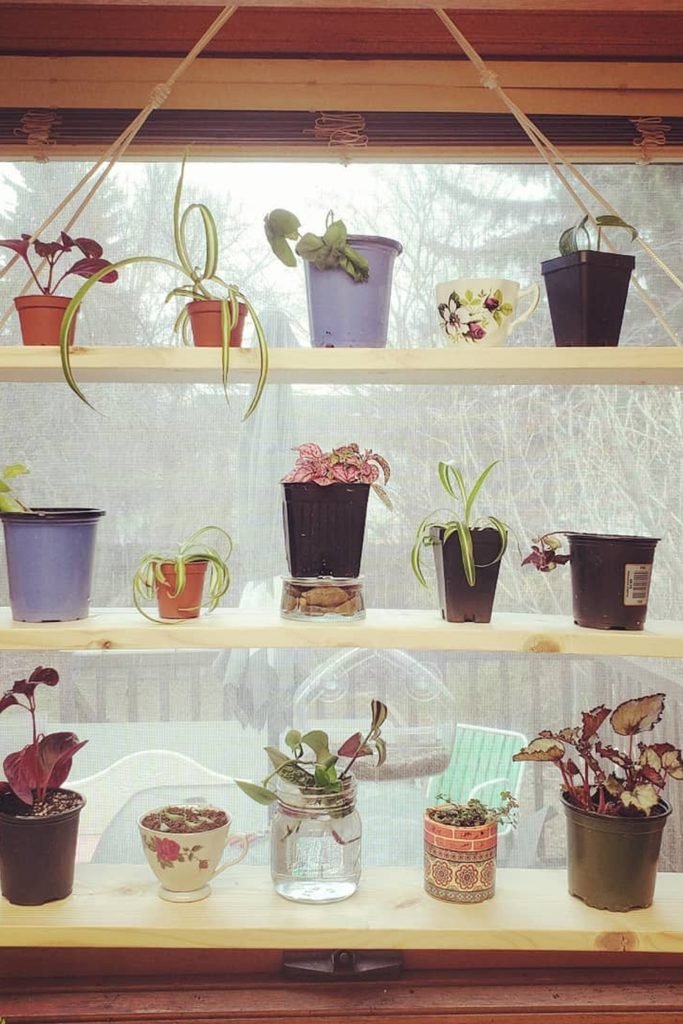
Simple Rope Tiers
You can stretch three useful growing levels across a smaller window without surrounding the opening with permanent brackets or bulky framing.
Thread rope through matching corner holes, knot beneath every board, and check each tier with a level before arranging your plants.
Choose lighter pots for the suspended boards and reserve heavier containers for the sill, reducing unnecessary strain on the upper anchors.
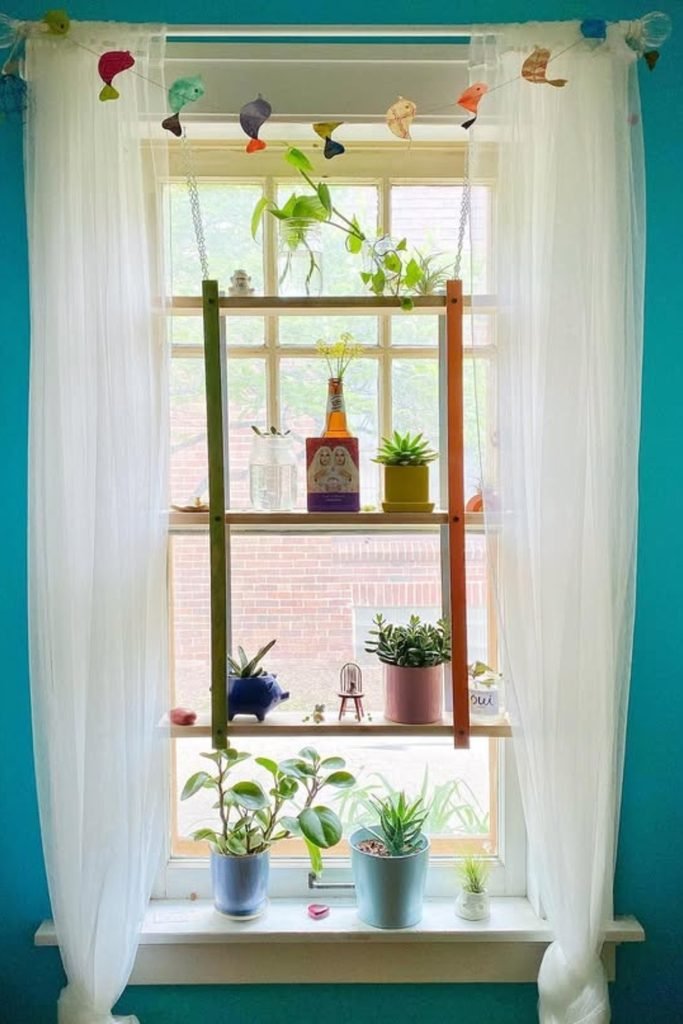
Vertical Strap Shelves
A narrow window can still hold several plant levels when slim boards are joined vertically instead of spreading supports across surrounding walls.
Use sturdy side straps or rails to connect each tier, checking the shelf spacing against your tallest plants before securing everything.
Let the lowest pots remain on the sill, giving larger plants extra headroom while smaller varieties occupy the elevated boards above.
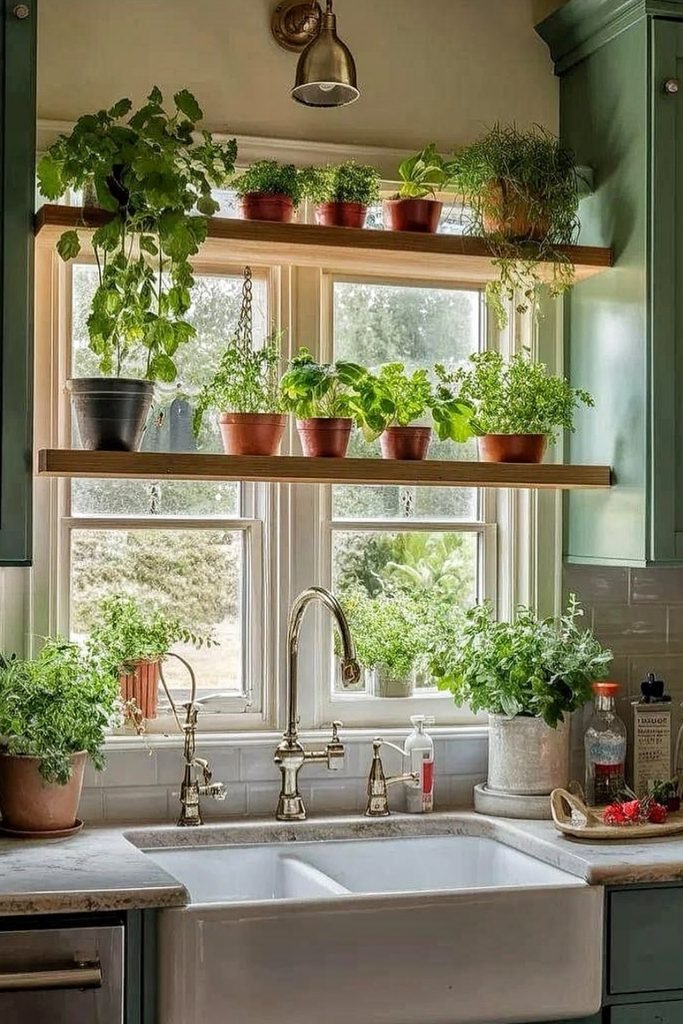
Kitchen Herb Shelves
Fresh herbs can claim the bright space above your sink without taking over the countertop where you actually prepare food.
Run narrow wooden shelves across the window, positioning them high enough that the faucet and window handles remain comfortable to reach.
Group frequently harvested herbs toward the front, and seal the boards well because splashes and regular watering make kitchen shelves prone to moisture.
Window Storage Wall
When plants already share a busy room, extending shelving beyond the window can turn one DIY build into useful storage too.
Connect long boards to sturdy vertical supports, reserving the brightest sections directly across the glass for plants that need stronger light.
Use the side sections for lighter household items, preventing unnecessary clutter from competing with pots for valuable sunny shelf space.

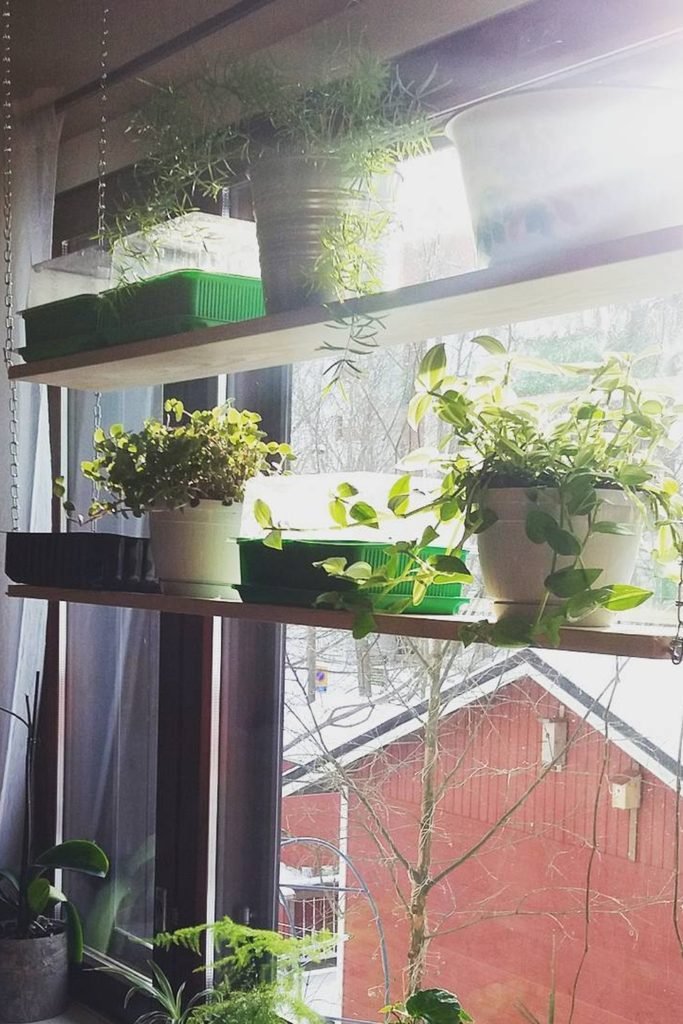
Chain Suspended Shelves
Metal chain gives hanging shelves firmer support than soft rope while bringing a slightly industrial edge to a plant-filled window.
Attach each board at four balanced points, then adjust individual chain links until both tiers sit level before loading any containers.
This setup suits seedlings and trailing plants nicely, but distributes heavier pots evenly so one end never carries most of the load.
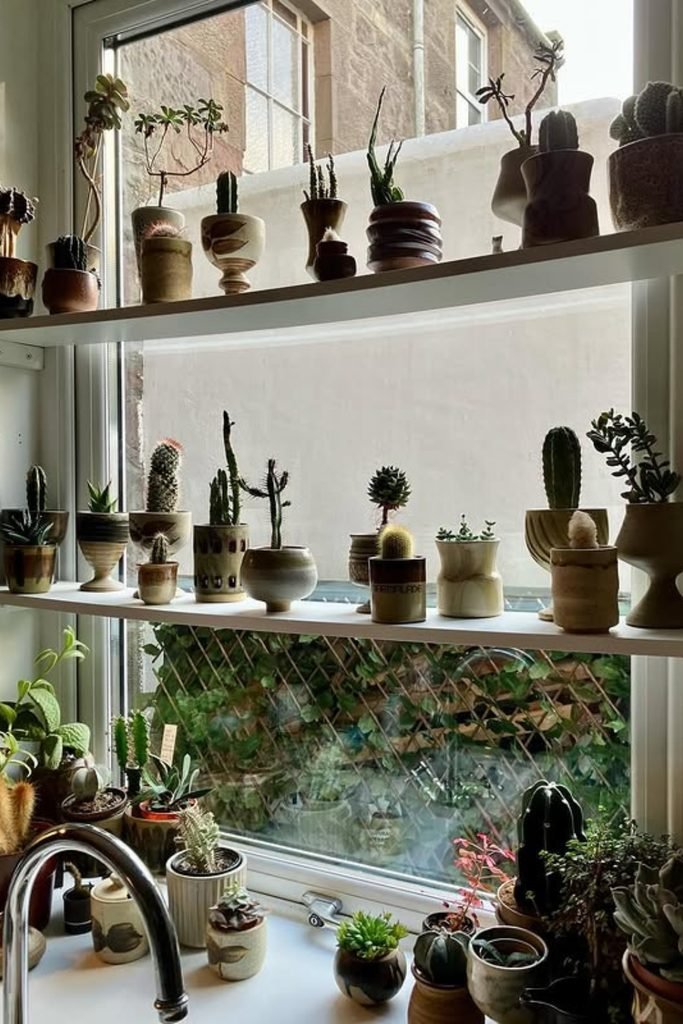
Cactus Display Shelves
Small cacti are perfect for shallower window shelves because their compact shapes leave plenty of breathing room between closely arranged pots.
Fit slim boards between the surrounding walls or cabinets, using secure end supports so the middle stays steady under multiple containers.
Reserve wider gaps for taller specimens, while shorter varieties can sit together without creating enough foliage to shade the level below.
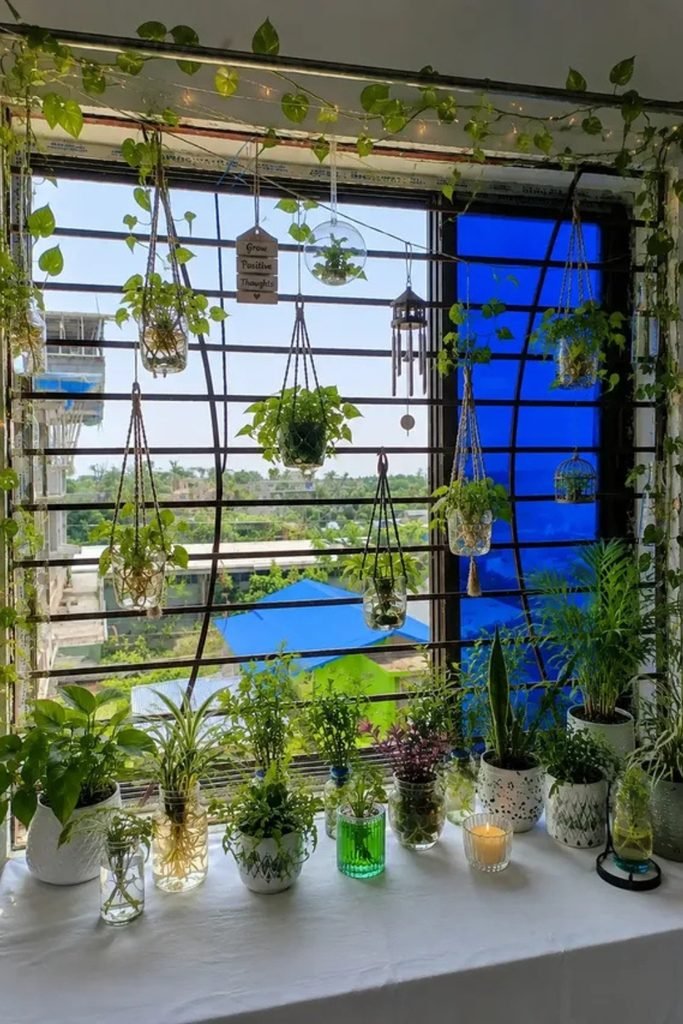
Hanging Window Garden
When drilling shelves across the frame feels too permanent, hanging individual planters can turn the existing window grille into growing space.
Use secure hooks at different heights so trailing vines have room to fall naturally without tangling around neighboring pots or window hardware.
Leave the sill for heavier containers and propagation jars, creating two planting zones without adding another freestanding shelf beside the window.
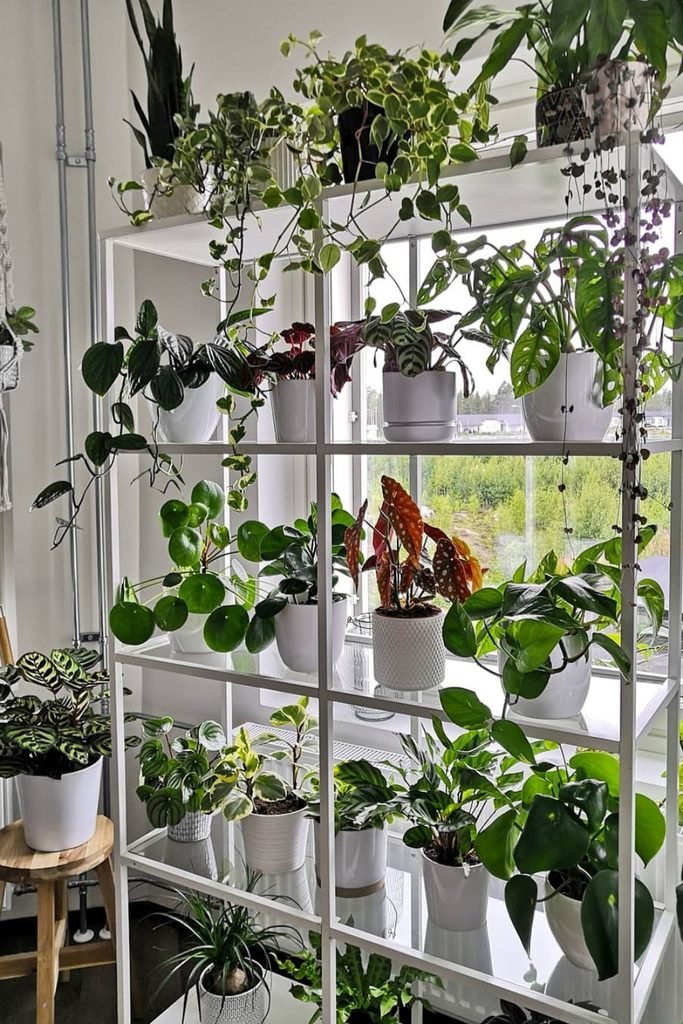
Grid Plant Stand
A large collection becomes easier to organize when an open grid gives each pot its own bright section instead of one crowded ledge.
Build a slim freestanding frame with staggered horizontal supports, allowing trailing vines to spill through openings rather than bunching across neighboring plants.
Position taller plants toward open upper sections and compact varieties below, using the varied gaps to accommodate growth without rebuilding later.
Grille Plant Shelf
A deep window recess can become a simple plant station by using the lower ledge for pots and the grille for hanging varieties.
Start with sun-loving containers along the sill, then suspend lighter trailing plants above where they will not steal usable planting depth below.
This approach avoids filling the opening with solid boards, so plenty of daylight still reaches the room while your collection grows vertically.
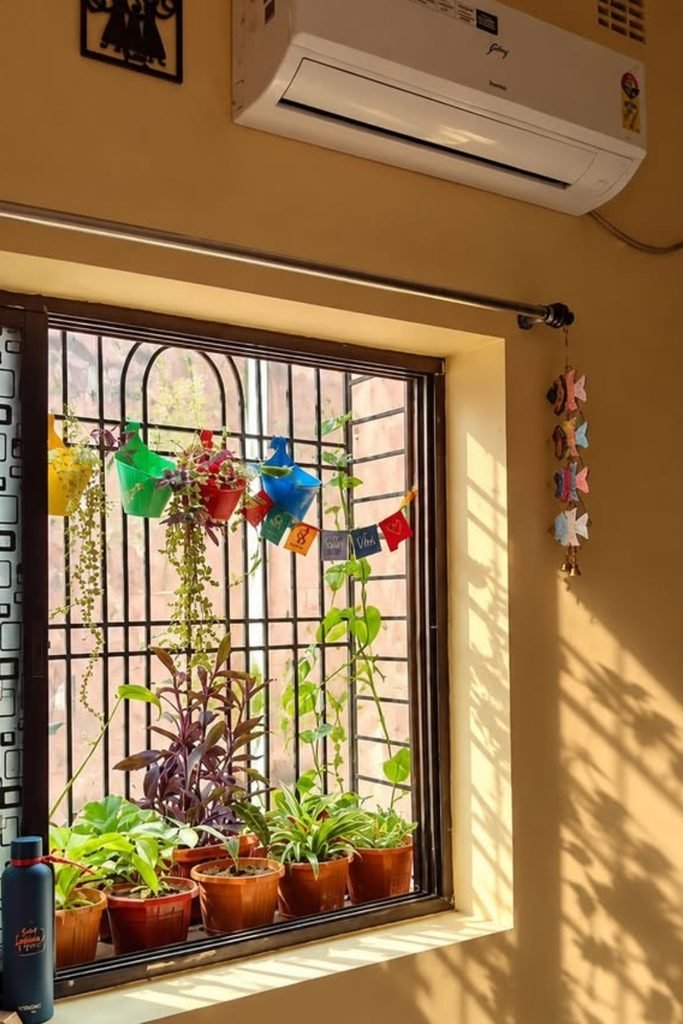
Clear Kitchen Shelves
Clear shelves are a smart choice above busy counters because they add plant space without making a smaller kitchen window feel boxed in.
Use sturdy transparent panels with secure side supports, then leave enough room between tiers for foliage and comfortable watering access.
Small and medium pots suit this setup best, while matching saucers catch drainage before moisture reaches the sill or surrounding counter.
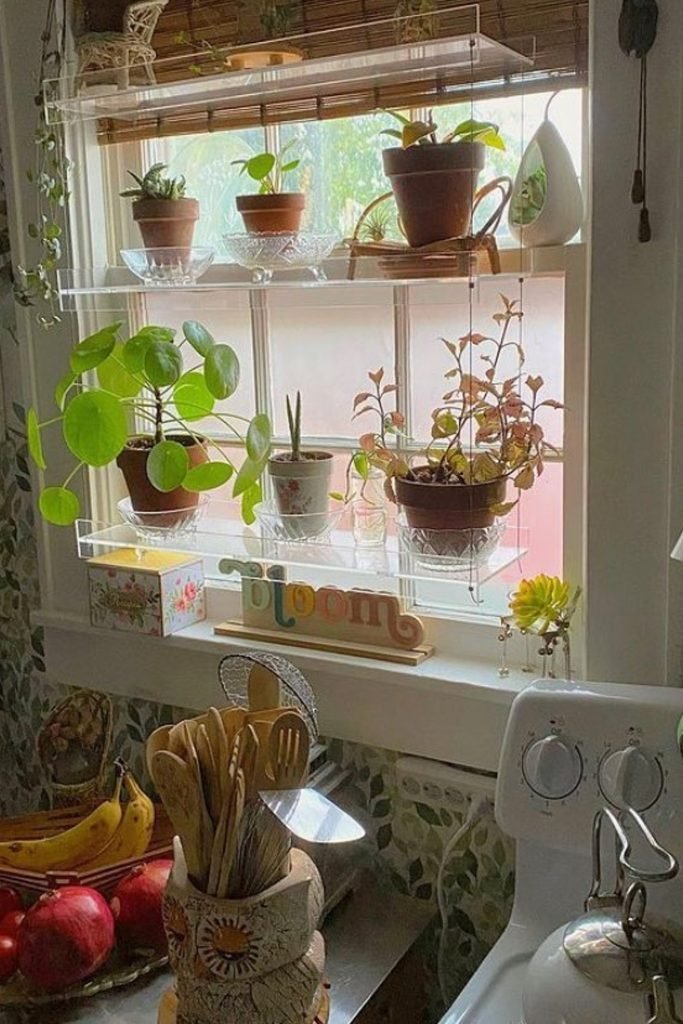
Recessed Plant Shelf
Deep window recesses already provide natural side support, so adding one central shelf can double growing space without building a bulky frame.
Measure between both sides carefully, then secure the board high enough for taller plants to remain comfortable on the lower sill.
Grouping smaller pots upstairs and larger foliage below also prevents the upper row from casting unnecessary shade across everything underneath.
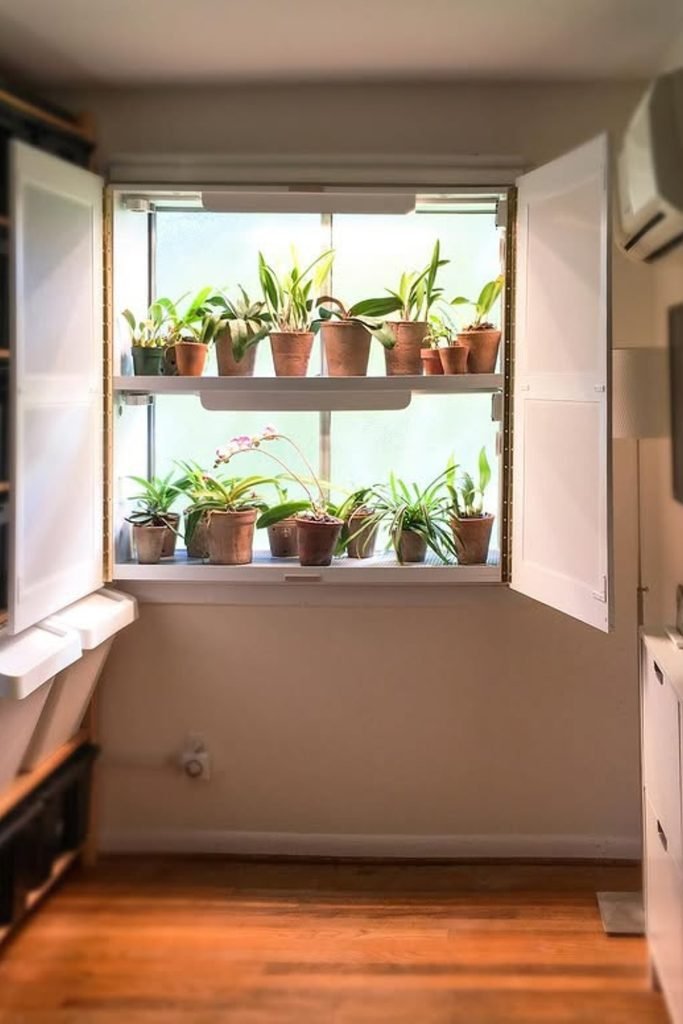
Acrylic Plant Tiers
When every level needs useful daylight, transparent acrylic can create multiple growing tiers without the visual heaviness of stacked wooden boards.
Cut each panel to fit the window recess, then use reliable supports and suitable thickness to prevent longer spans from bowing.
Mix compact plants with propagation bottles across the tiers, leaving open areas where sunlight can continue reaching foliage farther down.
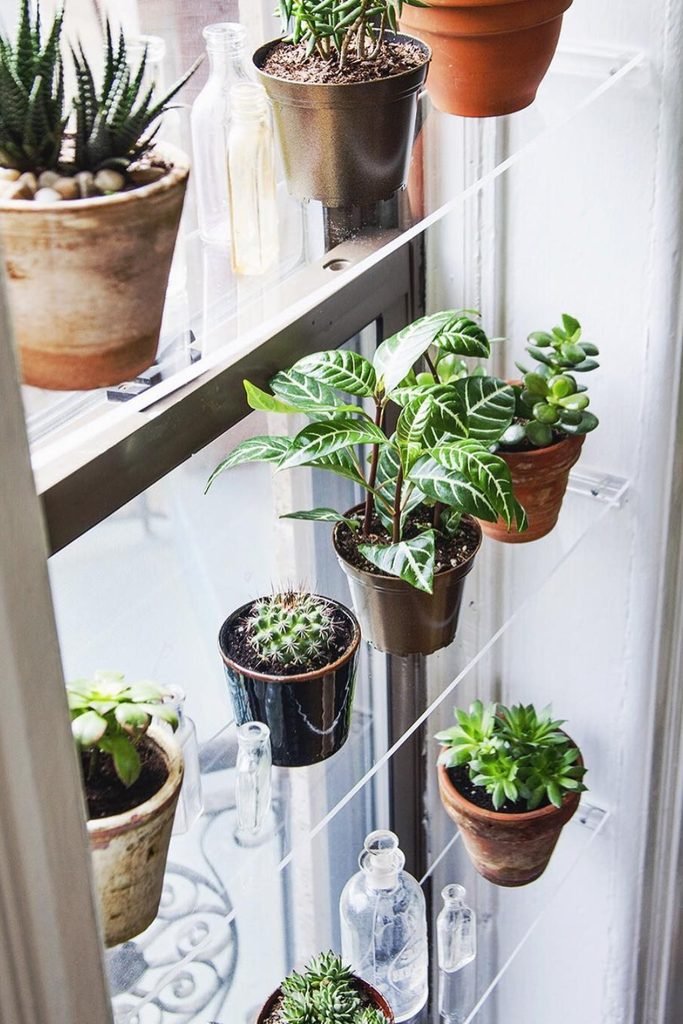
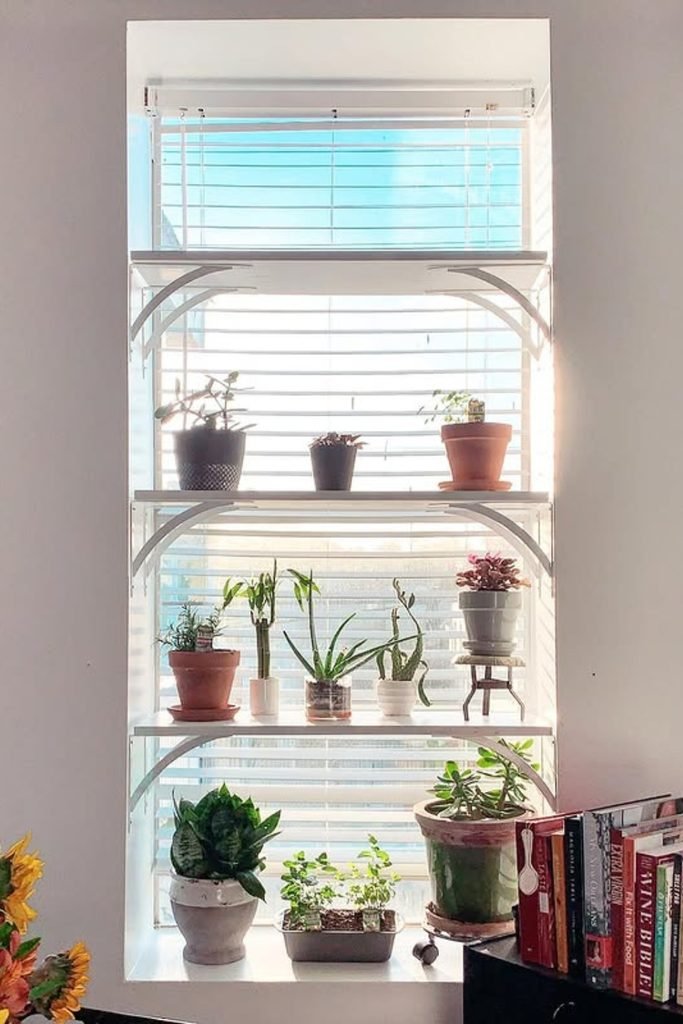
Arched Window Shelves
A tall narrow window benefits from shelves that follow its proportions, turning unused height into several manageable plant zones.
Curved side braces can strengthen each level while adding character, making simple boards feel more intentional than ordinary straight brackets.
Space the tiers according to plant height, and leave the upper window area open so blinds can still move without catching foliage.
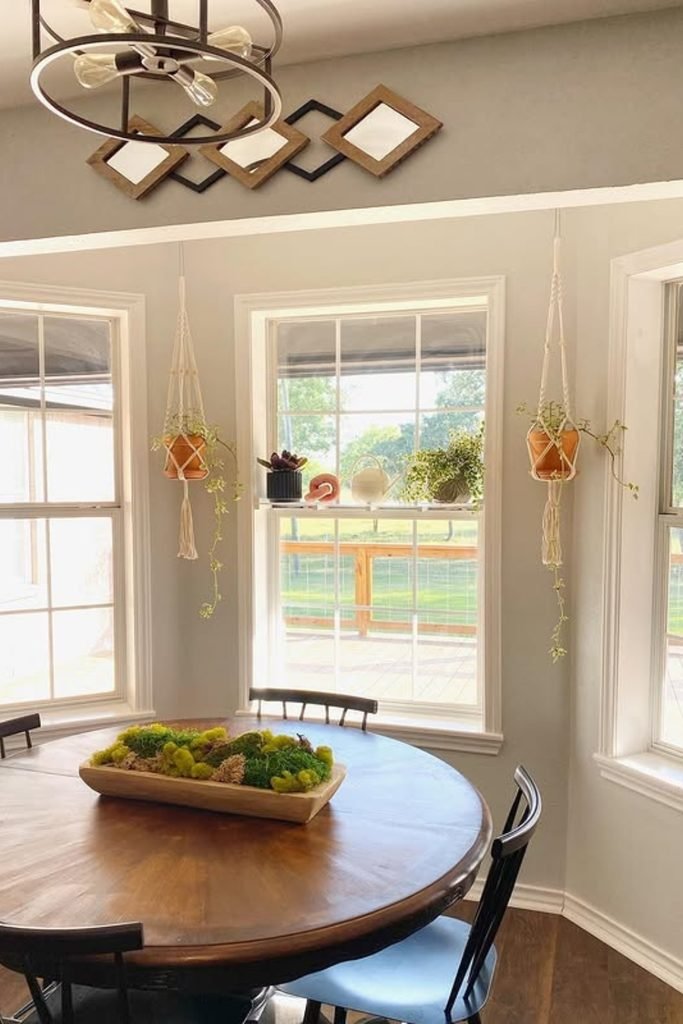
Single Window Ledge
Sometimes one extra ledge is enough, particularly when a dining area needs greenery without turning every window into a packed display.
Fit a slim board across the middle opening, giving compact pots better light while leaving the original sill completely available below.
Pairing the ledge with hanging planters nearby spreads greenery around the room instead of forcing every plant onto one crowded surface.
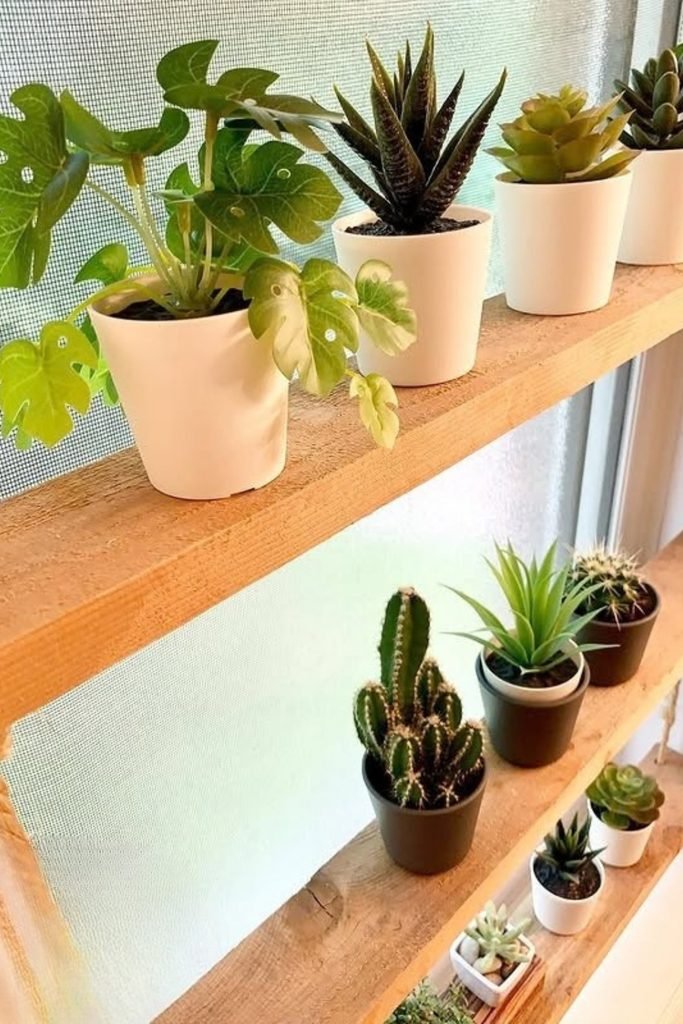
Rustic Wood Tiers
Rough timber boards bring plenty of character to a simple plant shelf, making inexpensive lumber feel intentional rather than unfinished.
Suspend each tier with thick rope, tying secure knots underneath while allowing enough distance for upright foliage and growing succulents.
Sand rough edges before hanging, then seal the wood against watering spills so its rustic finish survives regular plant care better.
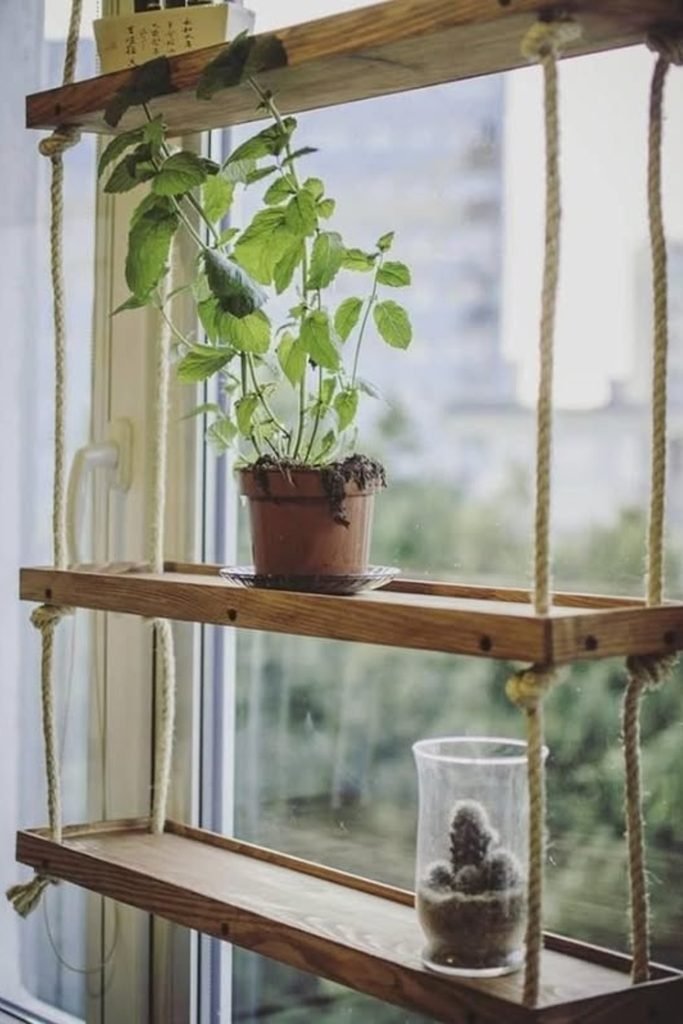
Framed Rope Shelf
Adding a raised wooden edge around suspended shelves gives small pots extra protection when the setup moves slightly during watering.
Build shallow tray-style boards, drill the corners for rope, and knot each level only after checking its position against the window.
The little border is useful for narrow shelves, where a bumped container has less surface behind it before reaching the edge.
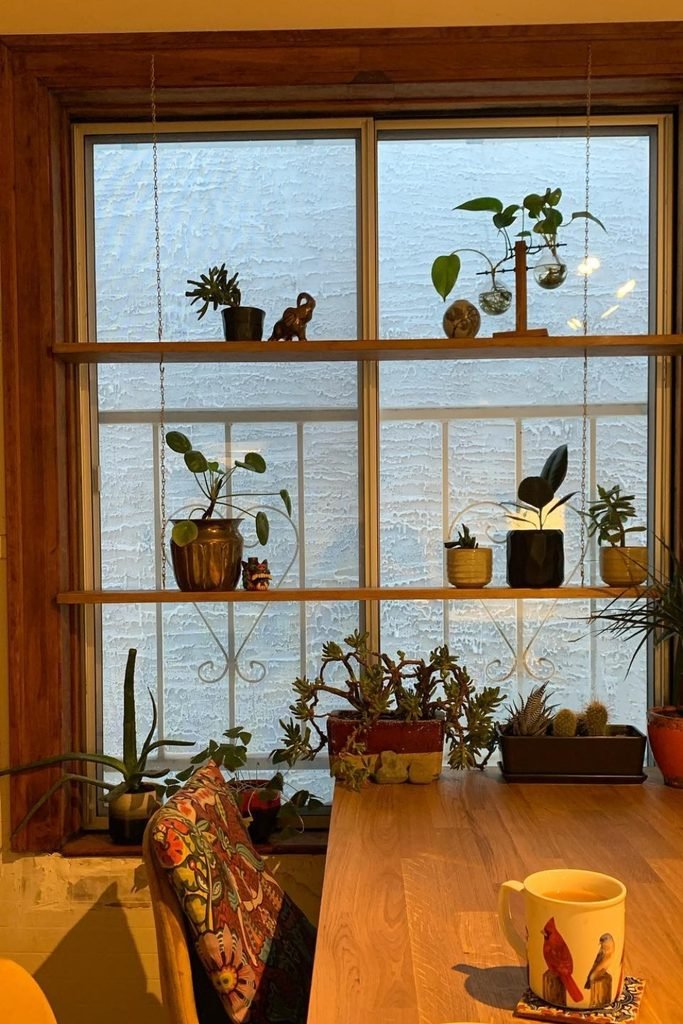
Chain Window Ledges
Thin chains almost disappear against a large window, letting simple wooden ledges provide plant space without introducing chunky brackets along the sides.
Anchor both chains securely above, then connect each board at matching heights so the shelves stay balanced as pots are rearranged.
Leave some open stretches between plants rather than filling every inch, preserving the outside view and making individual pots easier to reach.
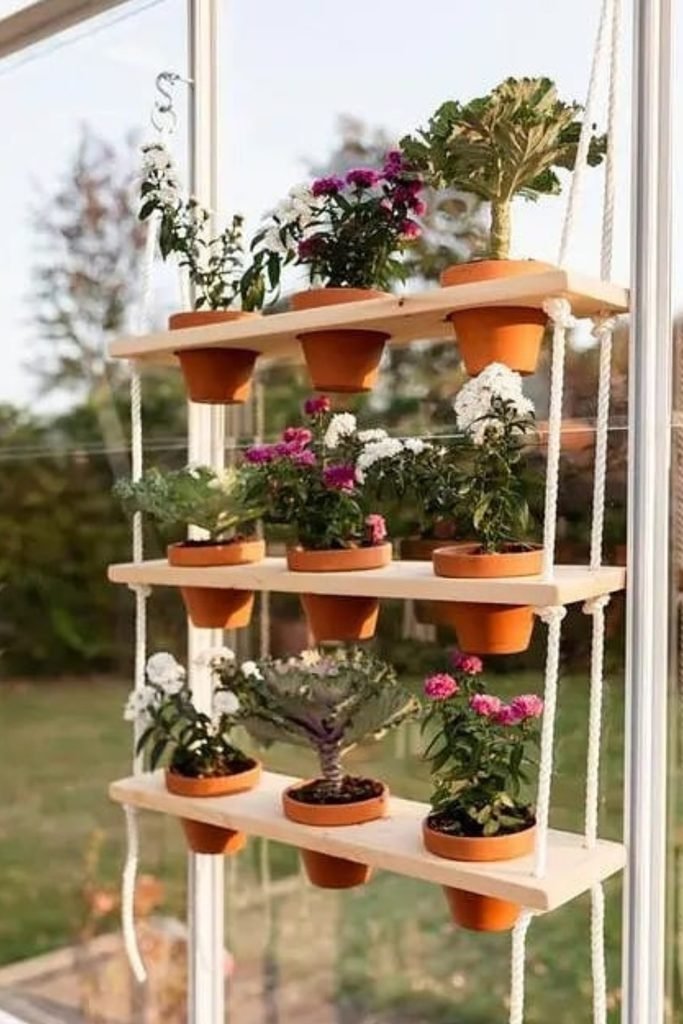
Cutout Pot Shelves
Cutting pot-sized openings into each board gives containers a more secure seat, which is helpful when suspended shelves can move slightly.
Trace each pot below its widest rim before cutting, leaving enough wood around every opening to maintain the board’s overall strength.
Use similarly sized lightweight pots for the cleanest fit, and make sure each container can still lift out easily for watering.
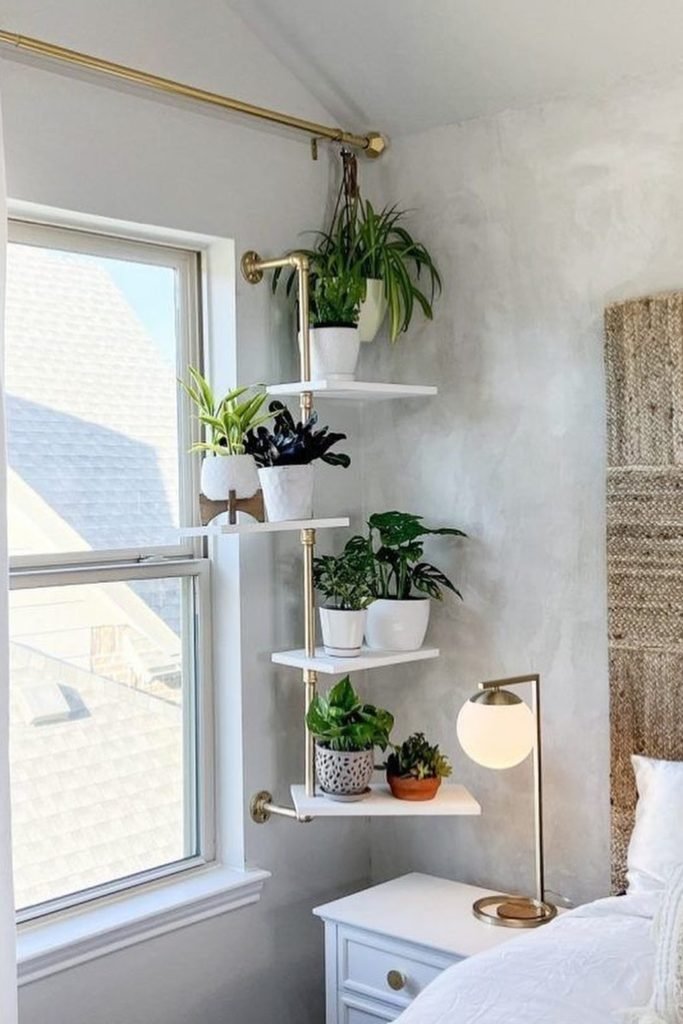
Corner Pipe Shelves
An awkward strip beside the window can become useful growing space when narrow shelves climb vertically instead of covering the glass.
Build around a floor-to-ceiling pipe or sturdy vertical support, staggering compact platforms so foliage has room beside each level.
This layout works nicely near beds or desks, where a full-width window shelf could feel intrusive or interfere with everyday furniture.
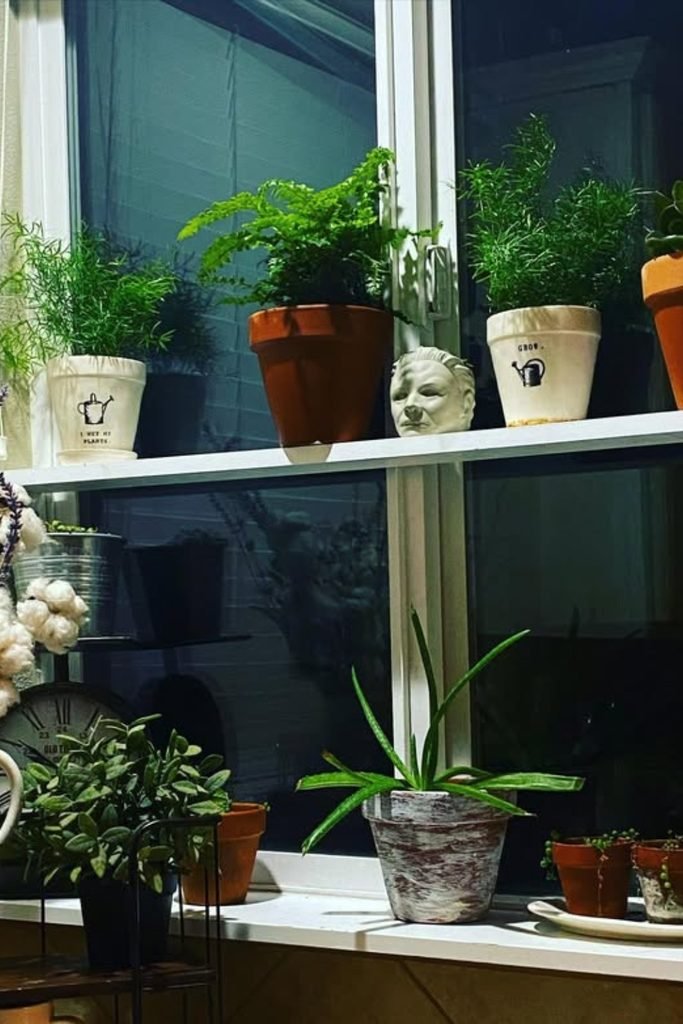
Midwindow Ledge
One simple shelf across the window can double your usable planting area without committing to a full multi-tier installation.
Mount the board around mid-height, leaving generous clearance for taller pots below and enough open glass for sunlight to pass through.
Smaller plants belong on the raised level, while heavier or faster-growing pots can stay safely supported by the original sill.
Sill Extension
If your existing sill is too shallow for pots, extending it outward solves the problem without covering the window with extra tiers.
Cut a deeper board to follow the opening, then add strong supports underneath so watering and heavier containers cannot make it tip.
Seal every exposed wooden surface before adding plants, since drainage, condensation, and occasional spills will eventually reach this hardworking ledge.
FAQS
Can I Build a Window Plant Shelf Without Drilling Into the Frame?
Yes. A removable sill extender, tension-supported setup, or freestanding shelf can add growing space without putting screws through the window frame.
Whichever method you choose, check its stability with the expected plant weight before loading it fully.
How Do I Protect a Wooden Window Shelf From Water Damage?
Seal unfinished wood with a water-resistant protective finish before placing your plants on it.
I also recommend using saucers beneath every pot, since drainage and small watering spills can eventually stain or swell an unprotected shelf.

Hi, my name is Ali Mehmood! I’m a passionate writer and DIY enthusiast who loves turning creative ideas into practical, hands-on projects.
I created this website to share inspiring, budget-friendly ideas that you can do yourself – whether it’s organizing your home, crafting something unique, or creating fun projects for kids and pets.
I believe DIY isn’t just a hobby – it’s a smart way to save money, reduce waste, and enjoy the satisfaction of making things with your own hands.
I’m excited to have you as part of this growing community, and I’ll continue bringing you helpful, realistic, and fun DIY ideas you can actually use.