This post may contain affiliate links: read full affiliate disclosure.
You see a full, beautiful fabric wreath and think it looks simple, until you start wondering how much fabric you need, which frame works best.
Add sewing into the mix, and an easy weekend project can suddenly feel more complicated than expected.
The good news is you can create plenty of polished wreath styles without touching a needle or sewing machine.
In this article, you’ll discover easy no-sew fabric wreath ideas, practical techniques, and inspiration you can confidently recreate at home.
Pom-Pom Layers
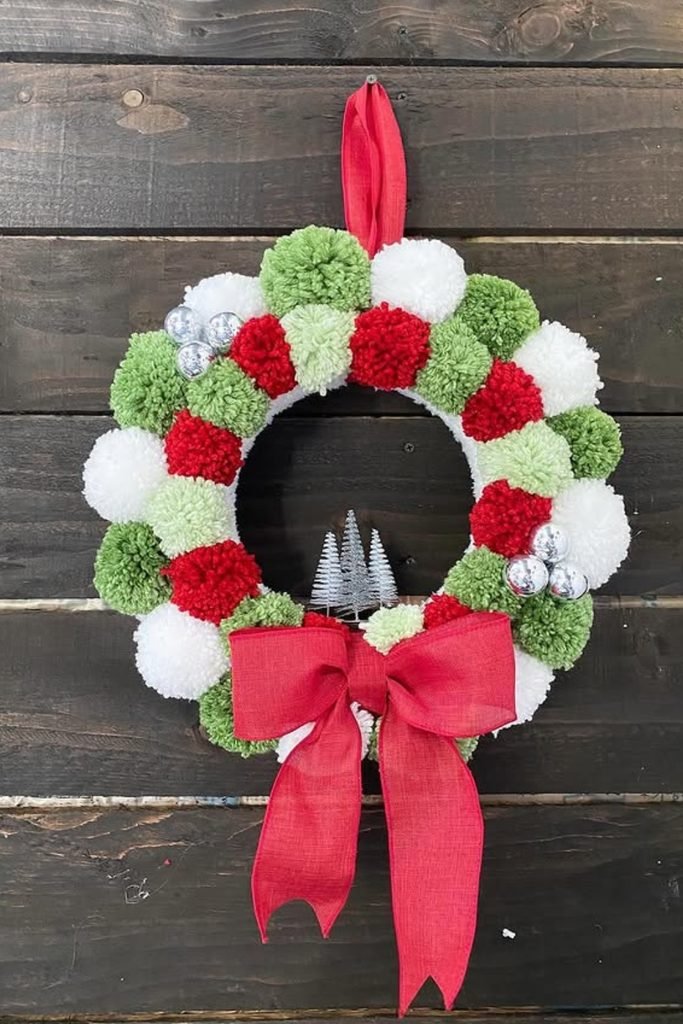
Skip flat fabric strips when you want extra dimension, and cluster soft fabric pom-poms tightly around a sturdy wreath base.
Mixing three coordinated colors gives the wreath rhythm, while varied pom-pom sizes help cover awkward gaps without making placement look calculated.
Finish with an oversized fabric bow and simple ornaments, letting those larger accents break up the dense texture around the frame.
Floral Fabric Blooms
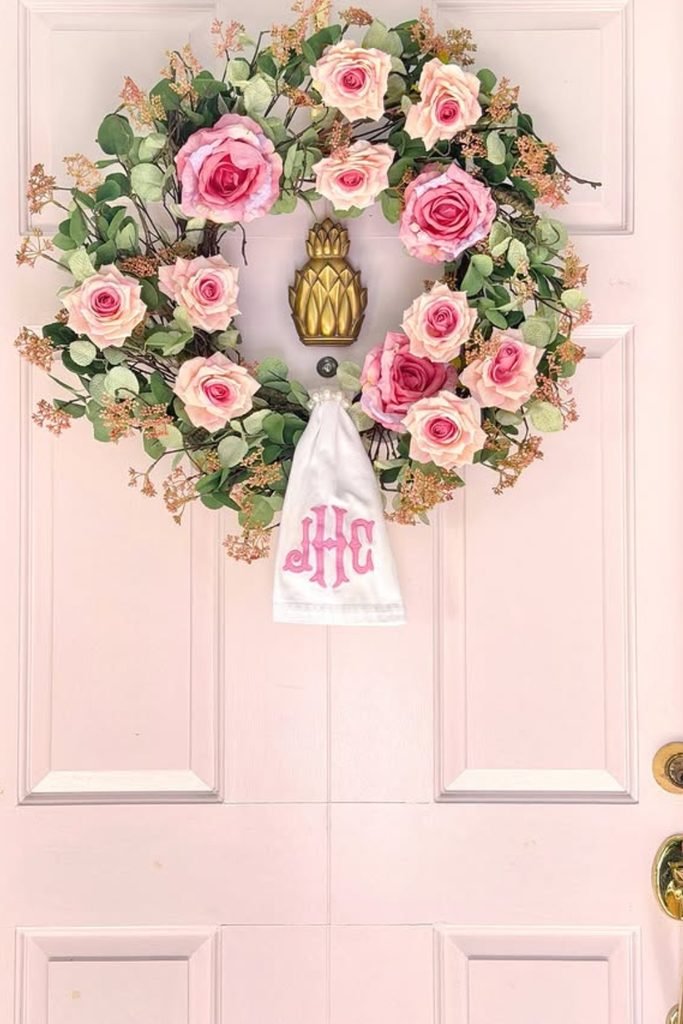
Turn leftover pink fabric into layered rose shapes, then spread different bloom sizes around a grapevine base for natural-looking fullness.
Tuck fabric leaves and smaller textured pieces between the roses, filling empty areas without covering every bit of the rustic frame.
Leaving the center completely open gives those soft blooms breathing room, while a fabric hanging accent can add a personal finishing detail.
Felt Flower Wreath
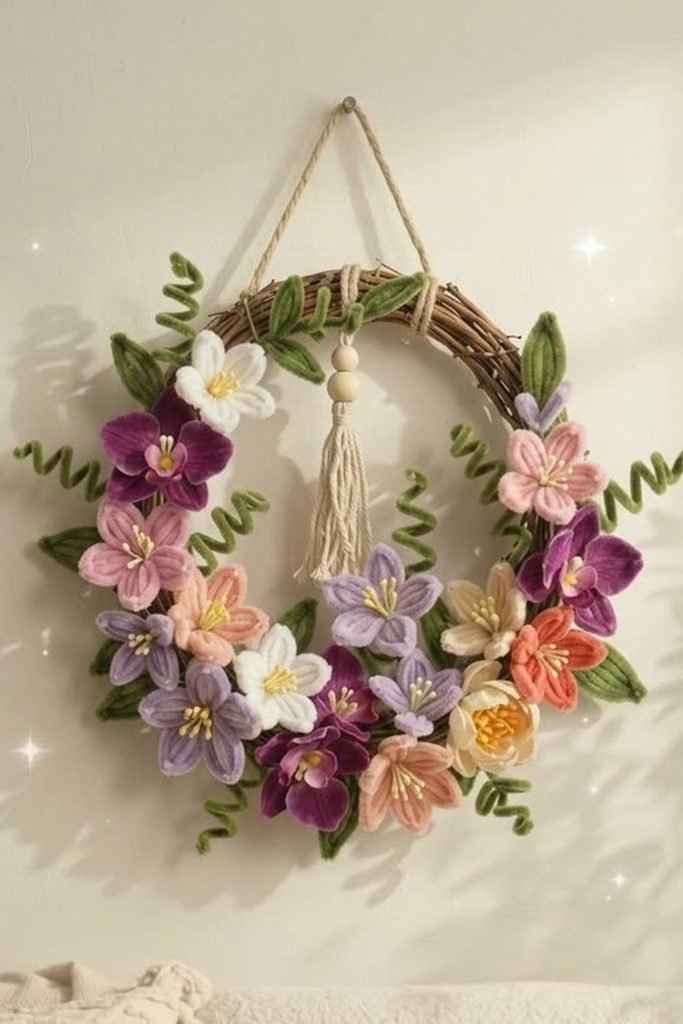
Felt is worth trying when raw edges bother you because cut petals stay tidy without hemming, making detailed flowers much easier.
Build several flower shapes in related pastel shades, then arrange them heavier along the bottom rather than covering the entire grapevine ring.
Curl narrow green felt strips around a pencil for playful tendrils, adding movement between leaves without needing complicated floral-making techniques.
Ribbon Garden Wreath
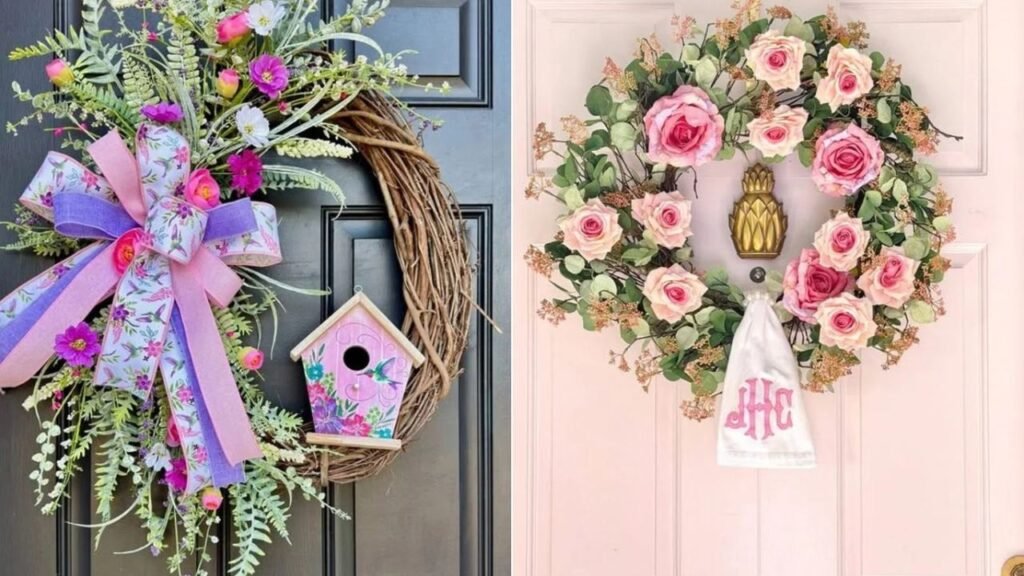
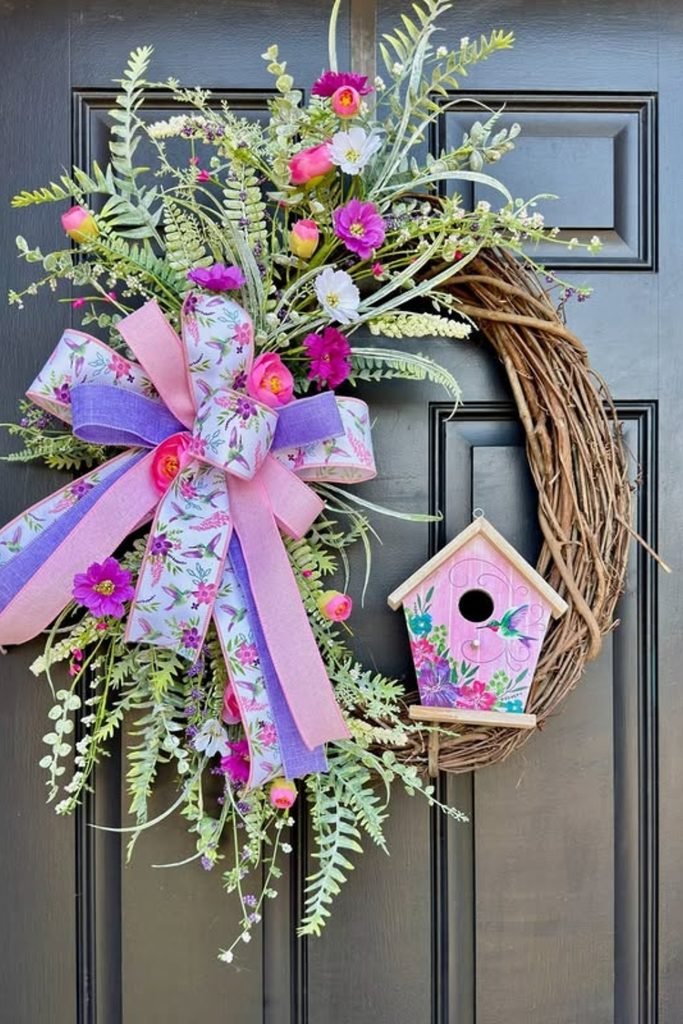
Give a simple grapevine wreath more personality by combining wide fabric ribbon with greenery instead of trying to cover the whole frame.
Layer two or three ribbon patterns into one generous bow, letting longer tails create softness beside the loose, airy foliage arrangement.
Small fabric flowers can repeat colors from the ribbon, helping a decorative birdhouse or another focal accent feel intentionally connected.
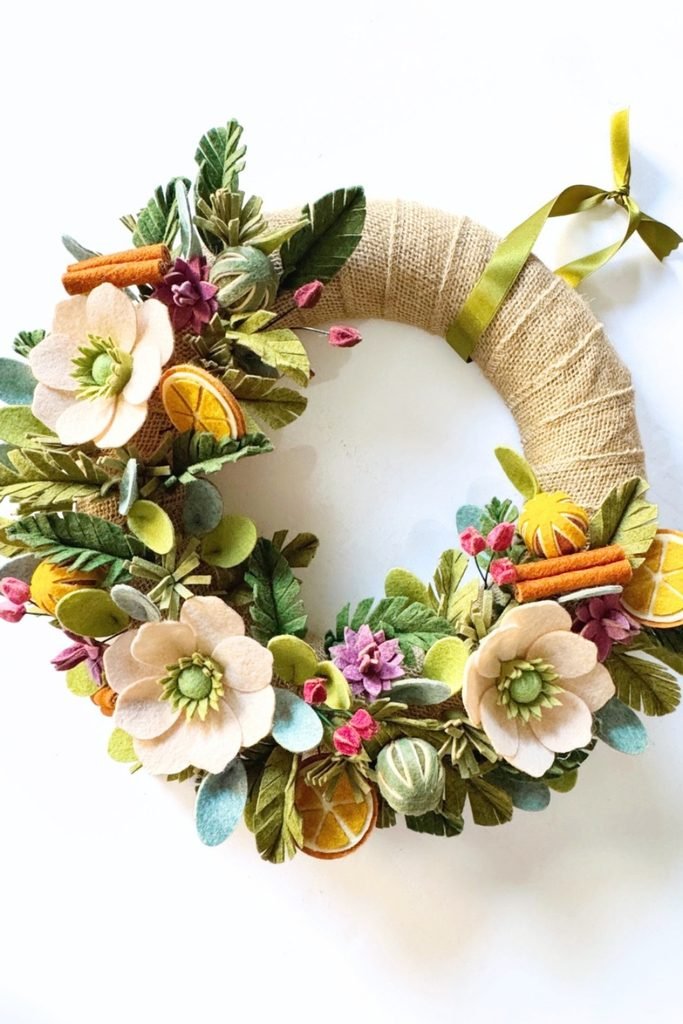
Citrus Felt Wreath
Bring warmth into a neutral wreath by wrapping the base in burlap first, giving colorful felt details a calm background.
Cluster felt leaves, dimensional flowers, and citrus slices heavier along the bottom, rather than spreading every accent at equal intervals.
A few cinnamon-stick details introduce another texture, while an exposed section of burlap prevents the finished arrangement from feeling overcrowded.
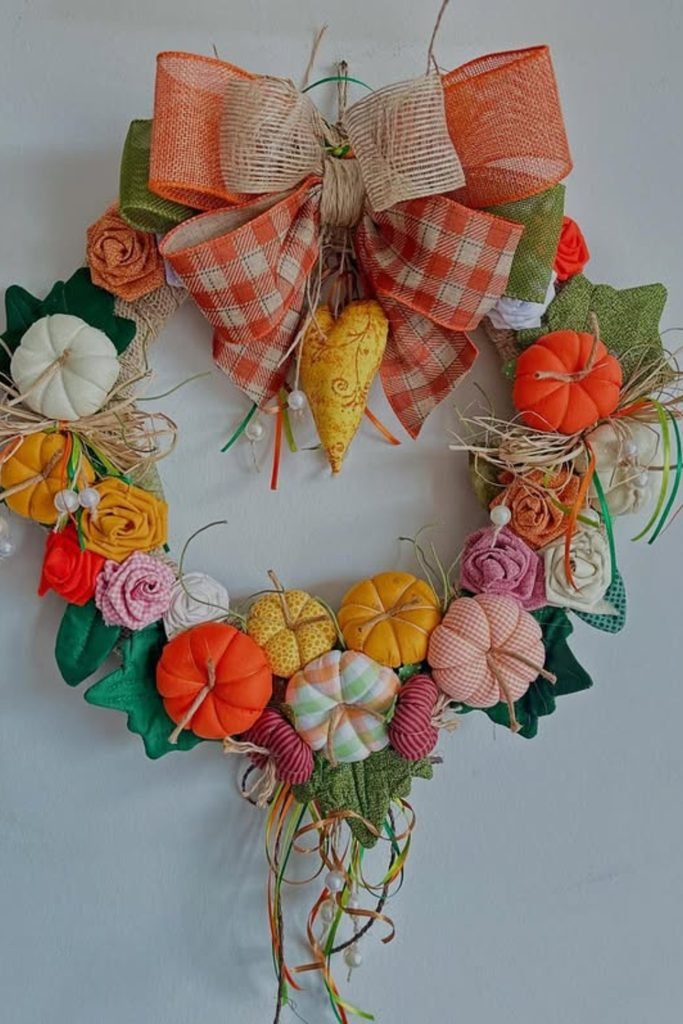
Fabric Pumpkin Wreath
Save small patterned scraps for stuffed fabric pumpkins, because mixed checks, stripes, and solids make each handmade piece feel intentionally different.
Arrange the pumpkins mainly around the lower half, then tuck fabric roses and leafy pieces between gaps to build fuller layers.
Finish the top with stacked burlap and checked bows, balancing the busy lower section without adding more pumpkins around the entire ring.
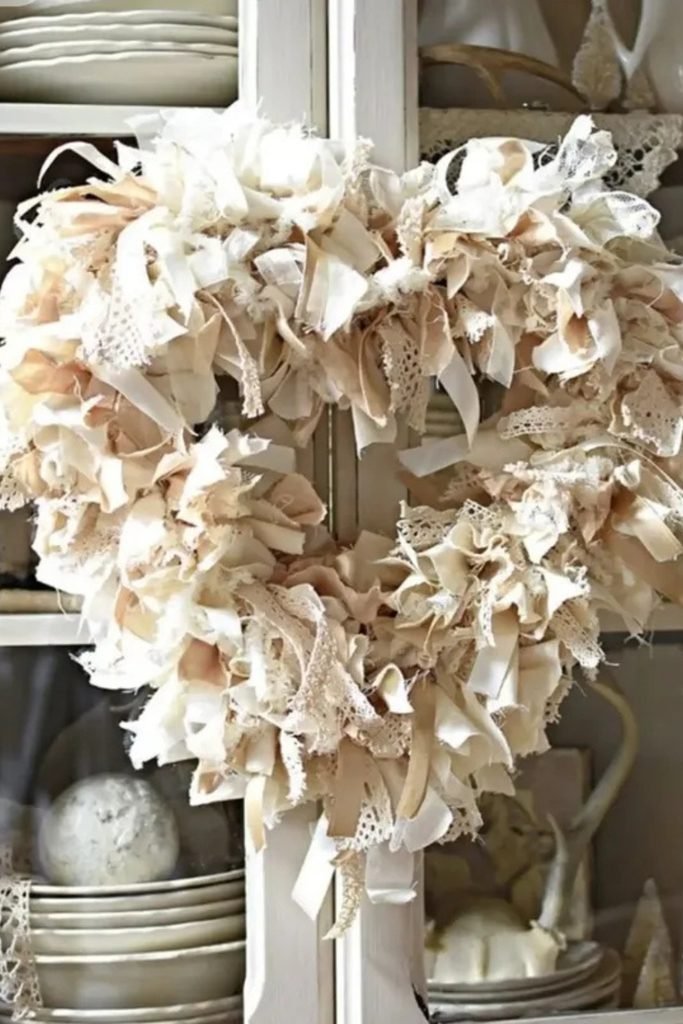
Shabby Heart Wreath
Lean into unfinished edges here, mixing torn cotton, lace, and soft neutral scraps for texture that actually benefits from fraying.
Tie short pieces densely around a heart-shaped wire frame, alternating materials as you work so lace never gathers in one heavy patch.
Uneven tails add to the relaxed vintage finish, making this a forgiving project when your leftover scraps have slightly different widths.
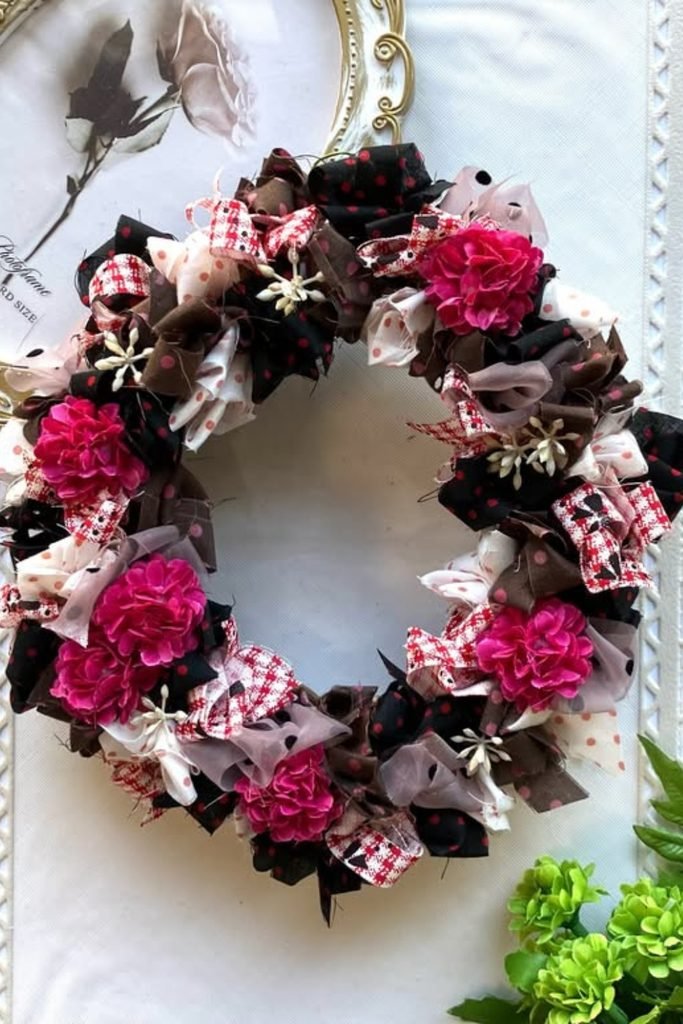
Knotted Floral Wreath
Bold prints become easier to combine when you repeat their colors, so choose scraps sharing two or three shades before cutting.
Tie the pieces closely around your frame, turning each knot slightly outward so the patterned ends create fullness instead of lying flat.
Tuck a few faux flowers between selected knots afterward, using them as focal breaks rather than covering your carefully mixed fabric.
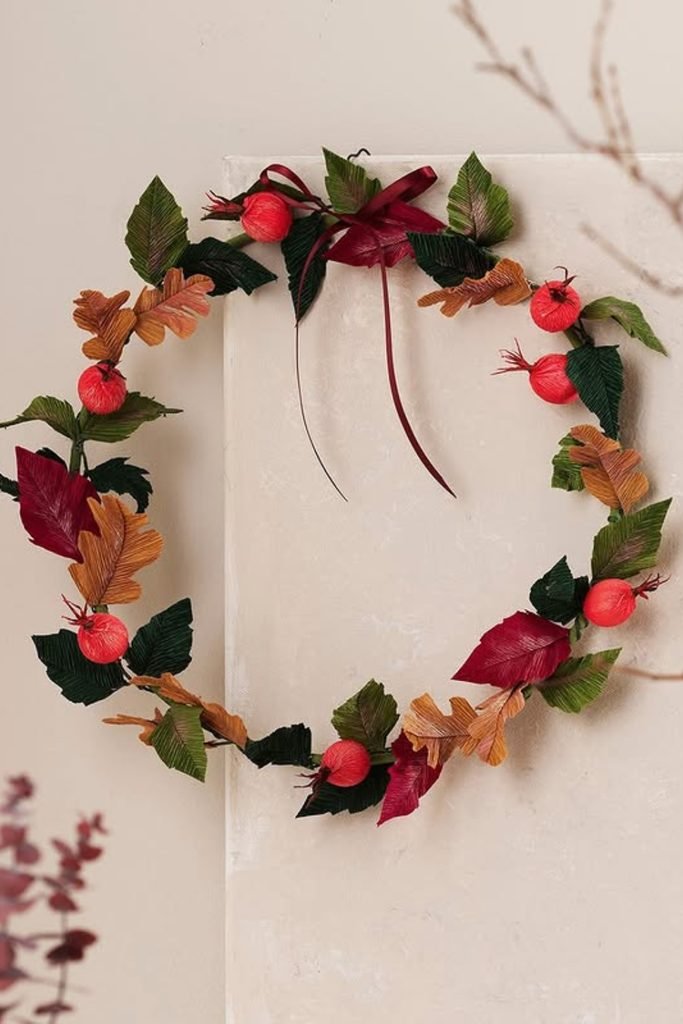
Crepe Leaf Wreath
Go lighter when you want the wreath to feel delicate, using textured crepe fabric for leaves instead of building heavy clusters.
Shape foliage in autumn greens, rust, and burgundy, then space small wrapped berries between branches to give the circle gentle rhythm.
A narrow ribbon bow suits this airy construction better than oversized decoration, allowing the handmade leaf textures to remain the focus.
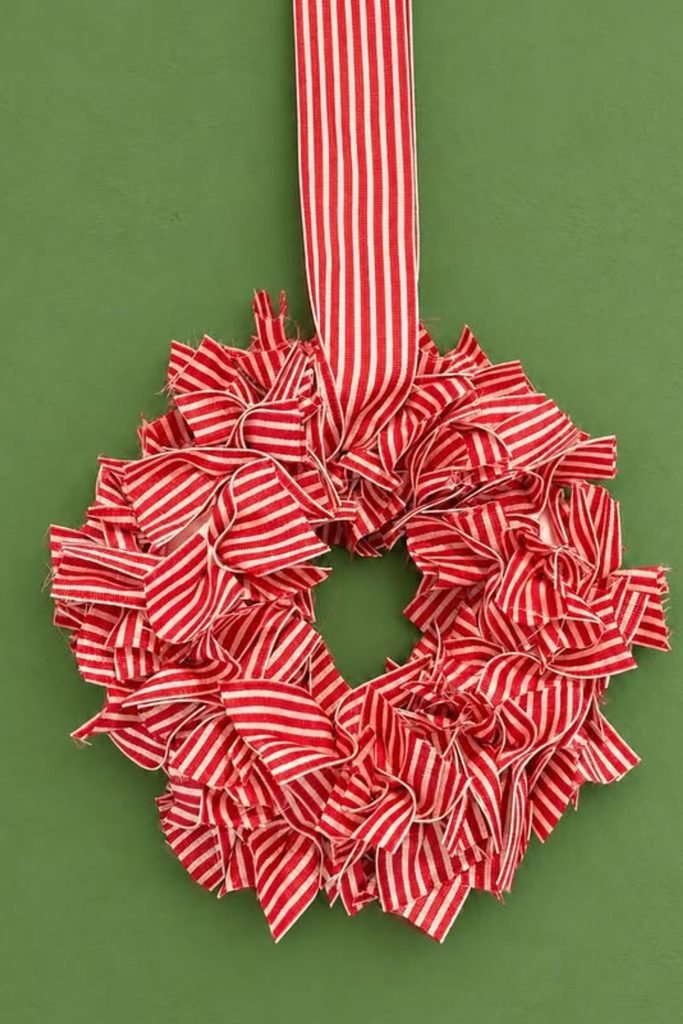
Striped Rag Wreath
One strong fabric pattern can create plenty of movement, so you do not always need several prints for an interesting wreath.
Cut red striped fabric into similar strips, then pack them closely around the form while turning the loose ends in different directions.
Use the same material as a wide hanging loop, giving the simple no-sew design a clean, intentionally coordinated finish.
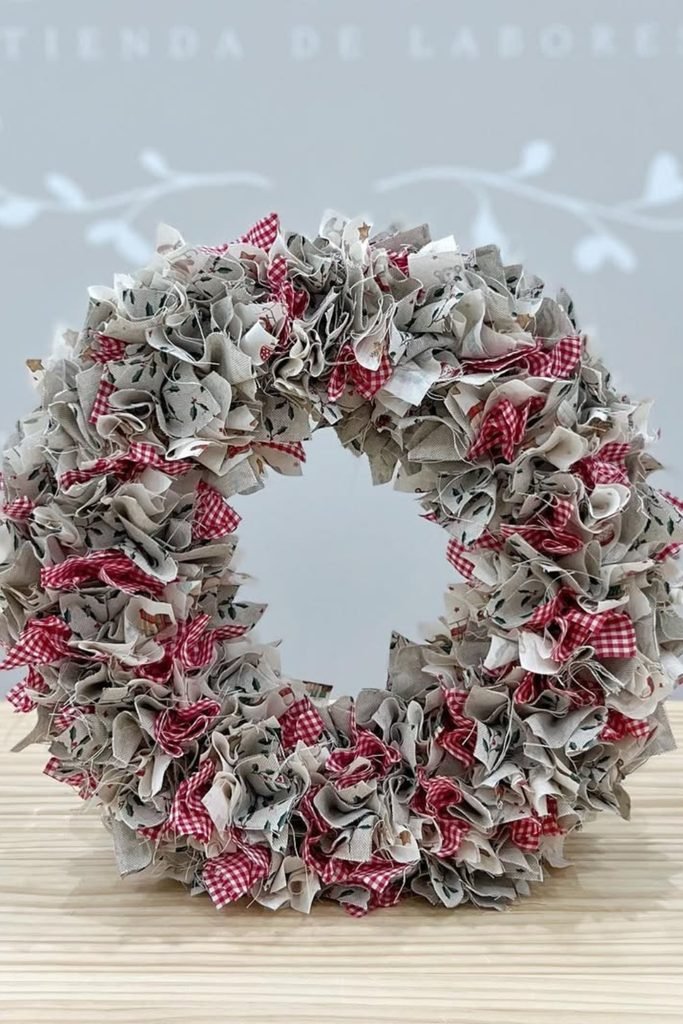
Gingham Scrap Wreath
Tiny scraps become surprisingly useful when you combine muted neutrals with smaller flashes of red gingham instead of throwing leftovers away.
Work short fabric pieces densely around the entire base, alternating prints often so brighter checks appear scattered rather than forming obvious sections.
Let raw edges and loose threads remain visible because their imperfect texture gives this compact wreath its relaxed, homespun character.
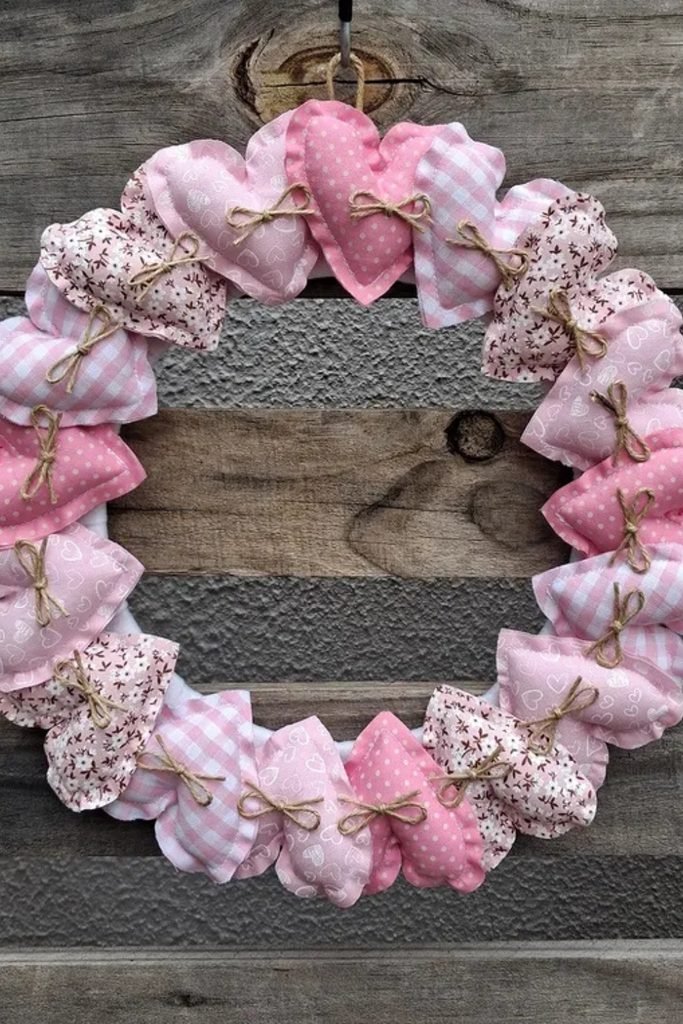
Padded Heart Wreath
Try soft padded shapes when loose rag strips feel too rustic, using coordinated pink prints to create a sweeter decorative finish.
Arrange fabric hearts closely around a simple circular base, alternating checks, florals, dots, and solids so neighboring pieces remain visually distinct.
Small twine bows bring rustic contrast to the pastel fabrics and can hide attachment points without introducing complicated sewn-looking embellishments.
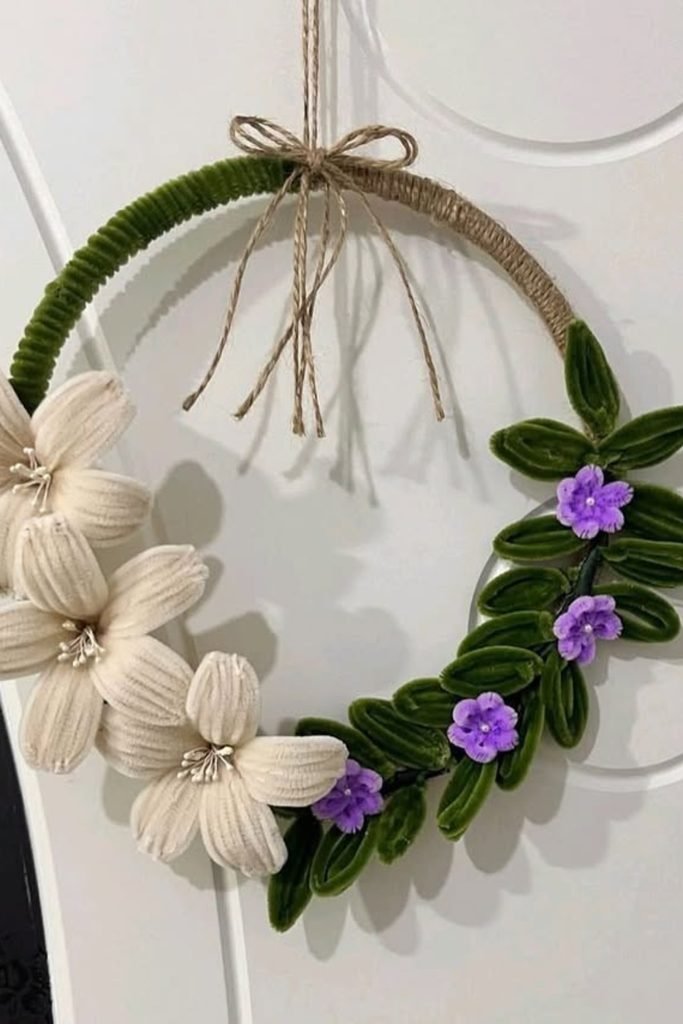
Corded Floral Hoop
Give an open hoop more character by wrapping selected sections with thick cord, leaving some of the base visible for contrast.
Fold soft fabric into simple petals and leaves, then concentrate them along one side so the arrangement feels light rather than crowded.
Small purple blooms between larger cream flowers add just enough color, while a twine hanger continues the relaxed handmade finish naturally.
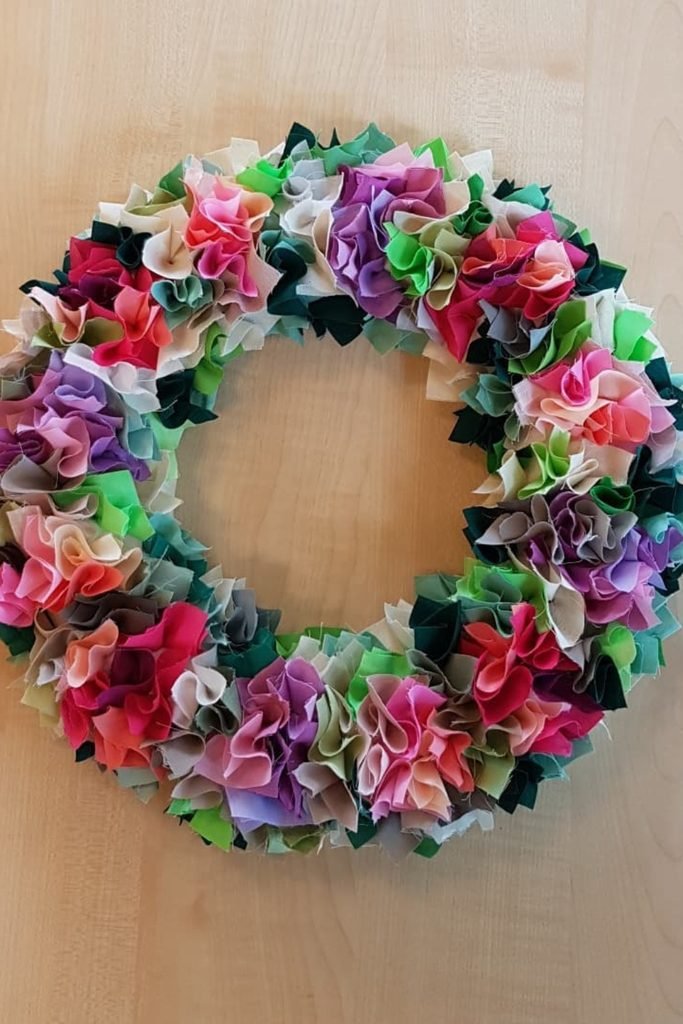
Tucked Scrap Wreath
Put oddly shaped leftovers to work by tucking small fabric squares closely together until the base disappears beneath soft, ruffled folds.
Mix pinks, greens, purples, and neutrals freely, but scatter each shade around the circle so no single area becomes visually heavy.
Push neighboring pieces closer whenever gaps appear, since tighter spacing creates that plush flower-like surface without requiring carefully matched fabric sizes.
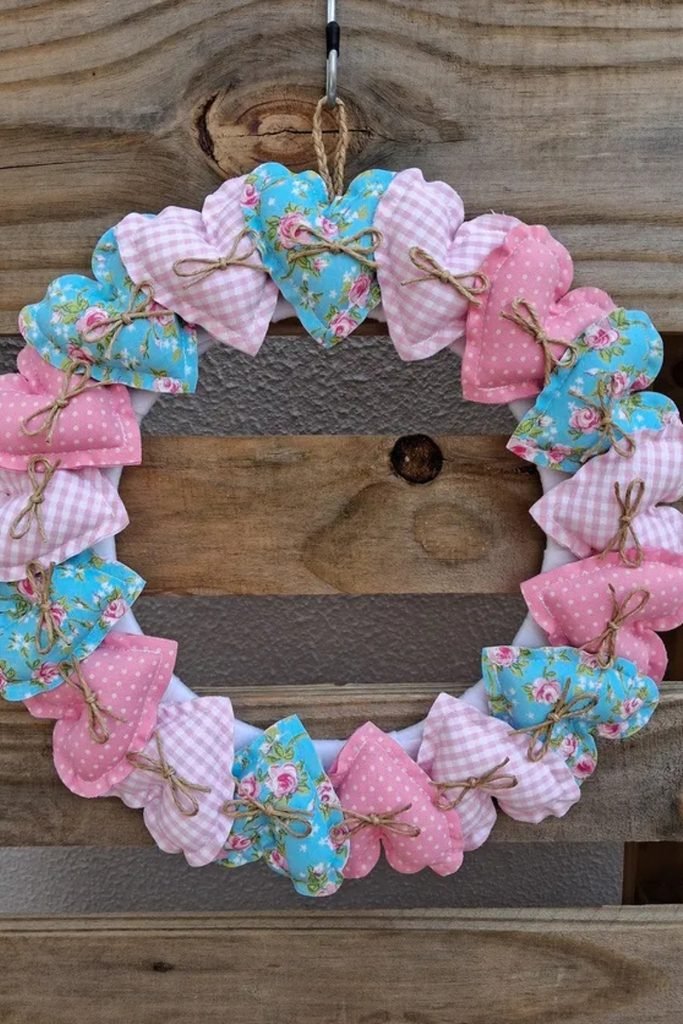
Cottage Heart Wreath
Let one brighter floral print change the mood of a pastel wreath by pairing turquoise roses with softer pink checks and dots.
Arrange padded fabric hearts in a loose repeating sequence, turning neighboring pieces slightly so their shapes overlap without forming rigid rows.
Simple twine bows tone down the sweetness of the prints, making the finished wreath easier to style with relaxed cottage décor.
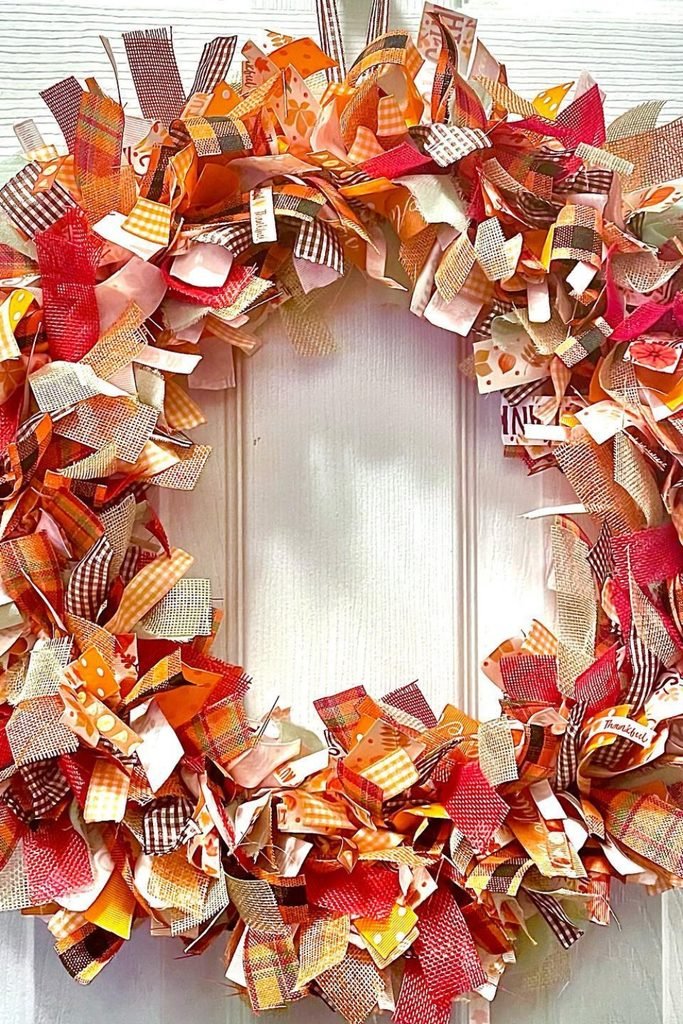
Autumn Scrap Wreath
Fall scraps look richer when texture varies too, so mix cotton prints with burlap, mesh, gingham, and loosely woven ribbon pieces.
Pack short pieces around the frame without arranging perfect color blocks, allowing rust, orange, cream, and brown to mingle naturally.
Leave several ends standing outward instead of flattening everything, because those uneven layers create the generous fullness this seasonal wreath needs.
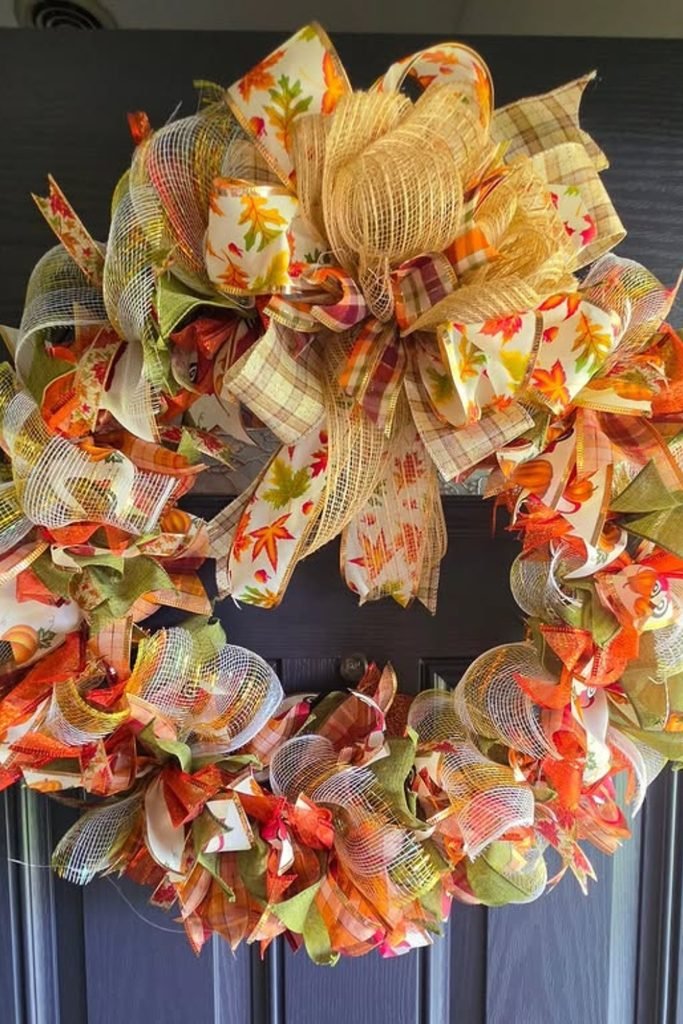
Harvest Ribbon Wreath
Go bigger with ribbon when you want dramatic fullness, layering wired fall prints and mesh so every loop holds its shape.
Mix leaf patterns, plaid, orange, and natural textures throughout the frame, varying loop sizes to prevent the layers from feeling repetitive.
Build one oversized bow near the top as your anchor, then let smaller ribbon tails disappear naturally into the surrounding volume.
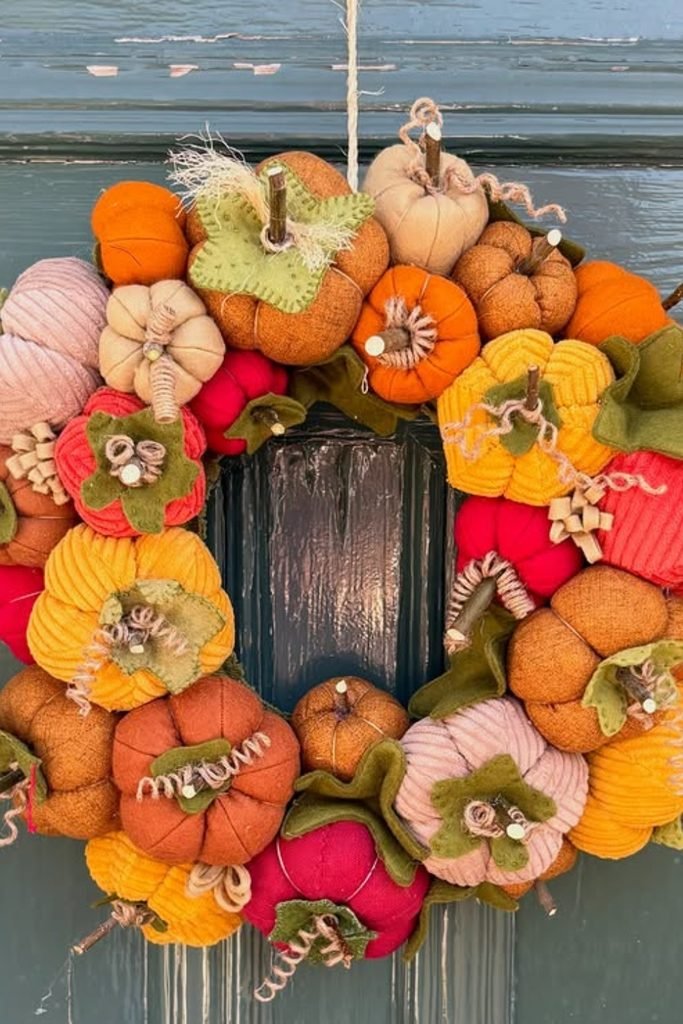
Fabric Pumpkin Wreath
Use leftover fabric in different weights to build soft pumpkins, turning even small seasonal scraps into useful dimensional decorations.
Vary pumpkin sizes and colors around the ring, packing smaller shapes between larger ones so the underlying wreath base stays hidden.
Twine, felt leaves, and twig stems add rustic detail without competing with the stitched-looking textures created by gathered fabric forms.
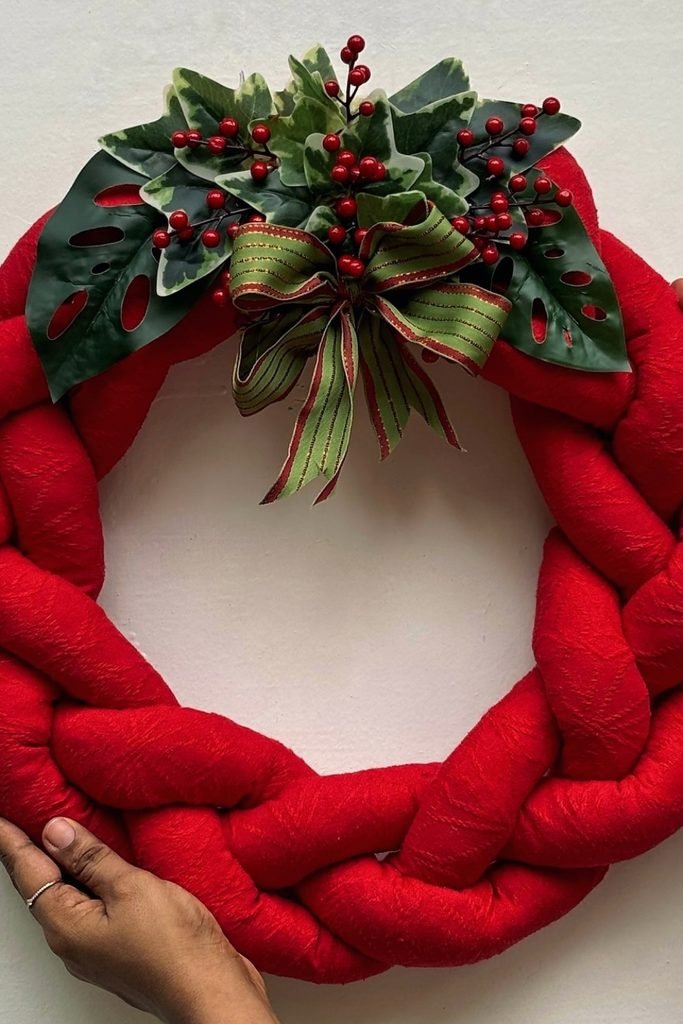
Braided Fabric Wreath
Choose a braided construction when you want a cleaner wreath without dozens of loose ends, using long padded fabric tubes instead.
Form an even three-strand braid first, then curve it into a circle and secure the meeting point beneath your decorative cluster.
A small arrangement of leaves, berries, and ribbon hides the join neatly while allowing the bold woven texture to command attention.
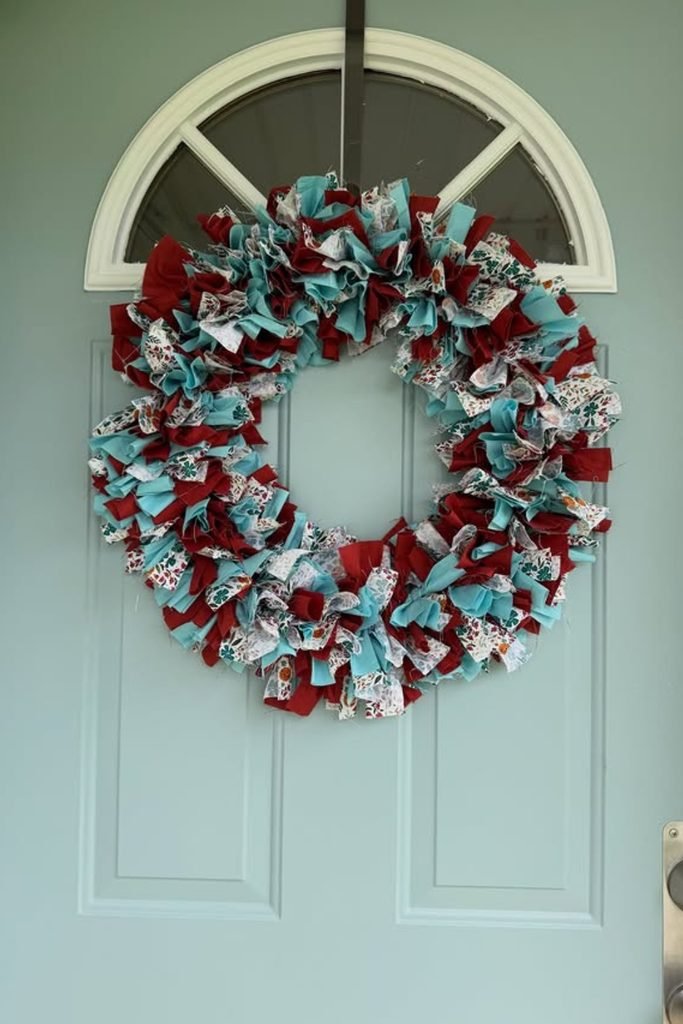
Holiday Rag Wreath
Limit a busy scrap wreath to three main colors, giving mixed holiday prints enough variety without letting the combination become chaotic.
Alternate red, turquoise, and patterned strips around the frame, pushing each knot toward its neighbor whenever the base begins showing.
Instead of trimming every loose thread, fluff the ends outward after finishing so the slightly frayed edges contribute extra texture and fullness.
FAQs
How Much Fabric Do I Need for a No-Sew Wreath?
Fabric amount depends on your wreath size, strip dimensions, and how full you want the finished design.
I recommend cutting a small batch first and testing it on your frame before preparing everything, since this helps you judge spacing and avoid wasting fabric.
Can I Use Old Clothes or Fabric Scraps for a No-Sew Wreath?
I suggest choosing fabrics with similar weights when you want an even shape, while mixed textures are better for a relaxed rag wreath.
Cut around bulky seams and damaged areas, then coordinate a few colors so the finished wreath still feels intentional.

Hi, my name is Ali Mehmood! I’m a passionate writer and DIY enthusiast who loves turning creative ideas into practical, hands-on projects.
I created this website to share inspiring, budget-friendly ideas that you can do yourself – whether it’s organizing your home, crafting something unique, or creating fun projects for kids and pets.
I believe DIY isn’t just a hobby – it’s a smart way to save money, reduce waste, and enjoy the satisfaction of making things with your own hands.
I’m excited to have you as part of this growing community, and I’ll continue bringing you helpful, realistic, and fun DIY ideas you can actually use.